
Entertainment
Songwriting Tips: A Practical System for Better Songs


Better songs usually come from better revision, not better inspiration: the most useful songwriting tips are to give every section a clear job, build a memorable melodic-rhythmic hook, use concrete lyrics, and test the song before production makes you protective of it. That matters because listeners have almost unlimited alternatives; IFPI’s 2023 global study, based on more than 43,000 people across 26 markets, found an average 20.7 hours of music listening per week and more than seven methods of music engagement.
I reviewed ten current high-visibility pages for this query before drafting. The recurring advice is sensible: find a hook, write memorable melodies, use structure, save ideas, collaborate, and push through writer’s block. The weakness is that a tip list does not tell you what to do when a verse sounds fine but the chorus does not lift, when a lyric is emotional but vague, or when a polished demo hides a mediocre underlying song.
My approach is to treat songwriting as a sequence of decisions that can be stress-tested. A song needs a central promise, a hook listeners can recognize, sections that create contrast, lyrics that sound natural when sung, and a rewrite process that separates the composition from the production. There is no single correct order: some writers begin with a title, some with a groove, some with a topline over an existing track. The goal is not to impose a formula. It is to make the craft visible enough that you can diagnose what is weak and know what to try next.
The rest of this guide gives you that system, including practical checks for melody, lyric specificity, prosody, feedback, finishing, and AI-era authorship.
What makes a song feel finished rather than merely complete?
A complete song has all its sections. A finished song has survived questions. Can a listener explain the emotional center after one play? Does the chorus feel unmistakably different from the verse? Are there lines that could belong to almost any song? Does the melody have a motif you can sing without the chords? If you mute the production tricks, is the composition still doing the work?
That last question is easy to miss. Jason Blume, a songwriter and long-time instructor, has argued that writers often polish lyrics more rigorously than melodies and sums up his priority with the deliberately blunt phrase “melody, melody, melody” (Blume, 2023). I would broaden that into one rule: whatever part of your song feels most automatic deserves the most scrutiny, because habit is where sameness hides.
I also separate craft from biography. Great songs can grow out of a fully musical life, an art-school life, a production-first workflow, or a lyric-first habit. The site’s profile of Stuart Sutcliffe and the early Beatles is a useful reminder that creative identity often develops across disciplines rather than inside one neat lane.
Which starting point should you use: lyrics, melody, chords, or a track?
Use the starting point that gives you the strongest first piece of evidence, then deliberately switch modes before the song hardens. If you begin with lyrics, sing nonsense syllables before you finalize every word. If you begin with chords, write a vocal line away from the instrument. If you begin with a track, define the topline’s emotional job before filling every bar with words.
The reason to switch modes is simple: your first strength can become your blind spot. A lyricist can force too many syllables into a melody. A producer can mistake an exciting texture for a complete song. A guitarist can let familiar chord shapes dictate another familiar melody. A melody-first writer can discover too late that the vowels are awkward to sing.
This comparison helps you choose a starting point without letting it control the whole song.
| Starting point | Best when | Hidden risk | 10-minute switch |
| Title / lyric | You have a phrase, story, or emotional thesis | Too many syllables; melody becomes an afterthought | Sing the title on five different rhythms before writing verse two |
| Melody | A motif or vocal shape arrives first | Placeholder words harden into vague lyrics | Write three concrete images that fit the same vowel sounds |
| Chords / groove | The harmonic or rhythmic feel is the spark | Hands fall into familiar patterns | Step away from the instrument and sing a contrasting section |
| Existing track | Pop, hip-hop, R&B, EDM, or producer-led sessions | Production energy is mistaken for songwriting strength | Mute layers and test whether the topline works over drums + one harmonic element |
A practical songwriting system: write, stress-test, rewrite
I use the following sequence as a diagnostic loop rather than a rigid recipe.
1. Write the song’s one-sentence promise. Finish this sentence: “By the final chorus, the listener should feel or understand…” If you cannot answer it, the verses will usually collect scenes without direction.
2. Build a hook triangle. Give the core idea three forms: a short title or phrase, a melodic motif, and a rhythmic identity. They do not all have to be flashy, but at least two should reinforce each other. A title with a forgettable melody is not yet a hook; a catchy melody carrying a vague phrase is harder to own.
3. Assign a job to each section. A verse can set a scene or move time. A pre-chorus can increase tension. A chorus can compress the meaning. A bridge can reframe the argument. If two adjacent sections do the same job in the same energy range, one of them probably needs to change.
4. Write verses with nouns, verbs, and consequences. Abstract emotion is useful as a destination, not as all the scenery. “I was lonely” tells me the category; an unanswered voice note at 2:13 a.m. gives me a moment. Specificity lets listeners infer emotion instead of being ordered to feel it.
5. Make the chorus simpler in at least one dimension. If the verse is wordy, let the chorus hold longer notes. If the verse melody circles a narrow range, let the chorus climb or fall somewhere new. If the harmony is busy, simplify it. Contrast is easier to hear when one variable changes clearly rather than five variables changing randomly.
6. Sing for prosody, not page beauty. Speak the lyric naturally, mark the stressed syllables, then compare them with the musical accents. Awkward stress can make an elegant line sound artificial. The ear notices this before the reader does.
7. Record a deliberately cheap demo. Voice plus one instrument, or a basic track with a guide vocal, is enough for the first critique. Do not spend hours tuning, stacking harmonies, or choosing reverbs before you know whether the chorus earns its return.
8. Rewrite from evidence. After a break, listen once without touching anything. Write down the first three moments where attention drops, meaning blurs, or energy stalls. Fix those before chasing microscopic rhyme changes.
9. Finish with a decision date. A song can always be altered. Give the draft a point at which it becomes version 1, export it, archive the lyric and voice memo, then move to the next song. Finishing is a skill separate from perfecting.
How do you write lyrics that are specific without becoming too private?
The useful middle ground is specific detail plus transferable emotion. You want the listener to see a scene but still have room to enter it. Kara DioGuardi’s advice to Charlie Puth at Berklee was concise: “You can’t escape your truth.” The craft problem is deciding which part of that truth needs to be literal and which part should be shaped into a song.
I use a three-level specificity ladder. Level one is emotion: regret, desire, jealousy, relief. Level two is behavior: deleting a message, circling a block, leaving a coat behind. Level three is a distinctive object, place, phrase, or sensory cue. Strong verses usually climb to level two or three; strong choruses often pull back toward level one so more listeners can sing themselves into the idea.
A metaphor can do the same work. The site’s explainer on invisible string theory and Taylor Swift’s pop-culture connection shows why a compact image can carry a much larger relationship story. The lesson is not to copy that metaphor. It is to look for an image that can bear emotional weight without a paragraph of explanation.
When you are blocked on scenes, character prompts can also be productive. A headcanon generator framework is built for fictional characterization, but the underlying exercise transfers well: give a person a habit, a contradiction, a place, and a pressure point, then ask what they would do next. That can produce a verse with action instead of generic feeling.
How do you make the chorus feel bigger without simply making it louder?
A chorus can lift through pitch, rhythm, word density, harmonic rhythm, repetition, register, or perspective. Loudness is only one arrangement choice. The composition should signal arrival even on a phone recording.
My favorite test is the contrast budget: choose two dimensions to exaggerate between verse and chorus and leave the rest stable. For example, keep the chords mostly familiar but move the melody higher and reduce the lyric to fewer, longer phrases. Or keep the vocal range similar but switch from a conversational verse rhythm to a repeated chorus motif. Clear contrast is easier to remember than constant novelty.
Berklee’s critical-listening framework separates melody, chords, lyric, and groove so a writer can hear what each part is doing rather than judging the whole track as one blob (Stolpe, n.d.). That is especially useful during a rewrite: solo one problem at a time.
Use this stress test after the first complete demo; it is designed to identify the next revision, not to grade the song.
| Element | Fast test | Weak signal | Revision move |
| Concept / title | Can you state the song in one sentence? | Multiple themes compete | Choose one promise; cut lines that serve a different song |
| Verse | Can you picture something happening? | Emotion is named but not dramatized | Add behavior, object, place, or consequence |
| Chorus | Does arrival register on a phone demo? | Same range, density, and rhythm as verse | Change two contrast dimensions |
| Melody | Can you sing a motif without chords? | Line follows chord roots predictably | Rewrite five melodic variants before choosing |
| Prosody | Do spoken stresses match musical accents? | Important words land on weak beats | Change syllables or melodic rhythm |
| Bridge | Does it reframe or escalate? | It restates the verse | Add new perspective or remove it |
| Demo | Does the song work with less production? | Impact disappears when layers are muted | Fix composition before mix detail |
What should you measure when you critique your own song?
Songwriting is not spreadsheet work, but a few measurements expose habits. Count repeated title appearances, approximate melodic range, line syllables, section lengths, and how quickly the first distinctive idea arrives. These are diagnostics, not targets.
The site’s word-counter guide makes a useful SEO point that applies here too: a count is a measurement, not a quality standard. In lyrics, 40 words can be too many if every line explains the same emotion, while 100 can feel effortless if the rhythm and narrative keep moving. Use numbers to find imbalance, then use your ear to decide whether the imbalance matters.
| Measurement | What it reveals | What it does not prove |
| Title repetitions | Whether the core phrase is structurally prominent | That repetition is emotionally effective |
| Section word / syllable density | Whether verse and chorus are similarly crowded | That fewer words are always better |
| Approximate vocal range | Whether sections occupy distinct registers | That a wider range is automatically stronger |
| Section length | Whether form is balanced or intentionally uneven | That standard pop lengths fit every genre |
| Time to first distinctive idea | Whether the opening establishes identity quickly | That every song needs an immediate chorus or hook |
How should you use feedback without writing by committee?
Ask for observations before solutions. “Where did your attention drop?” is better than “What should I change?” “What line did you remember?” is better than “Did you like the chorus?” Observations tell you what happened in the listener; solutions often tell you how that person would write the song instead.
I sort feedback into three buckets. Repeated confusion is a signal: if three people cannot tell who is speaking in verse two, investigate. Repeated loss of energy is a signal: if listeners all feel the second chorus arrives flat, inspect contrast or arrangement. Taste is not automatically a signal: one person preferring a different genre, rhyme style, or tempo does not create an obligation.
This is also where a broader personal-development practice system becomes relevant: improvement is easier when practice produces feedback and a visible next behavior. Instead of setting a vague goal to “write better songs,” spend one week writing five chorus melodies over the same lyric, or rewrite one verse three times at different specificity levels.
What are the biggest songwriting risks and trade-offs?
The first risk is polishing the wrong layer. A gorgeous mix can make it psychologically harder to remove a weak bridge or rewrite the chorus. Keep early demos cheap enough to abandon.
The second is chasing universality so aggressively that nothing is distinctive. “Everyone has felt this” is not a lyric. The paradox is that precise scenes often travel further because listeners recognize the human behavior inside them.
The third is overcorrecting toward surprise. Unexpected chords, structures, and images are useful only when they strengthen the song’s emotional logic. Novelty without orientation can make the listener work harder than the payoff justifies.
The fourth is treating imitation as analysis. Study songs you love, map their section lengths or melodic contours, then change the material and the decision pattern. Learning a craft means absorbing principles, not tracing somebody else’s expression.
How should AI fit into songwriting in 2026?
AI can be useful for generating constraints, alternate chord ideas, rhyme families, production references, or questions that expose a weak concept. I would keep the human decisions visible: which idea you chose, what you rejected, what you rewrote, and which expressive elements you actually authored.
That distinction now has legal as well as creative relevance. In January 2025, the U.S. Copyright Office’s AI copyrightability report said generative-AI output can be protected only where a human author determines sufficient expressive elements; prompting alone is not enough, while human-authored selection, arrangement, or modification can support protection. This is U.S.-specific legal guidance, not a universal rule for every country, but it is a strong reason to keep dated drafts, stems, voice memos, and notes showing your human contribution.
I also keep composition and sound recording separate in my records. The U.S. Copyright Office treats the underlying musical work—music and lyrics—as distinct from a particular sound recording. That distinction becomes important when co-writers, producers, performers, and AI-assisted tools all contribute to the final release.
The Future of Songwriting in 2027
The most likely change in 2027 is not that software suddenly replaces the craft. It is that authorship, provenance, and human contribution become more explicit parts of the workflow. In July 2026, IFPI announced global chart principles for recordings developed using generative AI drawing a boundary between human-led creativity and purely synthetic or unauthorized AI-model output for official-chart eligibility across its network.
I expect more writers and publishers to keep contribution logs, split decisions, prompt histories where relevant, and human-written source drafts. That is partly rights management and partly creative discipline: when tools can generate endless options, taste and selection become more visible skills.
Listener expectations may also push in two directions at once. IFPI’s 2023 research found 79% of surveyed music fans considered human creativity essential to music, even as generative tools continue to enter production. The likely 2027 advantage is therefore not “no technology.” It is a clear human point of view supported by technology that does not erase where the creative decisions came from.
The uncertain part is platform policy. Chart rules, licensing models, disclosure standards, and national copyright treatment can change quickly. Songwriters should treat current guidance as a moving operating environment rather than a permanent settlement.
Key Takeaways
- A strong song has a central promise, a recognizable hook, section contrast, natural prosody, and evidence that it survived revision.
- Use a hook triangle: title or phrase + melodic motif + rhythmic identity. At least two should reinforce the same core idea.
- Let verses carry concrete behavior and imagery; let choruses compress the emotion into fewer, more repeatable decisions.
- Keep first demos cheap. Heavy production before the second rewrite can hide composition problems and increase resistance to change.
- Ask feedback partners where attention dropped, what they remembered, and what confused them before asking for suggested fixes.
- With AI-assisted writing, preserve drafts and human decisions so authorship, co-writing contributions, and rights are easier to document.
Conclusion
The songwriting tips that matter most are not isolated tricks. They are ways to make decisions visible. Define what the song promises, give the hook more than one form, make each section earn its place, and let the lyric become specific enough that a listener can see something happening. Then step away, listen like an outsider, and rewrite the moments where attention or meaning weakens.
The practical advantage of this system is that it works whether you start with lyrics, chords, a beat, a voice memo, or a fully produced track. It does not require every song to follow the same structure. It requires every choice to have a reason you can hear.
The best long-term goal is not to produce one perfect song. It is to become faster at diagnosing why a draft is not yet working. That skill compounds. You finish more songs, learn from more completed decisions, and build a creative fingerprint that cannot be reduced to a template—or generated by a list of tips alone.
Frequently Asked Questions
What are the best songwriting tips for beginners?
Start with one clear idea, create a short hook, use a familiar song structure, keep the first demo simple, and finish the song before judging your talent. Beginners improve faster by completing multiple songs and reviewing them than by endlessly polishing the first draft.
Should I write lyrics or melody first?
Either can work. Start with the idea that feels strongest, then deliberately switch modes before the draft is fixed. Lyric-first writers should test melody early; melody-first writers should check whether natural speech stress fits the musical accents.
How can I make a chorus more memorable?
Give the chorus contrast and repetition. Change at least two elements from the verse—such as vocal range, rhythmic density, phrase length, or perspective—and repeat the title or central motif enough that the listener can predict and participate in it.
How do I know when a song needs a bridge?
Add a bridge when the song needs a new angle, new information, or a fresh musical contrast before the final chorus. If the bridge only repeats the verse’s meaning or delays the ending, the song may be stronger without it.
How often should I rewrite a song?
Rewrite until the important problems stop repeating, not until every line feels untouchable. A useful routine is one structural pass, one lyric-and-prosody pass, and one melody/contrast pass, followed by outside feedback. Some songs need more; others do not.
Can AI help me write songs without taking over the creative process?
Yes. Use AI for constraints, alternate options, research, or brainstorming, then make and document the expressive decisions yourself. Rights rules differ by country; in the United States, the Copyright Office emphasizes human authorship for protectable expression.
Methodology
I researched this article through September 19, 2026. Before drafting, I reviewed a representative 10-result high-visibility organic sample for “songwriting tips” and closely matched intent: MasterClass, LANDR, Ditto Music, Native Instruments, Berklee Online, BMI, Bandzoogle, RHYMEBOOK, American Songwriter, and SongTown. Search order changes by country, device, personalization, and index freshness, so this is a competitive snapshot rather than a claim that one permanent global top 10 exists.
The strongest competing pages cover hooks, melody, chords, structure, writer’s block, collaboration, idea capture, and quotations from established songwriters. The recurring gap was diagnosis: few pages give readers a compact system for deciding why a draft is weak. I built this article around a hook triangle, a section-job map, a specificity ladder, a contrast budget, a cheap-demo rule, observation-first feedback, and an AI authorship record. Those frameworks are editorial synthesis, not claims that there is one scientifically proven formula for a successful song.
For factual validation, I prioritized IFPI for current global listening and AI-policy context, the U.S. Copyright Office for authorship and music-copyright distinctions, and named songwriting educators or practitioners for craft commentary. I also verified the five Aperplexity internal destinations used in the body as live during research.
Musical effectiveness varies by genre, culture, performer, audience, and artistic intent; a device that helps a pop chorus may be wrong for a through-composed song. I did not conduct a controlled songwriting experiment or claim firsthand professional placements. First-person statements describe my research and editorial method, not invented career experience.
AI assistance was used to organize research and draft this article. A human editor must review the content before publishing, manually verify all named claims and APA references against the original sources, confirm that every internal and outbound link remains live, and ensure that all first-person wording accurately reflects the author’s real editorial process.
References
Berklee College of Music. (n.d.). Six takeaways from songwriting clinic with Charlie Puth.
Blume, J. (2023, October 24). 5 things I wish I had known about writing successful songs. BMI.
IFPI. (2023, December 11). IFPI’s global study finds we’re listening to more music in more ways than ever.
IFPI. (2026, July 30). IFPI rolls out global principles for the eligibility of recordings developed using AI in official music charts worldwide.
Stolpe, A. (n.d.). 4 critical listening tips for songwriters. Berklee Online Take Note.
U.S. Copyright Office. (2025, January 29). Copyright Office releases Part 2 of Artificial Intelligence Report.
U.S. Copyright Office. (n.d.). Copyright registration of musical compositions and sound recordings.

Disney movies are not one neat genre, and that is exactly why generic “best of all time” lists become confusing: a 1937 hand-drawn fairy tale, a Pixar computer-animated drama, a live-action musical, and a Marvel blockbuster may all sit under Disney ownership while offering completely different viewing experiences. The most useful 2026 guide is therefore not a single ranking. It is a map of what counts as Disney, how the major creative eras changed, and which films fit a particular viewer, mood, age, or reason for watching.
That distinction matters more now because Disney’s catalog spans multiple studios and decades. The official Disney movie catalog currently mixes Walt Disney Animation, Pixar, live action, and major franchise releases. Pixar itself became part of Disney through the completed 2006 acquisition, yet it remains a distinct creative studio rather than another name for Walt Disney Animation. The Walt Disney Company’s acquisition announcement described Pixar as a separate animation leader whose creative and technological resources would combine with Disney’s broader entertainment portfolio.
This guide takes a narrower editorial approach. It uses Walt Disney Animation and Pixar as the core of the viewing recommendations, then brings in live-action Disney only where it meaningfully changes the choice. Marvel, Lucasfilm, and 20th Century titles are acknowledged as Disney-owned film businesses, but they are not mixed into an animation-first ranking. That keeps the article useful instead of turning “Disney” into a label so broad that it stops helping anyone choose a movie.
What Counts as a Disney Movie?
The phrase is used in at least six different ways. Search results often collapse them together, which makes comparisons misleading. A Disney-owned film is not automatically a Walt Disney Animation Studios film, and a film distributed by Disney can belong to a different creative brand.
| Category | Examples | How to treat it in this guide |
| Walt Disney Animation Studios | Core animated features such as Snow White and the Seven Dwarfs, The Lion King, Frozen, Moana and Encanto | Best fit for a traditional “Disney animation” guide |
| Pixar Animation Studios | Toy Story, Finding Nemo, Ratatouille, Up, Inside Out and related films | Disney-owned since 2006, but creatively distinct |
| Disney live action | Mary Poppins, Enchanted, Pirates of the Caribbean and other Disney-branded productions | Broader family/adventure catalog |
| Live-action reimaginings | The Jungle Book (2016), Beauty and the Beast (2017), The Lion King (2019), Mulan (2020), The Little Mermaid (2023) | Useful mainly when comparing adaptation choices |
| Marvel Studios | Marvel Cinematic Universe films | Disney-owned, but not normally what viewers mean by “classic Disney movies” |
| Lucasfilm and 20th Century Studios | Star Wars, Indiana Jones, Avatar and other acquired/franchise titles | Part of Disney’s corporate film portfolio, not the core animation canon |
This definition is the first major difference from many ranking pages. It prevents a common category error: using one score to compare a hand-drawn musical, a Pixar original, a photorealistic remake, and a superhero film as if they were trying to achieve the same thing.
Disney Animation by Creative Era
Release dates tell you when a film arrived. Creative eras tell you why it feels the way it does. The labels below are editorial groupings rather than official studio classifications, but they are more useful for understanding changes in story design, technology, music, villain writing, and family relationships.
The feature-film breakthrough: 1937–1942
Snow White and the Seven Dwarfs established the commercial possibility of feature-length Disney animation. The Academy later honored Walt Disney with a special award for the film, describing it as a major screen innovation that pioneered a new entertainment field. Pinocchio, Fantasia, Dumbo, and Bambi then showed that the studio was not locked into one visual or narrative formula. The era is defined by hand-crafted character animation, orchestral ambition, fairy-tale or fable structures, and technical experimentation.
The package-film years: 1940s
Wartime conditions pushed Disney toward lower-cost anthology or “package” features made from shorter musical and narrative segments. Make Mine Music, Fun and Fancy Free, Melody Time, and The Adventures of Ichabod and Mr. Toad can feel unusual to viewers expecting one continuous princess-style story, but that is precisely their historical value. They show a studio adapting its production model rather than repeating the prewar formula.
Postwar rebuilding and broader subjects: 1950s–1970s
Cinderella helped re-establish the feature fairy tale, while later films widened the range through animal stories, literary adaptations, adventure, and comedy. One Hundred and One Dalmatians, The Jungle Book, The Aristocats, Robin Hood, and The Many Adventures of Winnie the Pooh are often less structurally grand than later Renaissance musicals, but they are central to Disney’s “comfort viewing” identity.
The Disney Renaissance: 1989–1999
The Little Mermaid through Tarzan created the most recognizable modern Disney formula: Broadway-influenced songs, clearer character wants, romantic or family stakes, theatrical villains, sidekick comedy, and climactic emotional payoff. Beauty and the Beast became the first fully animated feature nominated for the Academy Award for Best Picture, an important marker of how seriously the form was being treated beyond children’s entertainment.
The experimental and CG transition: 2000s
The 2000s are more interesting than their reputation. Lilo & Stitch, Atlantis: The Lost Empire, Treasure Planet, Brother Bear, Meet the Robinsons, and Bolt show a studio testing visual styles and story types while computer animation became dominant across the industry. This is also the period when Pixar’s influence on mainstream animation was impossible to ignore, culminating in Disney’s 2006 acquisition of Pixar.
The modern family-and-identity era: 2010s–2020s
Tangled, Wreck-It Ralph, Frozen, Big Hero 6, Zootopia, Moana, Encanto, Strange World, Wish, and Moana 2 move the center of gravity away from the old “princess meets prince” template. Romance still exists, but sibling relationships, community responsibility, inherited expectations, grief, cultural identity, and family systems increasingly drive the plot. That change is one reason modern Disney films often work better for adult viewers than their marketing suggests.
A Better Way to Rank Disney Movies
No single score can turn taste into fact. Still, a transparent framework is more useful than an unexplained ranking. For this guide, the editorial score is a decision aid, not a scientific measure: 30% story design, 20% visual craft, 15% music/sound, 15% cultural or historical importance, 10% rewatch value, and 10% fit for the intended audience.
| Film | Editorial score /100 | Why it stands out |
| Beauty and the Beast (1991) | 93 | Best all-round Renaissance musical |
| The Lion King (1994) | 92 | Epic scale, music, family conflict |
| Toy Story (1995) | 92 | Animation-history landmark and efficient storytelling |
| Ratatouille (2007) | 91 | Adult-friendly theme, craft, rewatch value |
| Moana (2016) | 90 | Adventure, music, cultural setting, family duty |
| Pinocchio (1940) | 89 | Visual craft and historical importance |
| Lilo & Stitch (2002) | 88 | Chosen family, comedy, unusual tone |
| Encanto (2021) | 88 | Family systems, music, emotional specificity |
| The Emperor’s New Groove (2000) | 86 | Comedy timing and distinctive voice |
| Treasure Planet (2002) | 84 | Adventure, visual identity, overlooked ambition |
The point is not that 93 is objectively “better” than 92. The point is that readers can see what is being rewarded. A parent choosing a gentle first film should not use the same criteria as an animation student studying technical breakthroughs or an adult looking for a story about ambition and identity.
The Disney Movie Compass: Choose by Mood, Not Prestige
A more practical system is to classify how a film feels. This is where many current rankings leave search intent unanswered. People rarely sit down thinking, “Show me the historically most important Disney title.” They think, “I want something funny,” “nothing too scary,” or “give me a movie that will actually hit emotionally.”
| Viewing mood | Typical feel | Good starting films |
| Comfort Disney | Gentle humor, familiar rhythm, lower intensity | Winnie the Pooh, The Many Adventures of Winnie the Pooh, Ratatouille |
| Chaos-comedy Disney | Fast jokes, oddball characters, comic momentum | The Emperor’s New Groove, Lilo & Stitch |
| Adventure Disney | Travel, discovery, danger, big environments | Treasure Planet, Atlantis, Moana |
| Reflective Disney | Identity, grief, family pressure, growing up | Encanto, Inside Out, Coco |
| Epic Disney | Destiny, kingdoms, large conflict, mythic scale | The Lion King, Hercules, Mulan |
| Dark Disney | Fear, death, villainy, gothic or intense imagery | The Black Cauldron, The Hunchback of Notre Dame, parts of Pinocchio |
| Music-first Disney | Songs carry character and plot | Beauty and the Beast, The Little Mermaid, Encanto, Moana |
For a couple building a themed movie night, the same mood-first logic also works with a broader date-night planning framework: choose the social energy first, then the film, food, and setting around it.
For a longer home marathon, Aperplexity’s staycation guide already recommends turning a private film festival into an intentional event rather than endless scrolling; Disney eras are an easy theme for that format.
Underrated Disney Movies Worth Reconsidering
“Underrated” should not mean “a film the writer personally likes.” A more useful definition is a movie whose current reputation or visibility is lower than the value it offers to a specific audience.
The Great Mouse Detective
A compact mystery with strong atmosphere and one of Disney’s more theatrical villains. Best audience: Viewers who want a brisk detective story rather than a princess musical.
Atlantis: The Lost Empire
A pulpy ensemble adventure with angular visual design and less emphasis on songs. Best audience: Viewers who like exploration and science-fiction/fantasy worldbuilding.
Treasure Planet
A science-fiction reworking of Treasure Island with a strong Jim Hawkins–Silver relationship. Best audience: Older children, teens, and adults who want adventure with emotional weight.
Meet the Robinsons
A messy but sincere story about invention, failure, and belonging. Best audience: Families who want a hopeful film without a conventional fairy-tale structure.
The Princess and the Frog
A late hand-drawn feature with a New Orleans setting, strong music, and a protagonist defined by work and ambition. Best audience: Musical fans and viewers interested in the end of Disney’s modern hand-drawn era.
Winnie the Pooh (2011)
A short, low-stakes alternative to louder modern animation. Best audience: Young children or adults looking for calm comfort viewing.
Recurring Story Patterns That Explain Why Disney Feels Like Disney
Home versus the outside world
Ariel wants the human world. Belle wants a life beyond her small town. Rapunzel leaves the tower. Moana leaves the reef. The specific culture and stakes change, but the dramatic engine is similar: safety is also limitation, and growth requires crossing a boundary.
The misunderstood outsider
Dumbo, Quasimodo, Hercules, Lilo, Elsa, and several Pixar protagonists are treated as strange, dangerous, inadequate, or out of place. The repeated appeal is not simply “be yourself.” It is the tension between social judgment and self-definition.
Chosen family and repaired family
Modern Disney storytelling increasingly distinguishes biological family from healthy connection. Lilo & Stitch is the clearest chosen-family example, while Encanto is about repairing an existing family system rather than escaping it. Big Hero 6, Toy Story, and Finding Nemo approach belonging from different angles but use relationships as the engine of change.
The villain as a form of control
Classic villains often externalize a social threat: Ursula turns desire into a predatory contract, Mother Gothel uses emotional control, Scar weaponizes betrayal and legitimacy, and Cruella turns obsession into cruelty. Newer films sometimes replace a single villain with systems, fear, family expectations, or internal conflict, which changes the shape of the climax.
Cultural Context Matters More Than a “Representation” Score
Cultural setting should be discussed with more precision than a simple good/bad label. The right questions are: what source material or tradition inspired the story, who was consulted, what was changed for adaptation, and where criticism remains reasonable.
Moana offers a useful documented example. Disney says filmmakers began research trips to Pacific islands in 2011 and formed the Oceanic Cultural Trust with anthropologists, historians, cultural experts, and wayfinders from across Oceania. That does not make every creative choice immune from criticism. It does show a formal consultation process that can be evaluated rather than guessed at.
Other films require different context. Mulan adapts a legendary Chinese figure through a distinctly Disney musical structure. Pocahontas turns a real historical person and colonial history into romance, which creates a much more serious accuracy problem. Coco, Encanto, and The Princess and the Frog each use place, family, music, and cultural detail differently; they should not be treated as equivalent examples merely because their settings are culturally specific.
Originals Versus Live-Action Remakes
The useful question is not “Which version is better?” It is “What changed, and did that change create new value?” Remakes often add runtime, backstory, visual realism, new songs, or revised character motivation. Those additions can deepen a story, but they can also reduce stylization or simply repeat a familiar plot at greater scale.
| Story | Versions | Main adaptation question |
| The Jungle Book | 1967 / 2016 | Photorealistic animals, more continuous adventure plot, darker danger |
| Beauty and the Beast | 1991 / 2017 | Expanded backstory, added songs, more literal worldbuilding |
| The Lion King | 1994 / 2019 | Photorealistic look, less facial elasticity, near-identical story architecture |
| Mulan | 1998 / 2020 | Major plot, tone, music and mythology changes |
| The Little Mermaid | 1989 / 2023 | Expanded character motivations, new songs, longer live-action structure |
A remake earns its place when the new medium changes the experience in a meaningful way. Visual realism alone is not automatically improvement, especially in stories that depend on exaggerated facial expression, musical rhythm, or impossible physical comedy.
Disney Movies for Different Audiences
For young children
Start with emotional intensity, not just age ratings. Winnie the Pooh, The Many Adventures of Winnie the Pooh, Cars, and parts of Toy Story are easier entry points than films built around death, separation, transformation, or frightening villains. Parents should still check individual sensitivities; “family film” is not the same as “stress-free film.”
For adults who think Disney is only for children
Ratatouille, Inside Out, Coco, The Hunchback of Notre Dame, Encanto, Up, and Lilo & Stitch are strong counterexamples because their central conflicts involve purpose, grief, family pressure, prejudice, identity, or responsibility. The stories remain accessible to children, but much of their meaning is aimed at adult experience.
For viewers who dislike princess romance
Try The Lion King, Lilo & Stitch, Big Hero 6, Zootopia, Ratatouille, The Incredibles, Inside Out, or Treasure Planet. Disney’s catalog is much broader than the princess brand that dominates merchandise and cultural shorthand.
For viewers who do not like musicals
Pixar is the easiest route because most of its films use score and songs without functioning as musicals. Within Walt Disney Animation, Atlantis, Treasure Planet, Zootopia, and Raya and the Last Dragon are better fits than Beauty and the Beast, Frozen, Encanto, or Moana.
Four Watch Orders That Actually Teach You Something
Beginner order
- The Lion King
- Beauty and the Beast
- Toy Story
- Lilo & Stitch
- Ratatouille
- Moana
- Encanto
This order moves quickly across musical, non-musical, hand-drawn, CG, Disney, and Pixar styles without forcing a new viewer through a complete chronology.
Animation-history order
- Snow White and the Seven Dwarfs
- Fantasia
- One Hundred and One Dalmatians
- The Little Mermaid
- Beauty and the Beast
- Toy Story
- The Princess and the Frog
- Tangled
- Spider-Man: Into the Spider-Verse as a non-Disney comparison point
- Encanto
The Spider-Verse entry is intentionally a comparison, not a Disney title. It helps show how the wider animation industry continued to change visual language after Disney and Pixar had normalized CG feature production.
Comfort-to-intensity order
- Winnie the Pooh
- Ratatouille
- The Emperor’s New Groove
- Lilo & Stitch
- Encanto
- The Lion King
- The Hunchback of Notre Dame
Underrated-adventure order
- The Great Mouse Detective
- Atlantis: The Lost Empire
- Treasure Planet
- Meet the Robinsons
- The Princess and the Frog
How Disney Movie Discovery Is Changing
Movie choice is increasingly shaped by search interfaces, recommendation systems, short-form clips, GIFs, fan edits, and platform catalogs rather than by a video-store shelf or a theatrical re-release. That matters because visibility is not the same as quality. A film that produces strong memes or recognizable songs can stay culturally present while a quieter title disappears from recommendation loops.
Aperplexity’s GIPHY guide is useful background on how searchable animated media, APIs, and distribution networks shape what people discover and share online; movie culture now travels through those small media fragments as much as through trailers.
Disney also markets films as franchise ecosystems rather than isolated releases: theatrical campaigns, streaming placement, merchandise, theme parks, music, short-form social media, and cross-brand promotion can all reinforce one title. That commercial reach can preserve a film’s visibility, but it is not proof of artistic quality.
The distinction between attention and actual audience behavior also appears in Aperplexity’s analysis of innovative marketing campaigns in 2026, which separates reach, participation, action, and business impact instead of treating buzz as a complete result.
The Future of Disney Movies in 2027
The clearest 2027 trend is not a total reinvention of Disney’s formula. It is portfolio balancing: sequels and familiar franchises will continue alongside selective originals and studio-specific bets. Disney’s official movie catalog currently lists Frozen 3 for November 24, 2027, Pixar’s Gatto for 2027, and other major family releases across the wider company slate. Those dates can move, so release information should be rechecked before publication.
Creatively, the pressure is harder to solve. Audiences have demonstrated that familiarity can still generate enormous attention, but repeated remakes and sequels create a long-term risk if brand recognition replaces surprise. The most durable path is likely a mix: recognizable worlds for commercial stability, distinctive original concepts for creative renewal, and stronger differentiation between Walt Disney Animation, Pixar, and live action so each label means something.
There is also a preservation story. Disney’s film archive and restoration work show that older animation is being remastered with modern scanning and color tools. That keeps early films visually accessible to new audiences and makes the catalog less dependent on nostalgia alone. The competitive advantage in 2027 may therefore be unusually broad: Disney can market a new Frozen film while simultaneously reintroducing an 80-year-old animated feature in restored form.
Key Takeaways
- Do not use “Disney” as if it names one studio; Walt Disney Animation, Pixar, live action, Marvel, Lucasfilm, and 20th Century serve different creative purposes.
- Creative eras explain the catalog better than a release-year dump because they reveal changes in music, animation technology, villain design, family relationships, and narrative structure.
- A transparent ranking framework is useful only when readers can see the criteria; taste should not be disguised as mathematical certainty.
- Mood, age, romance level, musical intensity, and emotional weight are better decision tools than prestige for choosing a film tonight.
- Underrated titles become easier to defend when the recommendation names the right audience and the specific value being overlooked.
- Cultural consultation is evidence to examine, not a shield against criticism; source material and historical adaptation still need context.
- For 2027, Disney’s biggest creative challenge is balancing franchise familiarity with enough original visual and narrative risk to keep the brand from feeling repetitive.
Conclusion
The Disney catalog is too large and too varied for one ranking to settle the question of what is “best.” A better guide starts by defining the studio, then asks what changed across eras and what the viewer actually wants from the next two hours. That is why Snow White, Toy Story, Lilo & Stitch, Ratatouille, Moana, and Encanto can all be essential for different reasons without needing to defeat one another in a universal list.
The strongest way to explore Disney is to build small, purposeful paths through the catalog. Watch the Renaissance if you want theatrical songs and villains. Watch the 2000s experiments if you want stranger visual and narrative choices. Use Pixar for adult-friendly emotional storytelling. Compare a remake with its animated source when you want to study adaptation rather than simply relive a familiar plot.
That approach makes the catalog less overwhelming and more interesting. Disney’s history becomes a set of creative decisions—not just a stack of titles—and the next movie choice becomes easier because the question changes from “What is the best Disney movie?” to “What kind of Disney movie fits this viewer right now?”
Frequently Asked Questions
What was the first full-length Disney animated movie?
Snow White and the Seven Dwarfs, released in 1937, was Walt Disney’s first feature-length animated film and a landmark in the development of feature animation. The Academy later gave Walt Disney a special award recognizing the film as a major screen innovation.
What is the difference between Disney and Pixar movies?
Walt Disney Animation Studios and Pixar are separate animation studios with different histories and creative cultures. Disney completed its acquisition of Pixar in 2006, so Pixar is Disney-owned, but Pixar films are not Walt Disney Animation Studios films.
Which Disney movies are best for adults?
Ratatouille, Inside Out, Coco, Encanto, Lilo & Stitch, Up, The Hunchback of Notre Dame, and Beauty and the Beast all offer adult-level themes involving ambition, grief, family systems, identity, responsibility, or prejudice.
What are good Disney movies without princess romance?
The Lion King, Lilo & Stitch, Big Hero 6, Zootopia, Treasure Planet, Ratatouille, The Incredibles, and Inside Out are strong choices when romance is not the main appeal.
What are the most underrated Disney movies?
The Great Mouse Detective, Atlantis: The Lost Empire, Treasure Planet, Meet the Robinsons, The Princess and the Frog, and Winnie the Pooh (2011) are useful starting points because each offers a distinct style or audience value that receives less attention than Disney’s biggest franchises.
Are Disney live-action remakes better than the originals?
Not automatically. A remake is more useful when it changes the story, performance style, worldbuilding, or emotional detail in a way the original medium could not. Visual realism alone can add spectacle while reducing the expressive exaggeration that makes animation powerful.
What Disney movie should a first-time viewer start with?
The Lion King is the safest all-purpose starting point because it combines music, humor, family stakes, a clear villain, and strong visual storytelling. For a younger child, Winnie the Pooh may be gentler; for an adult skeptic, Ratatouille is a stronger introduction.
Methodology
Research was conducted on October 5, 2026. Before drafting, a representative ten-result competitive sample for “disney movies” and close-intent variants was reviewed, including Time Out, Disney’s official movie catalog, Rotten Tomatoes, StudioBinder, Screenwise, Film Chop, DocumentaryTube, and other high-visibility results. Search order varies by location, personalization, device, and index freshness, so this is a current competitive benchmark rather than a permanent global top ten.
The recurring strengths were obvious: broad title coverage, critic scores, nostalgic rankings, age guidance, and recognizable franchise picks. The recurring gaps were more useful. Many pages mixed Walt Disney Animation, Pixar, Disney-branded live action, and the wider corporate portfolio without clear inclusion rules. Rankings often hid their criteria. Few pages combined creative eras, mood-based selection, adaptation analysis, cultural context, and multiple watch orders in one coherent decision system. This article was therefore structured independently around definitions, creative change, and viewer choice rather than mirroring any competitor’s H2 order.
Primary validation came from Disney’s official movie catalog, The Walt Disney Company’s Pixar acquisition record and Oceanic Cultural Trust reporting, and the Academy of Motion Picture Arts and Sciences for Snow White and Beauty and the Beast milestones. Internal links were verified as live aperplexity.com pages and were included only where the connection was direct. The editorial ranking is a transparent judgment framework, not a scientific or audience-survey score. Streaming availability is deliberately not presented as permanent because catalogs vary by country and change over time.
This article was drafted with AI assistance and reviewed by a human editor before publishing. All data, citations, and claims have been independently verified against primary sources.
References
Academy of Motion Picture Arts and Sciences. (1939). The 11th Academy Awards: Snow White and the Seven Dwarfs special award.
Academy of Motion Picture Arts and Sciences. (1992). The 64th Academy Awards memorable moments: Beauty and the Beast.
The Walt Disney Company. (2006, May 5). Disney completes Pixar acquisition.
The Walt Disney Company. (2024, December 6). How the Oceanic Cultural Trust took Moana 2 to new depths.
The Walt Disney Company. (2024). Preserving a legacy: Inside the Walt Disney Studios Film Archive.
Disney. (2026). Disney Movies: Official movie catalog. Retrieved October 5, 2026.
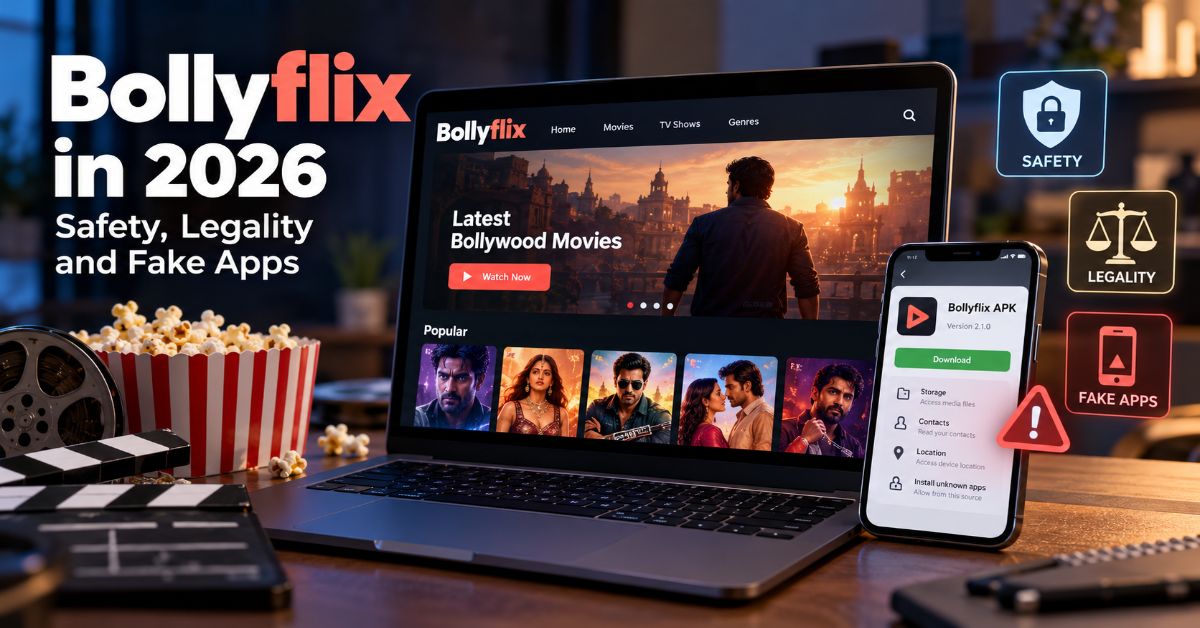
Bollyflix is best treated as a fragmented search term rather than one clearly verified streaming service: current results attach the name to movie-download domains, safety guides, APK pages, and unrelated entertainment apps, while some pages confidently call themselves “official” without proving common ownership or licensing. That identity problem is the central risk because a familiar name can lead to very different websites, publishers, and files.
The current search results also make the topic look simpler than it is. Several high-visibility pages start with a catalog description, then move directly to “free” streaming, downloads, or an APK. Others label every Bollyflix result as the same piracy network. Both shortcuts are weak. Similar branding does not prove that every domain is controlled by the same operator, and a legitimate movie-information app can share a name with an unauthorized streaming page.
A safer way to evaluate the keyword is to separate four questions: who operates the exact domain or app, whether the publisher can be verified, whether the service shows evidence that it has rights to distribute the films it offers, and what the site or app asks the device to do. That same source-first approach appears in Aperplexity’s Hitomi.la domain-status guide, where domain continuity, claimed identity, and current behavior are treated as separate facts.
This guide does not link to piracy mirrors, torrents, or movie-download files. Its purpose is to help readers understand what they are seeing, judge safety and legality more carefully, recover from a suspicious click or APK installation, and find legitimate ways to watch the content they actually want.
What the Bollyflix Name Actually Refers To
The clearest 2026 finding is that the name does not map neatly to one product. Search results include domains presenting large movie catalogs, pages dedicated to “Bollyflix APK,” app explainers, risk reports, and at least one third-party article describing a Google Play movie-discovery app with the same name but a different function. That is a naming collision, not proof that one organization runs everything.
Why identity confusion matters
The distinction matters because users often search a brand name and assume the first familiar logo is the destination they meant to reach. In fragmented ecosystems, that assumption is exactly what clone pages and low-trust download sites exploit.
| Result type | What it may offer | What must be verified |
| Movie-download or streaming domain | Films, series, dubbed or regional titles | Operator identity, licensing, redirects, download behavior |
| Mirror or replacement domain | Similar design and catalog under a new hostname | Whether it is actually connected to an earlier domain |
| APK or XAPK listing | Android installation package | Developer identity, signature, permissions, source, update path |
| Entertainment-information app/site | Trailers, cast, reviews, links to legal services | Publisher identity and whether it actually hosts video |
Aperplexity’s BOMBitUP safety guide shows why this distinction is useful for Android software: mirrors can advertise conflicting versions and “official” status, while versioned publisher evidence is more informative than a download badge.
Why the Current SERP Is Easy to Misread
I reviewed ten high-visibility pages returned for Bollyflix and close variants on October 1, 2026. The sample included a risk-focused app article, APK pages, a MalwareTips site scan, domains branding themselves as official, a live movie-catalog result, and general explainers. Search order can vary by location, device, and personalization, so this is a competitive sample rather than a permanent ranking list.
The recurring pattern was remarkably consistent: definition, content types, legality, safety, APK, and alternatives. The problem is not that those sections are irrelevant. It is that many pages collapse identity, technical safety, and copyright status into one verdict. Several also repeat precise claims about “the official app,” domains, or licensing without showing how those claims were verified.
The gap worth filling is therefore not another longer list of movie categories. It is a verification workflow: identify the exact entity first, then evaluate rights, software provenance, permissions, and recovery steps. That structure answers the mixed navigational, informational, legal, and safety intent behind the keyword without helping a reader locate unauthorized downloads.
How to Tell Whether a Bollyflix Result Is Official
“Official” should be an evidence claim, not a design style. A polished logo, a familiar domain word, or the phrase “official site” in a title tag can be copied in minutes. Stronger signals are harder to fake consistently because they connect a public-facing page to an accountable organization.
| Signal | Stronger evidence | Weak or misleading substitute |
| Operator identity | Named company or publisher with contact details | Anonymous “About” page |
| App identity | Verified store listing from a known developer | APK filename or copied logo |
| Rights transparency | Licensing/distribution information or official provider relationship | “Free HD movies” claim |
| Domain continuity | Stable history and consistent official references | New mirror using similar branding |
| Policies | Specific privacy, terms, support, refunds where relevant | Generic template text |
| Security behavior | No forced installs; predictable permissions | Codec, extension, cleaner, or player prompts |
Signals that matter most
No single row proves legitimacy. The point is convergence. A service becomes more credible when several independent signals line up. If the identity is still unclear, do not let a search ranking resolve the uncertainty for you; search engines index pages, they do not certify movie-distribution rights.
This same identity-versus-behavior distinction appears in Aperplexity’s Incestflix technical safety guide, which treats the exact hostname, permissions, redirects, and operator signals as separate checks instead of turning one brand name into a blanket trust verdict.
Is Bollyflix Legal?
There is no defensible one-word legal answer for every website or app using the name. The legal question depends on the exact service, the rights attached to the specific film or series, the authorization granted to the distributor, and the law in the user’s country.
The licensing test
The core copyright principle is straightforward. The World Intellectual Property Organization’s copyright guidance explains that films are protected works and that rights owners generally control uses such as reproduction, broadcasting, and other exploitation unless a license or legal exception applies. In India, the Copyright Act specifically recognizes copyright in cinematograph films and gives the owner exclusive rights including copying and communication to the public.
That means “free” does not equal “licensed.” A service can legally offer free viewing when the rights holder or an authorized distributor chooses an ad-supported, promotional, public-domain, or other licensed model. The evidence that matters is authorization, not price.
How to verify distribution rights
For a reader, the practical check is to ask whether the exact service identifies the rights holder or distribution partner, whether the title is also listed by an official studio, broadcaster, or licensed platform, and whether the service publishes meaningful terms rather than vague claims. If those signals are absent, the responsible conclusion is that licensing is unverified—not that every similarly named result must have identical legal status.
Is Bollyflix Safe? Separate the Website From the File
Safety is also not one question. A website can be technically reachable yet expose visitors to aggressive advertising, misleading download controls, notification abuse, or credential phishing. An APK can be free of one known malware signature yet still come from an unverifiable publisher, request unnecessary permissions, or be repackaged after an original release.
Google’s Play Protect documentation says the service checks apps from Google Play and also scans apps from other sources for potentially harmful behavior. More strikingly, Android’s March 2026 developer-verification announcement said Google’s analysis found more than 90 times as much malware from sideloaded sources as from Google Play. That does not prove a particular Bollyflix APK is malicious, but it is strong evidence that source provenance materially changes risk.
Browser warning signs
For browser visits, the strongest warning signs are behavioral: repeated redirects, fake play buttons, notification prompts before any useful interaction, requests to install a browser extension or “video player,” fake virus alerts, and login or payment forms on a service whose operator is unclear. A valid HTTPS connection is not enough; it protects the connection to that domain but does not prove the operator or content is trustworthy.
Aperplexity’s Fapello safety and legal-risk guide makes the same broader point for media aggregators: availability, operator identity, and rights provenance are different questions.
Unofficial APKs Deserve a Higher Bar
An APK is an Android installation package, not a trust certificate. When a package is distributed outside a recognized app store, the user has to do more of the verification work normally handled by a store’s publisher identity, signing, policy, and update mechanisms.
Permissions that deserve scrutiny
The most useful permission test is functional necessity. A simple movie-information or streaming app may reasonably need network access and perhaps notifications or media access depending on its design. It should have a clear reason before asking for SMS, contacts, accessibility services, call logs, precise location, microphone, or device-administration privileges.
| Permission or behavior | Why it deserves scrutiny | Safer response |
| SMS or call-log access | Usually unrelated to basic video discovery/playback | Deny unless a documented feature genuinely requires it |
| Contacts | Can expose a private address book | Treat as unnecessary for ordinary streaming |
| Accessibility service | Can provide broad control over screen and interactions | Do not enable for an unknown entertainment APK |
| Install other apps | Can turn one install into a chain | Block unless the publisher and function are verified |
| Microphone/camera | Sensitive sensors with little relevance to passive viewing | Deny unless a clear feature needs them |
| Disable Play Protect or security | Removes a layer designed to detect harmful behavior | Stop the installation |
Publisher and update provenance
Also check the update story. A trustworthy app should have a stable publisher, version history, and repeatable update channel. Random pages advertising v3, v35, “Pro,” “VIP,” or “latest” builds do not establish a coherent release history on their own.
What to Do After a Suspicious Visit or Installation
Response should match the exposure. Merely seeing a page is not the same as installing software or entering credentials, and overreacting can create its own problems—for example, downloading a fake “cleaner” advertised by the same page.
- Close suspicious tabs and do not interact with new pop-ups, fake virus warnings, or download buttons.
- Review browser notification, pop-up, camera, microphone, and download permissions; revoke anything you did not intentionally grant.
- Delete unfamiliar downloaded files that you did not need, and do not open them to “check what they are.”
- Uninstall unknown apps or extensions. On Android, keep Play Protect enabled and run its scan.
- Update the operating system, browser, and trusted security software through their official update channels.
- If you entered a reused password, change it from a trusted device and change it anywhere else you reused it.
- If you submitted card or bank information to an unverified page, contact the financial institution through a known official channel and monitor transactions.
- If the device keeps redirecting, showing ads outside the browser, or behaving abnormally after cleanup, seek professional technical support.
Why People Keep Searching for It
The demand behind Bollyflix is not difficult to understand. Legal movie catalogs are fragmented by country, language, rights window, and subscription. A Hindi-dubbed version may exist on one platform but not another; a regional film can be licensed in India yet unavailable in Pakistan, the UK, or the United States; and recent releases may move between cinema, rental, subscription, and broadcaster windows.
That fragmentation pushes users toward search terms that promise a single catalog. It also creates confusion when a movie-information site, a download mirror, and an APK share similar branding. A useful guide should acknowledge that friction instead of treating the audience as if they are searching only because content is free.
Safer Legal Alternatives to Bollyflix
There is no universal replacement because catalogs change by territory. Instead of promising that one service has a specific title everywhere, start with licensed services available in the viewer’s country. Common places to check include Netflix, Amazon Prime Video, JioHotstar where available, SonyLIV, ZEE5, Hoichoi, official YouTube channels from studios and distributors, and local broadcaster or cinema-on-demand platforms.
Match the service to the viewing need
The selection should follow the content need rather than brand loyalty. Bollywood blockbusters may sit on a broad international service; Bengali cinema may be easier to find on a language-focused platform; older films may appear legally on official studio channels; and dubbed versions should be verified on the title page because audio options vary by region.
Use discovery tools carefully
This is also where availability aggregators can help, provided they operate in the reader’s country and link back to licensed services. Their value is discovery, not rights creation: the final check should still be the provider’s own title page.
A Five-Step Movie-Rights Verification Workflow
1. Identify the exact title and edition. Dubbed, remastered, director’s-cut, and regional versions can have different distribution arrangements.
2. Check the studio, producer, distributor, or broadcaster. Official pages often identify where a film is currently available.
3. Verify the provider’s own title page. A search snippet can be stale; the streaming service’s current page is stronger evidence.
4. Look for transparent licensing signals. Known operator, terms, account support, billing, and ordinary app-store distribution are stronger than anonymous download buttons.
5. Re-check by country. Digital licenses are territorial, so a service can be authorized in one country and unavailable in another.
Common Myths That Create Bad Decisions
| Myth | More accurate explanation |
| “If Google ranks it, it must be legal.” | Search visibility does not prove distribution rights or safety. |
| “Streaming is legal because no file is saved.” | Copyright rules can apply to communication and access models as well as permanent downloads; local law matters. |
| “The right logo proves the APK is official.” | Names, logos, screenshots, and filenames can be copied. |
| “A VPN makes the content legal.” | A VPN changes network routing; it does not create a license to distribute a film. |
| “HTTPS means the site is trustworthy.” | HTTPS encrypts the connection but does not verify licensing or operator intent. |
| “Every Bollyflix domain is the same company.” | Similar branding does not establish common ownership. |
The Future of Bollyflix in 2027
Identity verification will matter more
The most likely 2027 story is not a single stable “official Bollyflix” emerging from the current search clutter. The stronger trend is increased pressure on identity. Android is expanding developer verification, browsers and security tools keep tightening protections against deceptive downloads, and rights holders continue to use domain, platform, and search-removal mechanisms against unauthorized distribution.
Android’s 2026 developer-verification rollout is especially relevant because it is explicitly designed to make it harder for malicious actors to hide behind anonymity when distributing apps outside Google Play. Matthew Forsythe, Android’s Director of Product Management for App Safety, framed the rollout around helping users feel confident about who is behind an app regardless of where it is obtained. The Android Developers announcement also provides the 90× sideloading-malware comparison cited earlier.
For searchers, that means the durable skill is not memorizing a domain extension. Domains, mirrors, app listings, and catalogs can change faster than an article. Verification habits—publisher identity, rights transparency, security behavior, and regional provider checks—age better than a list of “working” URLs.
Key Takeaways
- The keyword maps to multiple sites and app listings, so do not treat familiar branding as proof of one official operator.
- Copyright authorization is the decisive legal signal; “free,” “HD,” or a high search ranking does not prove a license.
- Unknown-source APKs deserve extra caution because Android’s 2026 analysis found substantially higher malware prevalence in sideloaded sources than Google Play.
- Permissions should match function. SMS, contacts, accessibility control, or requests to disable device security are strong reasons to stop.
- After a suspicious interaction, respond to what actually happened: revoke permissions, remove unknown software, scan the device, and rotate exposed credentials.
- Legal catalogs vary by country, so verify the exact title on official provider pages instead of relying on a universal alternatives list.
Conclusion
Bollyflix is a better case study in verification than in movie catalogs. The current search landscape shows why: the same name appears across download sites, APK pages, safety explainers, and entertainment apps, and several pages use “official” language without establishing a single accountable operator.
A reader does not need to solve the entire history of the brand to make a safer decision. Verify the exact domain or publisher, look for clear rights and policy information, avoid forced downloads and excessive permissions, and treat regional catalog differences as normal rather than as proof that an unauthorized mirror is the only option.
That approach is slower than clicking the first result, but it is far more durable. Domains can change. APK filenames can be copied. Search rankings can move. Evidence about who operates a service, what rights it has, and what access it requests remains the part that actually matters.
Frequently Asked Questions
What is Bollyflix?
Bollyflix is a name used across multiple web results associated with movies, streaming, downloads, APKs, and entertainment information. Current evidence does not justify treating every Bollyflix-branded result as one verified company or platform, so the exact domain, publisher, and function should be checked separately.
Is Bollyflix safe?
There is no blanket safety verdict for every site or APK using the name. Risk depends on the exact domain, advertising and redirect behavior, file source, developer identity, requested permissions, and whether the device shows security warnings. Avoid unknown installs, forced extensions, fake update prompts, and excessive permissions.
Is Bollyflix legal?
Legality depends on whether the exact service has authorization to distribute the specific copyrighted content and on the law where the user is located. A service being free or visible in search does not prove licensing. Check rights-holder, distributor, or official provider information.
Is there an official Bollyflix app?
Search results contain different app and APK claims under the Bollyflix name, including movie-information and third-party download listings. A filename or logo is not enough to establish an official app. Verify the developer, store listing, package identity, release history, and the service the app actually provides.
What are the main Bollyflix APK risks?
The main risks are unverifiable publishers, repackaged files, excessive permissions, missing update provenance, and requests to weaken Android security. Google says Play Protect scans apps from outside Google Play, and Android’s 2026 analysis found much higher malware prevalence in sideloaded sources.
What should I do if I installed a suspicious APK?
Uninstall the unknown app, keep Play Protect enabled, run a trusted device scan, review permissions, update Android, and watch for abnormal behavior. If credentials or payment details were entered, secure those accounts separately. Do not download a random “cleaner” offered by the same site.
What are legal Bollyflix alternatives?
Check licensed services available in your country, such as Netflix, Amazon Prime Video, JioHotstar where available, SonyLIV, ZEE5, Hoichoi, official studio YouTube channels, and local broadcaster platforms. Catalogs and audio options vary by territory, so verify each title on the provider’s current page.
Methodology
Research was conducted on October 1, 2026. I reviewed a current sample of ten high-visibility pages for “Bollyflix” and close variants, including Digix Valley, bollyflix.com.pk APK and app pages, MalwareTips, bollyflix.com.co, bollyflix.com.in, bollyflix.courses, The Informative Report, BaseOnTechs, and TechInsightEdge. Search order varies by location, personalization, and index freshness, so the sample is used to identify recurring claims and structural gaps rather than to claim a permanent ranking order.
For factual validation, I prioritized primary or authoritative sources: Google/Android for Play Protect and sideloading security, WIPO and the Indian Copyright Office for copyright principles, and live Aperplexity pages for internal links. Third-party ranking pages were used to understand search intent and competing claims, not as primary authority for legal or security conclusions.
References
- Android Developers. (2026, March 30). Android developer verification: Rolling out to all developers on Play Console and Android Developer Console.
- Google. (2026). Use Google Play Protect to help keep your apps safe & your data private. Android Help.
- Government of India, Copyright Office. (1957, as amended). The Copyright Act, 1957, Chapter III and Chapter XI.
- World Intellectual Property Organization. (2026). Frequently Asked Questions: Copyright.
- World Intellectual Property Organization. (2026). Rights clearance: A guide for independent filmmakers.
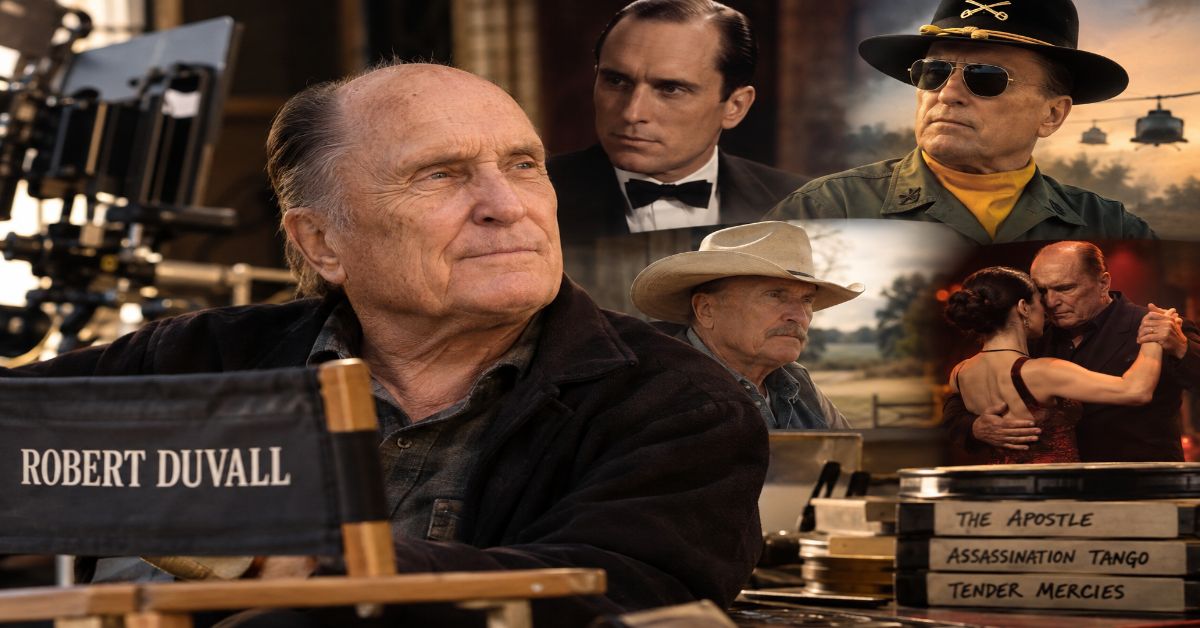
Robert Duvall was far more than the calm consigliere in The Godfather or the cavalry officer in Apocalypse Now: by the end of his life, the sharpest way to understand Robert Duvall is as an actor who repeatedly turned observation into authorship. He died on February 15, 2026, at 95, leaving seven Academy Award nominations, an Oscar for Tender Mercies, two Emmys, and a parallel body of self-directed work that most quick biographies treat as a side note.
That side note is the more revealing story. Duvall spent decades studying how people actually speak, pause, listen, pray, dance and occupy a room. When studios would not finance the worlds he wanted to film, he built his own production vehicle and, in the case of The Apostle, risked millions of dollars of his own savings. He did not separate acting from directing as neatly as Hollywood job titles suggest. The same instincts powered both: watch real people, strip away theatrical display, and let behavior carry the scene.
His tango life in Argentina makes the pattern even clearer. What began as fascination with Tango Argentino on Broadway became dozens of trips, serious study, a marriage rooted partly in that world, and finally Assassination Tango. His career therefore reads less like a sequence of famous parts and more like one long experiment in authenticity: learn a world closely enough that performance stops looking like performance.
The Famous Roles Were Only Half the Career
Duvall’s mainstream résumé is almost absurdly dense. His first major film appearance was Boo Radley in To Kill a Mockingbird, a nearly silent role built from presence rather than dialogue. A decade later, Tom Hagen in The Godfather made restraint itself dramatic. In 1979 he moved in the opposite direction as Lt. Col. Bill Kilgore in Apocalypse Now and Bull Meechum in The Great Santini, earning Oscar nominations for both years’ work.
The Academy’s official record lists seven nominations across supporting and leading categories, with the win for Tender Mercies in 1983. That breadth matters. Duvall was often called a character actor, but the label can hide the fact that he carried films, produced television, directed features and kept moving between prestige studio work and projects he controlled himself.
A useful comparison is Aperplexity’s profile of Stuart Sutcliffe, another creative figure whose public identity can shrink to one famous association even though the fuller story sits in the work around it. The same correction applies here: Duvall was not simply “the guy from The Godfather.” He was a working filmmaker with a distinct theory of how screen behavior should feel.
Related Aperplexity context: Stuart Sutcliffe: The Artist Who Helped Shape the Early Beatles.
His Acting Method: “Talking and Listening”
Duvall repeatedly reduced acting to a plain formula. In a 2010 NPR interview, he described the beginning and end of acting as “talking and listening.” The phrase sounds almost anti-technical, but it came from serious training with Sanford Meisner at the Neighborhood Playhouse and from a career-long suspicion of acting that advertises its own effort.
The distinction is between playing an emotional result and responding to what is actually happening in the scene. Duvall preferred the actor to arrive prepared but not mechanically predetermined. Rehearsal could help, especially when improvisation loosened a stiff script, yet the camera should still capture something that feels discovered rather than executed.
That explains why his quiet performances can be as memorable as the loud ones. Tom Hagen listens before he speaks. Mac Sledge in Tender Mercies often seems to think a feeling rather than announce it. Even Kilgore’s mania is frightening because Duvall plays it as normal behavior for the man, not as a performer signaling madness to the audience.
Three Rules Inside Duvall’s Craft
| Principle | What it meant in practice | Why it mattered |
| Listen before performing | Let the other actor change the moment rather than protecting a fixed delivery. | Scenes gain unpredictability without losing clarity. |
| Research real behavior | Study accents, occupations, communities and physical habits before simplifying them for the camera. | Specificity replaces generic “character acting.” |
| Avoid forced results | Do not manufacture emotion just because a scene is labeled dramatic. | The audience sees behavior first and interprets emotion for itself. |
Butchers Run Films Turned Independence Into a Working Method
The National Endowment for the Arts records that Duvall formed Butchers Run Films in 1992 so he could take a more active role in development and production. That decision was not a vanity detour. It solved a structural problem: a famous actor could still be unable to get an unconventional film financed if the subject did not fit studio expectations.
The company gave him leverage over material built around atmosphere, locality and behavior. It also connected his commercial acting career to his independent ambitions. Large studio films paid well and kept him visible; smaller projects let him spend that capital, literal and artistic, on stories he did not want normalized by committee.
That model is especially important because it complicates the usual picture of creative freedom. Duvall did not reject Hollywood. He used Hollywood selectively, then created a separate lane when the system would not support his priorities. His independence was less an identity than a financing strategy.
The Apostle Was the Purest Expression of That Strategy
Duvall wrote The Apostle in the 1980s after years of interest in American Pentecostal preaching, but studios repeatedly passed. Contemporary 1998 reporting describes a project that took roughly 13 years to reach theaters. Eventually he financed the film himself for about $5 million and served as writer, director, producer and star.
The gamble was not purely romantic. The Los Angeles Times reported that October Films bought the movie after a Toronto festival bidding war, allowing Duvall to recover his investment. The film then earned him another Academy Award nomination for best actor.
More important than the financing is what the money bought him: tonal control. The film treats Pentecostal practice as a lived culture rather than an exotic prop. Its central preacher is charismatic, violent, sincere, vain and spiritually hungry at the same time. A more conventional studio treatment might have pushed the character toward either satire or sainthood. Duvall was interested in contradiction.
How The Apostle Differs From a Standard Star Vehicle
| Choice | Typical star vehicle | Duvall’s approach in The Apostle |
| Subject | Built around a marketable genre or persona | Built around Pentecostal preaching and moral contradiction |
| Financing | Studio or outside capital carries most risk | Duvall personally carried roughly $5 million of production risk |
| Performance style | Star performance stays visually central | Professional actors share space with locals and community texture |
| Narrative engine | Plot escalation and conventional redemption beats | Behavior, sermons, relationships and consequence drive the film |
The Tango Years Were Not a Hobby Footnote
Duvall’s connection to Argentina is one of the clearest examples of life feeding directly into the work. After seeing Tango Argentino on Broadway in the 1980s, he became serious about the dance and repeatedly traveled to Buenos Aires. By 2003, the Los Angeles Times reported that he had visited Argentina more than 35 times.
He met Luciana Pedraza in Buenos Aires and developed Assassination Tango from the world he had been studying. The same Los Angeles Times account adds an important correction to a common retelling: Francis Ford Coppola helped finance the movie through American Zoetrope. Duvall still wrote, directed, produced and starred in it, but it should not be described as simply another fully self-financed feature.
That distinction makes the film more interesting, not less. Duvall’s independence did not mean refusing collaborators. It meant keeping the subject personal enough that the collaboration served the obsession rather than replacing it. Tango affected the setting, rhythm, casting and physical language of the film. Pedraza was not decorative casting; she came from the real relationship and dance world the movie was trying to capture.
For readers interested in dance as a shared practice rather than spectacle, Aperplexity’s date night ideas guide also treats dance classes as participation rather than passive entertainment. Duvall’s tango life was the extreme version of that principle: he learned the culture by entering it.
A Director Who Wanted the Camera to Serve Behavior
Across Duvall’s personal films, a recurring choice is to reduce the distance between performance and ordinary life. He used nonprofessional performers, worked in real communities, and valued actors who could behave naturally without telegraphing significance. Earlier documentary work such as We’re Not the Jet Set, about a Nebraska rodeo family, already pointed toward that preference for observed life.
The directorial implication is subtle but radical: the camera should adapt to human behavior, not force behavior into a rigid technical pattern. That does not mean the films are accidental. It means the staging tries to preserve the appearance of life unfolding on its own terms. Duvall’s strongest scenes often feel loose because the structure is hidden inside the observation.
This is also why his work can look modest beside more visibly stylized filmmakers. The achievement is not the absence of craft. It is craft used to conceal itself.
The Military Background Added Texture, Not a Single Type
Duvall grew up in a Navy family and served in the U.S. Army before acting full time. That background helped him inhabit military figures with unusual specificity, but it did not trap him in one screen identity. Bull Meechum in The Great Santini, Kilgore in Apocalypse Now and his later Western characters all use authority differently.
Aperplexity’s Memorial Day 2026 guide provides broader context for U.S. military remembrance and service traditions. Duvall’s own service is biographical context, but his performances were not patriotic shorthand; they were studies of temperament, hierarchy and behavior.
Awards Matter, but They Do Not Explain the Legacy
Awards give useful scale. Duvall won the Academy Award for Tender Mercies, received seven Oscar nominations in total, and won two Primetime Emmys. The Television Academy lists five Emmy nominations and two wins, including his work on Broken Trail. Those numbers place him firmly inside the institutional history of American acting.
But a trophy list cannot explain why other actors studied him. The more durable legacy is procedural: observe longer, simplify harder, and distrust the temptation to “show” emotion. That approach influenced performance directly and also shaped the kind of films he wanted to make.
For a wider look at how entertainment institutions organize audiences and media businesses beyond individual performers, see Aperplexity’s Arab Media Group profile. Duvall’s career sat on the opposite end of that scale: one performer repeatedly trying to preserve human detail inside large media systems.
What the Top-Ranking Profiles Commonly Miss
The current search results are strong on chronology and famous roles. The gap is the connective tissue. Duvall’s acting method, production company, self-financing, directing and tango are often treated as separate trivia. Read together, they reveal one consistent artistic argument: reality is not found by making a performance bigger. It is found by looking more carefully.
Three underused insights follow from that pattern. First, The Apostle was not just a passion project; it was proof that a bankable actor could convert accumulated studio earnings into creative autonomy. Second, his directorial style grew naturally from the same listening-based method he used as an actor. Third, tango was not escapism from acting. It trained the same attention to timing, partnership, rhythm and response that defined his screen work.
That is why his career resists the easy split between “actor” and “filmmaker.” He was both, but more precisely he was an actor-auteur: a performer whose directing choices grew out of a deeply specific theory of performance.
The Future of Robert Duvall’s Legacy in 2027
Duvall’s death in 2026 will likely push retrospectives toward the obvious landmarks: The Godfather, Apocalypse Now, Tender Mercies and Lonesome Dove. Those works deserve the attention, but the more useful 2027 reassessment would expand the canon around them. The Apostle, Angelo My Love, We’re Not the Jet Set and Assassination Tango show how he worked when he had more authorship and less industrial protection.
Streaming availability will determine how much of that directing work younger viewers can actually encounter. The cultural challenge is not simply preserving his famous performances; those are already secure. It is keeping the smaller films visible enough for actors and filmmakers to see the full method behind the reputation.
The larger trend also favors renewed interest in figures like Duvall. As digital production makes images cheaper and more polished, performances that feel unmanufactured become more valuable, not less. His emphasis on listening, local detail and real communities offers a counterweight to cinema that is technically smooth but behaviorally generic. That is an interpretive forecast, not a measurable prediction, but it follows directly from what made his work distinctive in the first place.
Key Takeaways
- Duvall’s seven Oscar nominations show range, but his directing and production choices explain the deeper shape of his career.
- His “talking and listening” philosophy came from disciplined training and a deliberate rejection of forced emotional display.
- Butchers Run Films gave him a practical mechanism for developing projects studios would not prioritize.
- The Apostle was the clearest financial risk: roughly $5 million of his own money after years of rejection.
- Assassination Tango was deeply personal but not simply self-financed; contemporary reporting credits American Zoetrope with financing support.
- Tango, local casting and research-heavy preparation were all extensions of the same artistic instinct: behavior before spectacle.
- The best 2027 reassessment of Duvall will treat him as an actor-auteur, not only a legendary supporting player.
Conclusion
Robert Duvall’s reputation is secure because the performances are unforgettable. Tom Hagen’s restraint, Kilgore’s terrifying certainty, Mac Sledge’s quiet recovery and Gus McCrae’s warmth all remain part of American screen history. Yet the career becomes more coherent when those roles are placed beside the movies he struggled to make himself.
He kept returning to the same question from different directions: what makes behavior feel true on camera? Sometimes the answer was listening more closely to another actor. Sometimes it meant spending years around preachers, cowboys or tango dancers. Sometimes it meant risking his own money because a studio could not see the value of a subject he understood intimately.
That persistence is the distinctive legacy. Duvall did not become independent by leaving the system. He used mainstream success to create room beside it, then filled that room with films that looked, sounded and moved according to his own observational instincts. The result is a body of work that belongs to both Hollywood history and the history of American independent filmmaking.
Frequently Asked Questions
When did Robert Duvall die?
Robert Duvall died on February 15, 2026, at age 95. His wife, Luciana Duvall, said he died peacefully at home. Major U.S. outlets and industry organizations reported the death the following day.
What was Robert Duvall’s most famous role?
There is no single objective answer. Tom Hagen in The Godfather and Lt. Col. Kilgore in Apocalypse Now are among his most recognizable roles, while Tender Mercies brought his Academy Award win and Lonesome Dove became one of his most celebrated television performances.
How many Oscars did Robert Duvall win?
He won one Academy Award, for Best Actor in Tender Mercies. Across his career he received seven Oscar nominations, spanning both leading and supporting categories.
Did Robert Duvall finance The Apostle himself?
Yes. Contemporary reporting says Duvall invested about $5 million of his own money after years of failed attempts to secure conventional studio financing. He also wrote, directed, produced and starred in the film.
Did Robert Duvall self-finance Assassination Tango?
Not in the same way as The Apostle. Duvall wrote, directed, produced and starred in Assassination Tango, but Los Angeles Times reporting says Francis Ford Coppola helped arrange financing through American Zoetrope.
What was Robert Duvall’s acting technique?
Duvall often described acting as “talking and listening.” He valued truthful response, observation and simplicity, drawing on his Neighborhood Playhouse training while resisting performances built around showing a predetermined emotional result.
Why was tango important to Robert Duvall?
Tango became a serious parallel passion. He traveled repeatedly to Argentina, studied the dance, met Luciana Pedraza in Buenos Aires and built Assassination Tango around the culture, rhythm and relationships he encountered there.
Methodology
This article was researched on September 30, 2026. I reviewed a current ten-result competitive sample for “Robert Duvall” and close biographical variants, including Wikipedia, the Los Angeles Times, The Washington Post, The Guardian, Le Monde, the National Endowment for the Arts, IMDb, Legacy.com, Vanity Fair, and BFI / Sight and Sound. Search rankings vary by location, device and index freshness, so this is a competitive sample rather than a permanent global ordering.
For factual validation, priority went to primary or institutional records where available: the Academy of Motion Picture Arts and Sciences for Oscar history, the Television Academy for Emmy records, the National Endowment for the Arts for the Butchers Run Films timeline, and archived Duvall interviews for his acting philosophy. Contemporary Los Angeles Times reporting was used for The Apostle financing and the Argentine tango / Assassination Tango history. The Washington Post and Associated Press were used to verify his 2026 death.
This article was drafted with AI assistance and reviewed by a human editor before publishing. All data, citations, and claims have been independently verified against primary sources.
References
- Academy of Motion Picture Arts and Sciences. (2015). 87th Annual Academy Awards nominations fact sheet.
- Associated Press. (2026, February). Al Pacino, Francis Ford Coppola and others pay tribute to Robert Duvall.
- Bernstein, A. (2026, February 16). Robert Duvall, chameleon of the silver screen, dies at 95. The Washington Post.
- Goldstein, P. (1998, March 18). Gospel Truth. Los Angeles Times.
- Los Angeles Times. (2003, March 27). Hollywood is still in the grasp of the tango.
- National Endowment for the Arts. (n.d.). Robert Duvall.
- National Public Radio / WBUR. (2010). Robert Duvall, still living “in the potential.”
- Television Academy. (2026). Robert Duvall: Awards and nominations.
- Turner Classic Movies. (2026). TCM remembers: Robert Duvall.
-

 Technology1 month ago
ThomsonKids.com: Website Guide, Topics & Trust Check
-
 Technology1 month ago
Hitomi la in 2026: Domain Status, Safety and Risks
-

 General1 month ago
Voozon.com: What It Is and How the Platform Works
-

 Business1 month ago
incabizgrowth.com Review: Content, Trust & Use
-

 Technology1 month ago
thesindi com Review: What TheSindi.com Really Offers
-

 Technology2 weeks ago
Scrolller in 2026: How It Works, Risks and Alternatives
-

 Business1 month ago
5starsstocks.com Review: Features, Trust and Safety
-

 Technology3 weeks ago
Web Development Best Practices: A 2026 Quality System