
Entertainment
nflbite: Safety, Legality & NFL Streaming Options

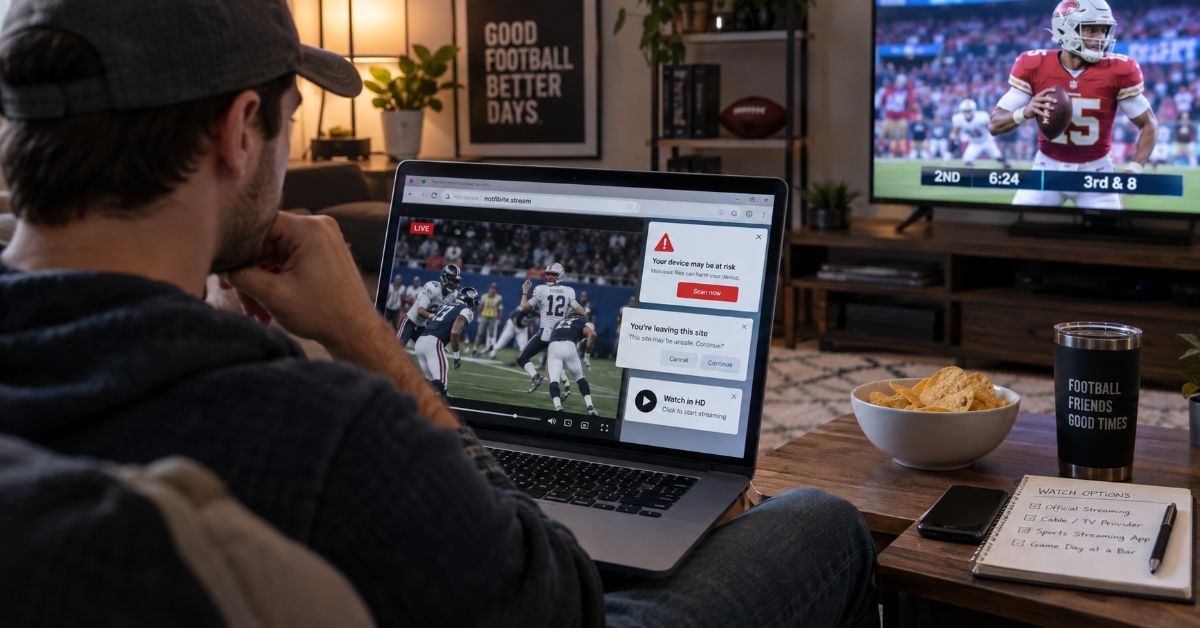
Kickoff is minutes away, your local channel is showing a different game, and a search for nflbite looks like the fastest route to a live stream. I understand why that search happens: the real goal is not to study a website, but to watch an NFL game with as little friction and cost as possible. The important part is knowing what the name represents, what risks come with unofficial stream-link pages, and which legitimate service actually carries the matchup you want.
I treat nflbite as a search term for an unofficial NFL streaming ecosystem, not as an official NFL product. Pages using the name have historically promoted free links to third-party game streams and have been associated with the old Reddit NFL-streaming community. That does not mean every page using the label has the same operator, the same domain, or the same safety profile. In 2026, multiple sites and social pages still use the NFLBite name, while the NFL’s own viewing guide points fans to authorized services such as NFL+, NFL Sunday Ticket, network partners, and other licensed streaming platforms.
That distinction matters because a free stream can cost more than money if it pushes deceptive ads, browser notifications, fake updates, credential prompts, or malicious downloads. It also may disappear mid-game, change domains, or provide a stream without documented broadcast rights. This guide explains what nflbite is, why its legal and security status deserves caution, how to recognize risky streaming pages, and how to choose an official option based on the type of NFL game you want to watch. The aim is simple: help you get from search box to kickoff without trading reliability, privacy, or account security for a link that may not last.
What is nflbite? Quick answer
NFLBite is a name used by websites and online communities that aggregate or promote free links to NFL game streams. It is not listed by the NFL as an authorized viewing service, so readers should not assume that a page using the NFLBite name is official, licensed, or safe simply because it appears in search results.
The search intent behind the term is mainly navigational with a strong transactional goal: find a working live NFL stream quickly. The safer way to satisfy that intent is to identify the game’s broadcast category first, then use the licensed service that covers it in your region.
How did NFLBite become associated with free NFL streams?
NFLBite became known in the wider NFL streaming conversation after Reddit’s r/NFLStreams community was removed. Pages using the NFLBite name have described themselves as successors or aggregators for links that once circulated through Reddit. Current search results still show more than one domain and social profile using the name, which is one reason it is better understood as a label or ecosystem than as a single, reliably verified service.
Why does the nflbite name still attract searches?
The appeal is straightforward: NFL broadcast rights are split across local channels, national networks, league products, and streaming platforms. A fan may have access to one game but not another, especially when an out-of-market Sunday afternoon matchup is involved. A free-link aggregator appears to solve that fragmentation in one place, even though the tradeoff is uncertainty about rights, reliability, and site security.
This table separates the brand impression from what can actually be verified.
| Question | What can be verified | Practical meaning |
| Is NFLBite an NFL product? | No. The NFL viewing guide lists authorized services and NFLBite is not among them. | Do not treat the name, logo, or search ranking as proof of authorization. |
| Is there one confirmed NFLBite site? | Multiple domains and social pages use the name. | A familiar name does not guarantee the same operator or safety controls. |
| What do NFLBite-style pages offer? | Typically links or access claims for free NFL streams. | The key question is whether the underlying stream has broadcast rights. |
| Why do fans search for it? | Convenience, cost avoidance, and access to games outside a local package. | Match the game type to a licensed service instead of chasing changing links. |
Is nflbite legal and safe to use?
There are two separate issues: copyright authorization and cybersecurity. They should not be collapsed into one yes-or-no claim because a page can be technically clean but still point to an unauthorized stream, or it can make legal-sounding claims while exposing visitors to aggressive advertising and malicious downloads.
What is the legal concern with NFLBite-style streams?
NFL games are copyrighted broadcasts distributed through licensed partners. A website that has no documented agreement with the rights holder should not be assumed to have permission to retransmit or distribute those broadcasts. Because NFLBite is not listed in the NFL’s official ways-to-watch resources, the safest conclusion is that users should verify rights through the NFL or an authorized broadcaster rather than relying on a site’s own claims.
Laws differ by country, and liability can depend on what a service is doing and how a viewer accesses it. This article is not legal advice. The practical rule is simpler: if the source cannot show that it is an authorized NFL broadcaster or distribution partner, do not treat free access as evidence that the stream is legitimate.
What are the security risks of unofficial sports-streaming sites?
The U.S. Federal Trade Commission has warned that pirated streaming apps and sites can spread malware, steal login credentials, expose payment information, trigger pop-ups, or redirect users to unwanted pages. Sports-stream pages are especially attractive to bad actors because fans are often in a hurry and willing to click through multiple overlays before a game starts.
A page does not need to install a traditional virus to create harm. Permission prompts can enable persistent browser notifications, fake player buttons can open phishing pages, and a request to install a codec or extension can turn a simple viewing attempt into an account or device compromise.
Use these warning signs as a quick risk check before interacting with any unfamiliar streaming page.
| Warning sign | Why it matters | Safer response |
| Repeated pop-ups or forced redirects | Common pattern for deceptive ads and malicious landing pages. | Close the tab and avoid returning through the same link. |
| Prompt to install a player, codec, APK, or browser extension | Streaming video in a normal browser rarely requires random software. | Do not install it. Use an official app or supported browser. |
| Request for card details on a page advertised as free | May be a subscription trap or phishing attempt. | Leave the page and use a verified provider checkout. |
| Browser notification request before playback | Can be used to push scam alerts after you leave the site. | Choose Block or Deny unless you intentionally trust the site. |
| Lookalike domain or misspelled brand | Copycat domains can imitate familiar names. | Navigate from the official league or broadcaster site instead. |
What are the best legal alternatives to nflbite in 2026?
The best alternative depends on the game, not just the team. NFL rights are divided by local market, day, network, and whether the matchup is in-market or out-of-market. As of August 30, 2026, the official NFL viewing guide lists NFL+, NFL Sunday Ticket, FOX One, Peacock, Paramount+, ESPN, Amazon Prime Video, Netflix, and traditional TV providers among the ways fans may access games, with availability varying by matchup and location.
NFL+ for mobile local and primetime games
NFL+ is the league’s own subscription service in the United States. For the 2026 season, the standard plan includes live local and primetime regular-season and postseason games on phones and tablets, NFL Network, out-of-market preseason games, and live game audio. NFL+ Premium adds NFL RedZone plus full, condensed, and All-22 game replays across supported devices.
NFL’s 2026 media information lists standard pricing at $6.99 per month or $49.99 per year, and Premium at $14.99 per month or $99.99 per year. Promotional pricing can change, so the league’s subscription page should be checked before purchase.
NFL Sunday Ticket for out-of-market Sunday afternoon games
NFL Sunday Ticket on YouTube is designed for regular-season Sunday afternoon games that are not carried on your local CBS or FOX broadcast. It can be purchased as a standalone YouTube Primetime Channel or added to an eligible YouTube TV plan. It does not replace every other NFL service because local games, national broadcasts, and postseason coverage are handled separately.
YouTube also offers features such as multiview and game-day tools, while plan pricing and promotions can vary during the season. If your main frustration is that your favorite team’s Sunday game is outside your local market, Sunday Ticket is the official product built for that problem.
Network and streaming partners for national games
Nationally distributed games may require a separate partner. Prime Video carries Thursday Night Football in the United States. Peacock is associated with NBC coverage, Paramount+ can carry local CBS games in supported markets, FOX One can provide local FOX access, and ESPN or ABC coverage depends on the specific game and subscription. The NFL’s personalized ways-to-watch tool is useful because it maps the schedule to your location and the services you already have.
NFL Game Pass for viewers outside the United States
International viewers should not assume U.S. packages apply in their country. DAZN’s NFL Game Pass International is available in many markets and offers live and on-demand NFL coverage, including the playoffs and Super Bowl, with regional exceptions. Rights can vary, so the correct starting point is the NFL’s international viewing page or the local DAZN offer for your country.
This comparison shows which official option solves which viewing problem.
| Viewing need | Best official starting point | Important limitation |
| Local or primetime game on phone/tablet in the U.S. | NFL+ | Live local and primetime viewing is mobile/tablet focused. |
| Out-of-market Sunday afternoon game in the U.S. | NFL Sunday Ticket on YouTube or YouTube TV | Does not include every local, national, or postseason game by itself. |
| Thursday Night Football in the U.S. | Prime Video | Requires Prime Video access and applies to designated TNF games. |
| CBS, FOX, NBC, ESPN/ABC game | Local channel or licensed streaming partner | Availability depends on market and the specific broadcast. |
| Every game while outside the U.S. in a supported market | NFL Game Pass International on DAZN | Country-specific rights and exceptions apply. |
How do I choose the right NFL streaming option without overpaying?
Instead of subscribing to everything, work backward from the games you actually watch. This approach usually costs less and removes the frustration that sends people searching for nflbite in the first place.
Check whether the game is local, national, or out-of-market. The NFL’s ways-to-watch page can personalize this by location.
Identify the broadcaster for that game. CBS, FOX, NBC, ESPN/ABC, Prime Video, and other partners cover different windows.
Use NFL+ when its mobile live-game limits fit your habits, especially if you also value NFL Network, audio, or replays.
Use NFL Sunday Ticket only if out-of-market Sunday afternoon access is a recurring need.
Review cancellation terms, free trials, bundles, student or eligibility discounts, and current promotions before paying.
Re-check the schedule later in the season because flex scheduling can change game times and broadcast windows.
A practical example: following one out-of-market team
Suppose you live in Chicago but follow a team whose Sunday afternoon games are usually shown in another region. A local streaming package alone will not reliably solve that problem. Sunday Ticket is designed for those out-of-market Sunday games, while nationally televised appearances can still fall on Prime Video, NBC, ESPN/ABC, or another partner. Mapping the schedule first prevents paying for overlapping services that do not address the missing games.
What should you do if you already visited an NFLBite-style site?
Visiting an unfamiliar page does not automatically mean your device is compromised. The response should match what you clicked, installed, or entered.
If you only opened the page, close it and clear any unwanted notification permissions you may have granted.
If you downloaded an app, extension, codec, or installer, remove it and run an up-to-date security scan.
If you entered a password, change that password on the real service and enable multi-factor authentication where available.
If you entered payment information, contact the card issuer, review recent transactions, and replace the card if advised.
If the browser keeps redirecting or showing alerts, review extensions, notification permissions, and startup settings before using the device for sensitive accounts.
The FTC’s consumer guidance on illegal streaming specifically recommends avoiding pirated content and using current security software if malware is suspected. That advice is more useful than trying to decide whether one particular mirror or clone is safer than another.
How was this nflbite guidance verified?
I based the viewing recommendations on first-party sources from the NFL and its licensed distribution partners, then used U.S. Federal Trade Commission consumer guidance for the malware and scam risk discussion. I did not treat promotional claims from NFLBite-branded pages as proof of licensing or security.
NFL Ways to Watch – Official game-by-game viewing guide and partner list.
NFL+ 2026 information – 2026 plan features and published standard pricing.
YouTube NFL viewing options – Sunday Ticket scope, local/national coverage, and standalone availability.
YouTube Sunday Ticket pricing and billing – Plan structure and billing notes.
FTC illegal streaming malware guidance – Consumer security risks from pirated streaming apps and sites.
DAZN NFL Travel Pass / Game Pass information – International NFL Game Pass scope and regional limits.
Key takeaway
NFLBite solves a real search problem on paper: fans want one fast route to a game that may be scattered across different rights holders. The weakness is that a free-link brand does not prove authorization, stability, or security. The most reliable approach is to identify the game’s broadcast category, use the NFL’s official viewing guide, and choose the licensed service that covers that matchup in your location.
Frequently Asked Questions about nflbite
Is NFLBite an official NFL streaming service?
No. NFLBite is not listed in the NFL’s official ways-to-watch resources. Official options include NFL+, NFL Sunday Ticket, network partners, and licensed streaming services.
Why are there multiple NFLBite websites?
The name has been used by different domains and online pages over time. That makes it difficult to verify one canonical operator, so a matching brand name should not be treated as proof that a site is authentic or safe.
Can a VPN make an unofficial NFL stream legal?
A VPN changes how your internet connection is routed and can improve privacy, but it does not create broadcast rights for a stream. Authorization depends on the content provider and applicable law, not on whether a VPN is used.
What is the cheapest official way to watch some NFL games?
It depends on the games you need. NFL+ can be a lower-cost option for live local and primetime games on phones or tablets, while free over-the-air local broadcasts may also cover some games with an antenna. Out-of-market Sunday access generally requires a different product.
Does NFL Sunday Ticket include every NFL game?
No. It focuses on out-of-market Sunday afternoon regular-season games. Local broadcasts, national games, Thursday Night Football, and postseason games may require other services or channels.
How can I check where one specific NFL game is streaming?
Use the NFL’s official Ways to Watch tool and enter your location, then check the matchup and broadcaster. This is more reliable than assuming the same service carries every game on a team’s schedule.
I understand why NFLBite attracts attention: kickoff is minutes away, the game is not in your local package, and a search result seems to offer a free route in seconds. But the name does not identify a licensed NFL broadcaster. It refers to an unofficial link-aggregation model in which a schedule page can send visitors to third-party streams, so the page you recognize and the video host you finally reach may be controlled by different parties.
That distinction is the core of the safety and legality question. In 2026, it is more useful to ask whether the exact domain is trustworthy, whether the final stream is authorized, what the browser is being asked to install or permit, and which official service actually carries the matchup. U.S. enforcement also became more visible this year. On July 20, 2026, the Justice Department said more than 1,000 domains had been seized across three World Cup streaming actions. In March, the U.S. Trade Representative made live sports piracy the issue focus of its 2025 Notorious Markets review.
I reviewed current NFL and YouTube viewing documentation, federal enforcement releases, FTC malware guidance, and the formats used by pages ranking for this query. The pattern is clear: many competing articles spend most of their space listing other unofficial sites. I take a different approach here. I separate the aggregator from the stream host, explain why moving domains create an identity problem, compare current licensed viewing options, and show the specific browser behaviors that should make a viewer stop. If your priority is reliable access, the best choice starts with the exact game, device, region, and coverage gap rather than with a generic free-versus-paid list.
What Is NFL Bite and How Does the Aggregator Work?
The service is commonly described as a fan-oriented directory that organizes links around live NFL games. The useful technical distinction is between discovery and delivery. A schedule page can help a visitor find a matchup, but the underlying video may be loaded from another host with its own advertising, tracking, permissions, uptime, and rights status.
That architecture is why two visitors can report very different experiences under the same brand. One may see a simple game index while another reaches a redirect chain or aggressive host. I use the same distinction in my Quick Links navigation guide: curation can make discovery easier without validating every destination behind a link.
- Index layer: organizes games, times, teams, or link choices.
- Link layer: transfers the visitor to another page or host.
- Media layer: delivers the video when a stream is available.
- Risk layer: ads, tracking, downloads, prompts, and redirects can appear at more than one step.
Why the aggregator-versus-host distinction matters
A familiar front page cannot guarantee that every linked destination is safe, stable, or licensed. I therefore avoid blanket claims such as “the site is safe” or “the site contains malware.” A more useful assessment follows the exact hostname, the redirect path, the permissions requested, and whether any file or extension is pushed to the device.
Why Do NFL Bite Domains and Mirrors Change?
Unofficial streaming brands can become fragmented across mirrors, copies, and lookalikes. The practical risk is identity, not only downtime. When users expect the address to move, a copycat can borrow the familiar name, layout, and team graphics and still look plausible to someone searching quickly before kickoff.
Recent enforcement shows why domain continuity can be fragile across the wider live-sports piracy ecosystem. On July 20, 2026, the Justice Department announced that more than 1,000 domains had been seized across three World Cup actions. That announcement was not a finding about this NFL-focused brand, but it demonstrates that unauthorized sports-streaming infrastructure can be disrupted at large scale.
I treat every replacement hostname as a fresh trust decision. I apply the same brand-versus-domain logic in my domain status and safety guide: a recognizable brand name and a currently controlled hostname are separate pieces of evidence.
A stronger mirror-checking rule
Do not treat a matching logo or layout as proof of identity. Check the exact hostname, avoid shortened or obfuscated links, and leave if the page unexpectedly asks for a browser extension, APK, video-player download, credentials, card details, or notification permission. Those requests create new risk even when the branding looks familiar.
Is Using an Unofficial NFL Stream Legal?
The legal answer depends on the country, the stream, and the user’s conduct. What can be stated clearly is that the NFL and its partners license game rights, while an unofficial stream may operate without those permissions. U.S. enforcement has repeatedly targeted commercial services and domains involved in unauthorized live sports distribution.
The Justice Department has also explained in a 2024 streaming case that the Protecting Lawful Streaming Act targets commercial, for-profit piracy services and does not criminalize users of illegal apps under that statute. That is not a universal immunity. Copyright, contract, circumvention, downloading, redistribution, and local enforcement rules can differ by jurisdiction.
For practical certainty, I would verify the matchup through the NFL Ways to Watch guide or the authorized broadcaster serving your market. A stream appearing in search results does not prove that it carries licensed rights.
Is the Aggregator Safe to Use?
Safety can change after the first click. A schedule page presents a different exposure from a host that pushes downloads, redirects, notification permissions, or credential forms, so I focus on what each destination asks the browser or device to do.
The Federal Trade Commission lists repeated pop-ups, unexpected browser toolbars, redirects, and other abnormal behavior among signs associated with malware. That browser-level framing also matches my ChromiumFX browser-security analysis, where the software displaying web content is part of the security surface rather than a neutral window.
Warning signs that should end the session
- A play button opens unrelated gambling, dating, crypto, or “system cleaner” pages.
- The page demands notification permission before it will show content.
- A “required” codec, extension, APK, desktop player, or update appears.
- A login form requests credentials for an unrelated account.
- A “free verification” flow requests card details or a small authorization charge.
- The browser displays a deceptive-site, dangerous-download, certificate, or malware warning.
What should I do after a suspicious click?
If you only opened a page and closed it, review browser downloads and notification permissions. Do not open unfamiliar files. If you entered a password, change it on the real service and update reused passwords. Persistent redirects or unexpected browser behavior justify a security scan and browser reset.
The FTC malware guidance provides a current consumer baseline for detecting and responding to suspicious behavior.
Unofficial Aggregators vs Official NFL Viewing in 2026
Many competing guides stop at a “free versus paid” comparison. NFL rights are fragmented by day, market, device, and package, so the useful comparison is what each option actually solves.
| Option | Best for | 2026 cost signal | Main limitation | Rights / risk position |
| Unofficial link aggregator | Finding third-party links | Usually free at point of access | Uptime, domain identity, host behavior, and stream rights can vary | Rights and downstream security are unverified |
| NFL+ | Local and primetime games on mobile/tablet, NFL Network, audio | $6.99/mo or $49.99/yr | Live game access depends on device, game type, and rights | Official NFL service |
| NFL+ Premium | RedZone, replays, All-22, NFL Pro | $14.99/mo or $99.99/yr | Does not replace Sunday Ticket for live out-of-market Sunday afternoon games | Official NFL service |
| NFL Sunday Ticket | U.S. out-of-market Sunday afternoon games | Varies by current offer and purchase channel | Does not include every local, national, preseason, or postseason game | Licensed NFL package on YouTube |
| Network / streaming partners | Specific local, national, and exclusive games | Varies by provider | Coverage follows the schedule, market, and subscription | Licensed broadcasters and partners |
Source basis: current NFL Media, NFL Ways to Watch, and YouTube Help documentation reviewed September 6, 2026. Prices and packages can change.
Which Official NFL Option Fits Your Use Case?
For local and primetime games on a phone or tablet, NFL+ is the lowest-cost direct league option in the current documentation. The standard tier is $6.99 per month or $49.99 per year. Premium costs $14.99 per month or $99.99 per year and adds RedZone, replays, All-22 coaches film, and NFL Pro features.
For out-of-market Sunday afternoon games in the United States, Sunday Ticket solves a different gap. YouTube says it covers regular-season Sunday afternoon games not carried locally. It can be bought through Primetime Channels without YouTube TV or added to YouTube TV, whose base service is currently $82.99 per month before Sunday Ticket.
Other games can sit with CBS, FOX, NBC, ABC/ESPN, NFL Network, Prime Video, Peacock, Paramount+, Netflix, or another authorized partner. I would check the matchup first rather than buy a bundle on reputation alone.
A lower-cost decision path
- Identify the game, date, and whether it is local, national, or out of market.
- Check whether an over-the-air local broadcaster already carries it.
- Use NFL+ when its mobile local and primetime coverage matches your need.
- Use a network-specific service when the game belongs to that partner and the subscription has wider value for you.
- Consider Sunday Ticket when out-of-market Sunday afternoon games are the recurring gap you need to solve.
What Does the 2026 Evidence Say About Live Sports Streaming?
The current picture is larger than one site. Enforcement is becoming more coordinated while legitimate NFL access remains split across rights holders. That tension helps explain why simple aggregators remain attractive despite legal, reliability, and security trade-offs.
| Date | Verified development | Why it matters |
| March 3, 2026 | USTR released its 2025 Notorious Markets review with live sports piracy as the issue focus | Shows current federal policy attention to unauthorized sports broadcasts and consumer risk |
| July 20, 2026 | DOJ said more than 1,000 World Cup streaming domains were seized across three actions | Shows that sports-streaming domain disruption can happen at large scale |
| August 2026 | NFL Media published standard NFL+ and NFL+ Premium pricing for the 2026 season | Provides a current official baseline for lower-cost direct NFL access |
| September 2026 | NFL Ways to Watch lists a multi-service broadcast and streaming ecosystem | Confirms that licensed access remains fragmented by game, service, device, and market |
A June 2026 federal announcement captured the consumer-security concern clearly. HSI Special Agent in Charge Eric Weindorf said, “When you open your network to illegal streaming sites, you’re taking a significant risk.” The DOJ announcement connected that warning to malware and insecure connections.
Three Insights Most NFL Streaming Guides Miss
1. The security boundary is each hop, not the brand
An aggregator can look ordinary while a later host behaves aggressively. Trust therefore belongs to each hostname, redirect, permission request, and download along the path, not just the logo at the start. That also explains why user reports can conflict.
2. Moving domains create an impersonation advantage
When visitors expect addresses to change, domain instability becomes a social-engineering weakness. A copycat only needs to look plausible while a fan is rushing to find a game. That is a hidden cost of mirror culture that many “is it down?” pages miss.
3. Official streaming has a routing problem, not only a price problem
Fans can face different destinations by day, market, and exclusive rights. The friction pushing some viewers toward one-page indexes is partly a discovery problem. If live reactions and play-by-play context are enough, my Threads vs X comparison explains why a real-time social platform can sometimes solve the information need without creating a streaming-rights problem.
The Future of NFLBite in 2027
I expect this category in 2027 to be shaped by three pressures: faster domain disruption, stronger anti-piracy coordination, and continued fragmentation of legitimate sports rights. The USTR’s 2025 Notorious Markets review put live sports piracy at the center of its issue focus, while the Justice Department’s 2026 World Cup actions showed how many domains can be targeted around one global event.
That evidence does not prove a future enforcement action against any particular NFL-branded aggregator. Operator identity and current domain control are not transparent enough to support that claim. What it does show is direction: unauthorized live sports distribution is receiving sustained attention from governments, leagues, broadcasters, registrars, hosts, and payment providers.
The demand side is less certain. Licensed NFL viewing is still divided across several services, and future rights deals can move games again. Better game-level discovery, clearer bundle economics, and fewer “where is this game?” moments would weaken the convenience advantage of unofficial indexes. If fragmentation remains high, those indexes will continue to appeal even as their reliability and risk profile stay uneven.
Key Takeaways
- NFLBite is best understood as an unofficial link aggregator, not a licensed NFL broadcaster.
- The page that lists a game and the host that delivers video can be separate trust, security, and rights decisions.
- The Justice Department’s 2026 World Cup actions show that unauthorized sports-streaming domains can be disrupted at large scale.
- NFL+ is a lower-cost direct option for specific mobile local and primetime use cases, while Sunday Ticket targets out-of-market Sunday afternoon games.
- Changing mirrors create an identity problem because copycats can exploit the expectation that the “real” address moves.
- The most efficient official choice starts with the exact game, market, device, and day rather than a generic best-service ranking.
Conclusion
I would not make a viewing decision based only on whether an NFLBite page loads. The important distinction is what the service actually is: a navigation layer that can point toward third-party streams, not a rights-cleared NFL broadcaster. Once that is clear, the trade-offs are easier to judge. Moving domains make identity harder to verify, third-party hosts make browser risk variable, and unauthorized streams can create copyright or terms-of-service issues that depend on location and conduct.
The licensed side is not perfectly simple either. NFL viewing in 2026 is divided across local networks, primetime partners, NFL+, Sunday Ticket, and several streaming services. That fragmentation explains why one-page indexes remain attractive, but convenience does not erase differences in licensing, support, privacy, reliability, or account security.
My preferred approach is game-first: identify the matchup, check the official availability for your market, and pay only for the coverage gap you actually need. If an unfamiliar stream asks for downloads, extensions, credentials, notifications, or payment verification, I would leave rather than turn a football game into a device-security problem.
Frequently Asked Questions
Is NFL Bite an official NFL streaming service?
No. It is commonly described as an unofficial aggregator for links associated with NFL games. Licensed options come from the NFL and authorized partners.
Does the aggregator host the actual video streams?
The model is link aggregation rather than direct broadcasting. A game page can lead to a third-party host, so security, uptime, and rights status can change after the index page.
Is NFLBite legal in the United States?
There is no universal answer for every stream or user action. Commercial unauthorized services can violate U.S. copyright law, while user exposure depends on conduct and other rules. This is general information, not legal advice.
Is an NFL Bite mirror safe on Chrome, Firefox, or mobile?
No browser makes an unverified stream safe. Keep it updated, deny unnecessary notifications, avoid downloads or extensions, and stop on dangerous-site warnings.
What is the best legal alternative for NFL games?
It depends on the matchup. NFL+ fits some local and primetime mobile uses, Sunday Ticket covers out-of-market Sunday afternoons, and authorized partners carry other games.
Can I watch every NFL game with NFL+?
No. NFL+ has device and game-type limits. It emphasizes local and primetime games on phones and tablets, plus NFL Network, audio, preseason access, and on-demand content. Sunday Ticket separately covers out-of-market Sunday afternoon games in the United States.
Why does a mirror sometimes stop working?
Causes can include downtime, domain changes, blocking, hosting problems, or enforcement. Without a verified operator statement, a failed address proves no single cause. Treat every replacement hostname as a new identity and security decision.
Methodology
I researched this article on September 6, 2026, using current NFL, YouTube, FTC, USTR, and Justice Department sources. I also reviewed ranking pages to identify repeated list formats and gaps in entity definition, domain identity, safety, and licensed viewing comparisons.
The legal discussion is general information, not jurisdiction-specific advice. Other enforcement shows industry direction, not a finding against this site. Prices and rights should be rechecked before publication.
AI assistance was used in drafting and organization. A human editor must review before publishing, verify claims and APA references, confirm links remain live, and ensure first-person statements reflect the editorial process.
References
- Federal Trade Commission. (2025, April). Malware: How to protect against, detect, and remove it. Consumer Advice.
- National Football League. (2026). Ways to watch NFL: Times, TV channels & streaming. NFL.com. Retrieved September 6, 2026.
- National Football League. (2026, August). NFL Media 2026 fall programming lineup. NFL.com.
- Office of the United States Trade Representative. (2026, March 3). USTR releases 2025 Review of Notorious Markets for Counterfeiting and Piracy.
- U.S. Department of Justice. (2024, November 19). Two Las Vegas men indicted for running illegal streaming service that generated millions in subscriber revenue.
- U.S. Department of Justice. (2026, June 26). United States seizes hundreds of internet domains used to illegally stream World Cup matches.
- U.S. Department of Justice. (2026, July 20). United States seizes more than 1,000 internet domains used to illegally stream World Cup 2026 matches.
- YouTube Help. (2026). NFL Sunday Ticket pricing & billing. Retrieved September 6, 2026.
- YouTube Help. (2026). Get NFL Sunday Ticket on YouTube. Retrieved September 6, 2026.
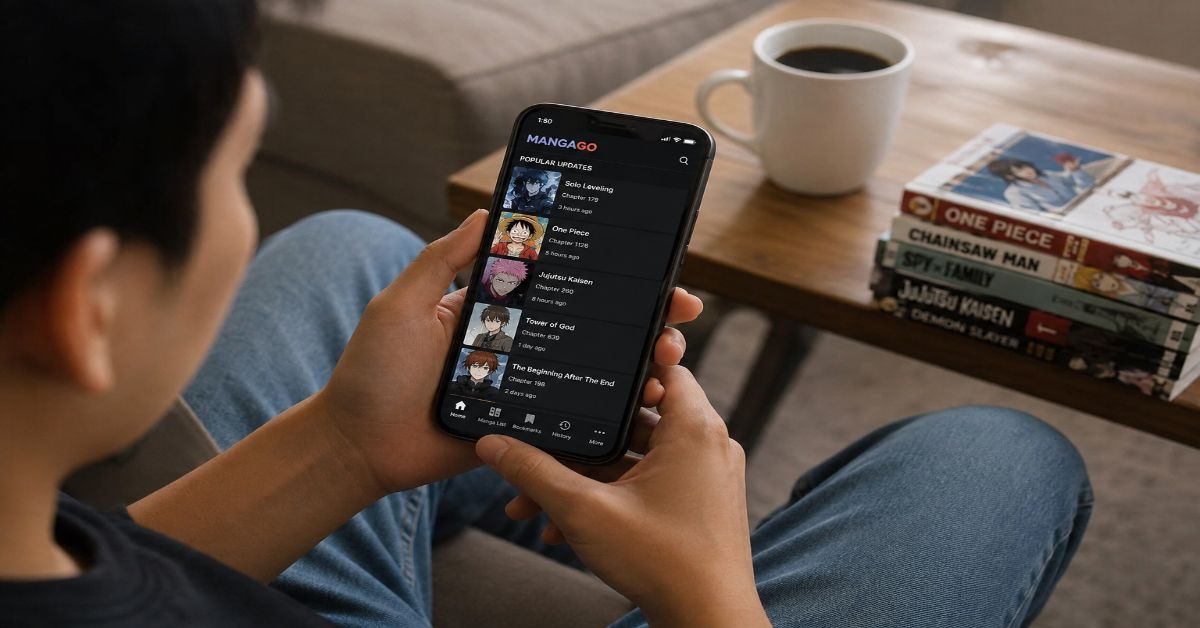
I found that the most important thing to understand about Mangago is that one familiar name now points to two different experiences: the .me website, a free browser-based manga site, and several unrelated app-store products using similar branding. That distinction matters because the website’s broad catalog and community reputation can make the apps look official by association, even when the current store listings identify different developers, policies, and data practices.
For most readers, the intent is practical. You may want the website, a phone app, a fix for an access problem, or a quick answer about safety and legitimacy. I separate those questions because a page that loads, an app that appears in a store, an HTTPS certificate, and a licensed manga catalog are four different signals. Treating them as interchangeable can create avoidable privacy, reliability, or copyright problems.
The evidence is also uneven. Search indexes and third-party descriptions consistently identify the web service as a manga, manhwa, and webtoon reader with genre browsing, comments, ratings, lists, and discovery features. However, my research environment could not directly fetch the live site on September 2, 2026. A current status checker was also receiving HTTP 403 responses from its probes, which is consistent with a web application firewall blocking automated checks rather than proving the site is globally offline. I therefore describe current site features conservatively instead of pretending I completed a live reader test.
The app side is easier to verify. Google Play and Apple’s App Store currently show multiple products with very similar names. Comparing those listings produces the core rule for this guide: verify the exact product before you install, sign in, pay, or assume it belongs to the website.
What is Mangago, and which version are people usually searching for?
The name most commonly points to the .me website, a free browser reader for manga, manhwa, webtoons, and related comics. Separately, app stores contain several mobile products using similar branding, but the current listings I checked do not establish them as official clients of the website.
If you remember reading chapters in a browser and using title discussions or reading lists, you are probably thinking of the website. If you found a phone app, check the developer, package name, privacy panel, and support identity before assuming a connection. My Picuki in 2026 guide makes the same identity point for another web service: a familiar name is not an operator check.
How does the browser website work, and what features stand out?
Indexed descriptions present the site as web-first. Readers search or browse titles, open a series page, choose chapters, and read in the browser. Genre pages are central to discovery, with categories commonly described as romance, shoujo, shounen, fantasy, isekai, horror, slice of life, drama, historical stories, yaoi, yuri, and webtoons.
Indexed pages also describe comments, ratings, recommendations, favorites, and reading lists. Those are useful discovery signals, but they do not prove licensing or technical safety.
Because I could not inspect the live reader directly in this review, I cannot confirm that every older account, sync, recommendation, or interface feature remains available unchanged in every region.
What does a browser-first reader change for users?
Browser access avoids installing a dedicated app, but it leaves users dependent on the domain, browser behavior, ads, cookies, and site availability.
When a page stops loading, I would not jump straight to random mirrors. Confirm the exact hostname, compare a fresh status source, try a normal browser session, and avoid any page that asks for a special player, APK, extension, or notification permission. My Cambro.tv status and safety guide uses the same evidence hierarchy: registration, reachability, and trust are separate questions.
Is there an official Mangago app for Android or iPhone?
I could not verify an official mobile app for the website. What I could verify are several independent app-store products with similar names. Their developer identities differ, and their listings do not establish a relationship with the website.
The most visible example is Ultimate Manga App. Apple’s current listing names Mouaad Ouajib as the developer, labels it free with in-app purchases, gives it an 18+ age rating, and claims access to more than 1 million manga and manhwa titles. Google Play lists the corresponding product with 100K+ downloads and an August 26, 2026 update. Those are store claims and metadata, not evidence that it is the website’s official app.
Other listings make the naming collision clearer. Manga & Comics is associated with ON A TANGENT LTD in the indexed Google Play listing I reviewed. Manga Go Reader uses a separate package and has surfaced under varying developer labels in regional store indexes, which is a strong reason to verify the current listing in your own country.
| Product or service | Platform | Identity signal | Verified snapshot | Main caution |
| Website | Browser | Website domain | Broad manga/manhwa/webtoon reader described by indexed sources | Live reader was not directly fetchable in this review |
| Ultimate Manga App | Google Play / App Store | Mouaad Ouajib; EriitoDraw branding on Google Play | 100K+ Play downloads; Apple claims 1M+ titles | Do not assume it belongs to the website |
| Manga & Comics | Google Play | ON A TANGENT LTD in indexed listing | Updated July 1, 2026; discovery/history features | Review its data-safety panel before installing |
| Manga Go Reader | Google Play | Separate package; regional labels have varied | Updated May 28, 2026; search and saved shelf | Verify current developer, package ID, and privacy terms |
Why are package IDs and developer names more useful than app names?
App names are marketing labels. Package IDs, developer accounts, support contacts, privacy disclosures, and update histories are stronger identity markers.
Recognition can transfer trust to an unrelated app. My Kracensoft apps and software guide applies the same rule: identify the publisher and distribution channel first.
What do current app privacy signals tell readers?
Store privacy panels show meaningful differences, though they are developer-provided. Google Play says the Ultimate Manga App may share personal information and app activity, while the Manga & Comics listing says app activity and device IDs may be collected and shared and shows no encryption or deletion path.
Use these panels as a screening tool: a basic reader should not need unrelated high-risk permissions.
| Check | Lower-caution signal | Higher-caution signal | Why it matters |
| Identity | Developer, package ID, support, and policy align | Unrelated or inconsistent publisher details | Reduces mistaken identity |
| Data safety | Clear collection scope, encryption, deletion route | Broad collection or weak data controls | Shows how much trust the app requests |
| Permissions | Only reading-related access | Unrelated high-risk permissions | Excess privileges increase exposure |
| Updates | Recent, coherent maintenance history | Abandonment or abrupt publisher changes | Helps judge maintenance continuity |
| Payments | Store-managed billing with clear terms | Off-platform card request | Reduces billing and phishing risk |
Why is the website sometimes difficult to access?
Access failures can originate from the site, a web application firewall, DNS, browser state, extensions, network filtering, or regional restrictions. During my review, an automated fetch failed, while DownOrNot reported that its recent probes received HTTP 403 responses and were blocked by a WAF. That does not prove the site was down for ordinary readers.
Regional filtering can also be real. GreatFire’s current record says the domain is blocked in mainland China and reports DNS poisoning, timeouts, and connection resets in its test history. Two users in different countries can therefore see different results at the same moment.
Troubleshoot without weakening security. Confirm the exact domain, test a mainstream browser, clear only the site’s cached data if it appears corrupted, check whether other sites work, and compare fresh status evidence. A reputable DNS resolver can help with some DNS issues, but it cannot repair a dead server, a deliberate block, or a rights dispute.
Should you use a mirror or VPN if the site is unavailable?
A mirror is a separate trust decision, and a VPN changes network routing rather than the rights status or security of the destination. Similar branding does not prove common ownership. I would not use either as a reason to ignore certificate warnings, unexpected downloads, payment prompts, or a mismatched domain.
The same principle appears in my The TV App guide: successful playback does not prove authorization. A manga chapter loading successfully is equally weak evidence about licensing or operator identity.
Is Mangago safe and legal to use?
I would not give the website a blanket safe-or-unsafe verdict because technical safety and copyright authorization are different questions. I could not inspect its current scripts, ads, cookies, or redirects directly. On the rights side, however, there are specific warning signals around the domain.
Google’s Transparency Report shows that Ridi Corporation had requested delisting of 7,382 URLs on the domain through July 14, 2025. A delisting request is not a final court judgment about the entire site, but thousands of URL-level requests are concrete evidence of repeated copyright complaints tied to the domain.
The wider environment is also tightening. Authorized Books of Japan reported in July 2026 that English-language manga piracy sites were drawing roughly 600 million monthly visits in aggregate, with the largest site around 300 million monthly visits by its estimate. A November 19, 2025 Tokyo District Court judgment, described by KADOKAWA, recognized Cloudflare’s liability in a case involving two massive manga piracy sites that publishers said carried more than 4,000 works without permission. These industry figures do not identify this domain as either site, so I do not attribute them to it.
For readers who want a positive legitimacy signal, the ABJ Mark is designed to identify e-book stores and distribution services that have permission from rights holders.
What does copyright enforcement mean for an ordinary reader?
Copyright rules vary by country, and visiting, downloading, uploading, and redistributing are not the same legal acts. I would avoid universal legal claims based only on a domain name. What is clear is that publishers are using search delistings, platform tools, litigation, and infrastructure-level actions to reduce unauthorized distribution.
Atsushi Ito, a Shueisha anti-piracy practitioner and ABJ representative, described in a 2024 industry discussion how he had used YouTube Content ID for about 14 years. That practitioner context shows how enforcement increasingly combines automated matching, platform cooperation, search removal, and legal action.
When rights status matters, licensed services are the cleanest choice. The same access-versus-authorization distinction appears in my NFLBite safety and legality guide, where free availability is not treated as proof of permission.
What are the practical trade-offs for manga readers?
Aggregators offer broad discovery and fast access, but the trade-offs include unstable availability, unclear rights, inconsistent app identities, privacy exposure, and fragile bookmarks.
Keep an independent reading list to reduce lock-in if a title, domain, app, or account disappears.
| Reader priority | Convenience benefit | Trade-off | Better rule |
| Maximum discovery | Broad discovery | Rights may be unclear | Use discovery as a lead, then check licensed availability |
| No installation | Immediate browser access | Domain or ad behavior can change | Verify hostname and avoid unexpected permissions or downloads |
| Community context | Reader comments add context | Popularity is not proof | Treat comments as opinions, not trust certificates |
| Mobile convenience | Several similar app names exist | Brand trust can transfer | Verify package ID, developer, privacy, and billing |
| Stable progress | Lists and bookmarks feel convenient | Progress can disappear | Keep a separate reading list outside the platform |
What three less-obvious insights matter most?
First, identity ambiguity is the recurring risk: one search term can lead to a website, unrelated apps, and copycat domains.
Second, app-store availability is not a licensing certificate, just as HTTPS does not resolve copyright questions for a website.
Third, convenience creates portability risk. External reading tracking protects continuity when a service, account, or domain disappears.
The Future of Mangago in 2027
I expect 2027 to make access and authorization easier to distinguish. ABJ’s 2026 traffic estimates show that English-language manga piracy remains large, while Japanese publishers continue using litigation, search delisting, platform cooperation, and infrastructure-focused cases. The 2025 Cloudflare judgment is significant because it shows enforcement reaching service providers, not only individual site operators.
Name reuse will probably remain a separate product problem. Current app listings already show how similar branding can coexist with different developers and privacy declarations. Readers will need to rely more on package IDs, developer identity, and licensing relationships instead of recognition alone.
The uncertain part is the website’s own roadmap. I found no verified public operator statement supporting claims of a new official app, a licensing transition, or a planned shutdown. Those predictions would be speculation. The evidence supports a narrower forecast: rights enforcement and identity verification will matter more, while demand for low-friction manga discovery will remain strong.
Key Takeaways
- Treat the browser service and similarly named mobile apps as separate products unless a verifiable operator relationship is shown.
- Use the exact domain, package ID, developer name, privacy panel, and support identity to verify what you are opening or installing.
- Do not read an HTTP 403 status probe as proof that a website is globally offline; a WAF can block automated checks.
- The 7,382 URL delisting requests tied to the domain are a meaningful rights-risk signal, even though requests are not a court judgment on the whole site.
- Keep your own reading list if continuity matters, because platform bookmarks can disappear with domain, app, or account changes.
- Prefer licensed manga services when you want the clearest rights status and a direct way to support publishers and creators.
Conclusion
The search term becomes much easier to understand once the product is identified. The browser-based service most readers associate with free manga, manhwa, webtoons, genre browsing, and community discussion, while current app stores contain several similarly named products from unrelated developers. That naming overlap is the central practical risk because it can transfer trust from one service to another before the operator is checked.
My research also found a real evidence gap. I could compare current app listings, copyright records, anti-piracy data, status evidence, and live internal references, but I could not directly inspect the website’s current reader because automated access was blocked. I therefore would not claim that every historical feature or safety characteristic remains unchanged.
The balanced decision is to separate three questions: does the service work, is it technically trustworthy enough for the data you will give it, and is the content authorized? Answering those independently produces a more reliable decision than asking whether one name is simply good or bad.
Frequently Asked Questions
Is the website the same as similarly named apps on Google Play?
No official relationship was verified. The website is browser-based, while similar Google Play listings show different developers and package identities.
Is there an official iPhone app?
I could not verify an official website client for iPhone. Apple’s Ultimate Manga App listing does not establish a connection to the website.
Why is the website not working for me?
Causes include WAF behavior, DNS, browser state, outages, network filtering, or regional blocks. Confirm the domain and fresh status evidence first.
Is mangago safe to use on a phone?
A phone does not make an unverified service safer. Avoid suspicious redirects, notifications, downloads, or payments, and review app developer and privacy details.
Is the Ultimate Manga App connected to the website?
I found no verified evidence of a connection. The store listing identifies a separate developer, so similar naming is not proof of shared ownership.
What is the safest way to find legal manga alternatives?
Use services that clearly identify publishers, licensing partners, or authorization signals such as the ABJ Mark, then check title availability in your region.
Methodology
I gathered this article from current app-store listings, Google copyright transparency data, Authorized Books of Japan material, the 2025 Cloudflare judgment release, regional blocking records, availability checks, and live aperplexity.com pages. I prioritized first-party sources and used secondary status or reporting sources only for added context.
I attempted to inspect the website directly, but the fetch was blocked and an external checker reported HTTP 403 WAF responses. I therefore did not claim hands-on testing of current page behavior, ads, sync, or every indexed feature. App metadata can vary by country and date.
My analysis separates technical reachability, software privacy, and copyright authorization. Delisting requests document rights-holder complaints, not a blanket court ruling on every page. Industry piracy estimates describe the wider market and are not attributed to this domain unless a source names it directly. AI assistance was used in drafting and structuring the article, and a human editor must review, verify citations, and approve the content before publishing.
References
Authorized Books of Japan. (2026). Publication piracy site status.
Apple. (2026). Ultimate Manga App. App Store.
Google. (2026). Ultimate Manga App. Google Play.
Google. (2026). Manga & Comics. Google Play.
Google. (2026). Manga Go Reader. Google Play.
Google. (2025). Copyright delisting transparency data for Mangago.me requests by Ridi Corporation.
GreatFire. (2026). Mangago.me domain censorship record for mainland China.

Before the Beatles had matching suits, global fame, or a recording career that would remake popular music, they were a hard-working club band absorbing influences in Liverpool and Hamburg. One of the people at the center of that unfinished version of the group was Stuart Sutcliffe, a Scottish-born painter who became the Beatles’ original bassist and then walked away before the world knew their name.
Stuart Sutcliffe matters because his story connects three parts of the Beatles’ beginnings that are often separated: the group’s formative Hamburg performances, the visual influence of photographer Astrid Kirchherr, and the art-school world that shaped John Lennon and the people around him. He joined the group in 1960, played alongside Lennon, Paul McCartney, George Harrison, and Pete Best, and left in 1961 to return to the vocation that had always been more central to him: painting.
I find Sutcliffe most revealing when he is not treated as a tragic extra in Beatles mythology. His short life shows how the band’s identity was being built from music, fashion, photography, friendship, and modern art at the same time. That wider view also helps answer the questions people still search for today: how Kirchherr changed the Beatles’ look, what is actually known about Sutcliffe’s fatal brain hemorrhage, where his paintings can be seen, how Eduardo Paolozzi influenced his artistic development, and why Sutcliffe appears on the cover of Sgt. Pepper’s Lonely Hearts Club Band.
His life ended in Hamburg on April 10, 1962, at only 21. The Beatles’ worldwide breakthrough came later, but Sutcliffe’s place in their pre-fame story was already fixed.
Who was Stuart Sutcliffe, and why does he matter?
Stuart Sutcliffe was a painter, art student, close friend of John Lennon, and the original bass guitarist in the early Beatles. He joined in 1960, worked through the group’s demanding Hamburg period, then left in 1961 to pursue painting in Hamburg, where he became engaged to photographer Astrid Kirchherr.
The concise answer is that Sutcliffe helped shape the Beatles before they became the Beatles the public remembers. His importance is less about a long recording legacy and more about being present at the point when a Liverpool rock-and-roll group was becoming a visually distinctive, culturally ambitious band.
That distinction matters. Calling him only the ‘lost Beatle’ or ‘fifth Beatle’ can make his life sound like an unfinished music career. In reality, art was not his fallback plan. He had studied at Liverpool College of Art, built a serious body of work, and chose to leave the band so he could continue developing as a painter.
This snapshot separates the fixed biographical facts from the mythology that later grew around Sutcliffe.
| Fact | Detail |
| Born | 23 June 1940, Scotland |
| Beatles role | Original bassist; joined in 1960 |
| Hamburg lineup | John Lennon, Paul McCartney, George Harrison, Pete Best, Stuart Sutcliffe |
| Left the Beatles | 1961, to pursue painting in Hamburg |
| Partner | Engaged to photographer Astrid Kirchherr |
| Died | 10 April 1962 in Hamburg, aged 21, from a brain hemorrhage |
How did Stuart Sutcliffe become the Beatles’ original bassist?
Sutcliffe’s path into the group began through art school rather than through an established career as a musician. At Liverpool College of Art he became close friends with John Lennon, whose musical ambitions were accelerating. In 1960 Sutcliffe joined the developing group on bass, alongside Lennon, McCartney, Harrison, and, for the Hamburg period, drummer Pete Best.
This early lineup matters because Hamburg forced the band to become more durable performers. They played long club sets, repeated material, learned how to hold difficult rooms, and developed the confidence that later defined their stage presence. Sutcliffe was part of that apprenticeship, even though painting remained the discipline in which he had deeper training and stronger ambitions.
Why the Hamburg years matter
Hamburg was more than a touring stop. It put the young band inside a different visual and cultural environment. The musicians met art students, designers, and photographers who looked unlike the Teddy Boy world they had known in Liverpool. Sutcliffe, already an art student, was especially receptive to that setting.
The result was a creative exchange rather than a simple makeover. The Beatles became tighter as performers while their appearance became less provincial and more deliberately modern. Sutcliffe sits at the intersection of those changes because he belonged to both worlds: the stage and the studio, rock and painting, Liverpool friendship and Hamburg modernism.
How did Astrid Kirchherr influence the Beatles’ style?
Astrid Kirchherr influenced the Beatles by helping move their image away from greased-back rock-and-roll convention toward the sharper, art-school look associated with their Hamburg circle. Her influence came through hair, clothing, photography, and, just as importantly, the way she presented the young musicians as visual subjects rather than merely nightclub performers.
The haircut was only part of the change
Kirchherr is strongly associated with the early version of the Beatles’ famous mop-top. Sutcliffe was the first member of the group to adopt the brushed-forward style after encountering it in Kirchherr’s circle. George Harrison followed, while John Lennon and Paul McCartney adopted related versions later. Jürgen Vollmer, another friend in the Hamburg art scene, also played a role in the hairstyle’s wider adoption, so the most accurate account credits the look to the circle rather than to a single dramatic haircut moment.
Kirchherr’s own appearance also mattered. Her short hair, dark clothes, leather, and minimalist style looked sophisticated and continental to the young Liverpool musicians. The appeal was not simply fashion. It offered a new model of how a modern artist or musician could construct an identity.
Her photographs created an early visual language
Kirchherr’s black-and-white photographs of the Beatles in Hamburg became some of the defining images of the pre-fame group. She photographed Sutcliffe, Lennon, McCartney, Harrison, and Best with a seriousness that contrasted with routine promotional photography. Her images used industrial settings, strong contrast, and composed poses to make the band look self-aware and modern.
That visual discipline gave the group an identity before the machinery of international pop promotion arrived. The following table separates the main areas of Kirchherr’s influence so the relationship is easier to understand.
| Area | Kirchherr’s influence | Why it mattered |
| Hair | Helped introduce the brushed-forward style first adopted by Sutcliffe | Moved the group away from greased-back Teddy Boy styling |
| Clothing and attitude | Part of a Hamburg art-school circle with a dark, minimalist, continental look | Gave the band a more modern visual reference point |
| Photography | Created stark black-and-white portraits in Hamburg | Presented the band as deliberate visual subjects before fame |
| Creative network | Connected the Beatles with artists and designers such as Klaus Voormann and Jürgen Vollmer | Expanded the band’s cultural world beyond the club stage |
Why did Stuart Sutcliffe leave the Beatles?
Sutcliffe left the Beatles in 1961 because painting was his primary vocation. By then he had formed a serious relationship with Kirchherr, was living in Hamburg, and had the opportunity to continue formal art study there. Leaving the band was therefore not simply a reaction to musical pressure. It was a decision to commit to the career for which he had been training.
This choice also corrects a common hindsight problem. Knowing what the Beatles became makes leaving them look unimaginable. Sutcliffe made the decision before Beatlemania, before the band’s major studio albums, and before global fame was a realistic certainty. From his position in 1961, pursuing art in Hamburg was not walking away from a guaranteed fortune. It was choosing the field in which he already had a strong identity.
His engagement to Kirchherr made Hamburg personally important as well. The city had become the place where his artistic and private life aligned, even as his musical life was moving in another direction.
What role did Eduardo Paolozzi play in Stuart Sutcliffe’s art?
Eduardo Paolozzi was an important teacher and mentor during Sutcliffe’s Hamburg art studies. Paolozzi, a major Scottish-born artist associated with the emergence of British Pop Art, served as a visiting professor at the Hamburg art school during the period when Sutcliffe studied there.
The relationship matters because it places Sutcliffe inside a serious modern-art environment. Paolozzi did not merely know him socially. He taught him, evaluated his work, and described him in a school report as highly gifted and intelligent, eventually regarding him as one of his best students.
Paolozzi as mentor, not ghostwriter
It would be misleading to say Paolozzi created Sutcliffe’s style. Sutcliffe already had an artistic direction before Hamburg, and his later paintings are usually discussed in relation to European abstraction and Abstract Expressionism. Paolozzi’s role was more valuable than simple imitation: he provided criticism, structure, and contact with an artist working at an international level.
One specific link is visible in the grid-like organization noted in discussions of Sutcliffe’s Hamburg paintings. In works such as Hamburg Painting No. 2, textured surfaces and subtle shifts in color create a dense, energetic field. Paolozzi’s influence can be understood as part of that developing formal vocabulary, while Sutcliffe’s heavy surfaces and compressed shapes remained his own artistic problem to work through.
The most useful conclusion is that Paolozzi confirms Sutcliffe’s seriousness as an art student. His later reputation should not rest only on his friendship with Lennon or his months on bass. He was being assessed within an art school by an established modern artist who saw substantial promise in him.
What caused Stuart Sutcliffe’s fatal brain hemorrhage?
Stuart Sutcliffe died in Hamburg on April 10, 1962, from a brain hemorrhage. He was 21. That is the documented immediate cause of death.
What is known and what remains uncertain
The harder question is what caused the hemorrhage itself. Sutcliffe had suffered severe headaches before his death, and accounts have sometimes connected his condition to an earlier fight in which he was reportedly struck on the head. That explanation remains a theory, not a conclusively established medical finding.
Contemporary doctors reportedly examined him during periods of illness but did not identify the underlying problem before his final collapse. For that reason, a careful account should separate two statements: the fatal event was a brain hemorrhage, while the initiating cause of that hemorrhage was never proved with certainty.
This distinction matters because popular histories often turn uncertainty into a dramatic causal story. It is accurate to mention the possible head injury as part of the historical record, but not to state that a particular fight definitively caused his death.
Where are Stuart Sutcliffe’s paintings displayed today?
Sutcliffe’s art is not concentrated in one permanent public museum display. His surviving work is spread across museum holdings, private collections, loans, and the Stuart Sutcliffe Estate. For a visitor in 2026, Liverpool is the clearest place to begin.
Liverpool is the clearest place to start
National Museums Liverpool holds Hamburg Painting No. 2, a 1961 work in the Walker Art Gallery collection. The Walker’s modern displays can rotate, so anyone traveling specifically to see it should confirm that the work is on view before visiting.
A second Liverpool option became especially relevant in 2026. On January 29, four previously unseen Sutcliffe works went on public display at the Liverpool Beatles Museum. The loan included a student drawing from his Liverpool period and three abstract works associated with Hamburg. Because museum loans can change, current display status is worth checking close to a visit.
The larger picture is broader than Liverpool. Works connected with the Stuart Sutcliffe Estate have appeared in exhibitions in Britain, Europe, and the United States. Two paintings were lent to the Guggenheim Museum’s Artistic License exhibition in New York in 2019-2020, a significant example of Sutcliffe being presented in a modern-art context rather than only a Beatles context.
| Place or collection | What is known | Visitor note |
| Walker Art Gallery, Liverpool | National Museums Liverpool holds Hamburg Painting No. 2 | Displays rotate, so confirm before visiting |
| Liverpool Beatles Museum | Four previously unseen works went on public display on 29 January 2026 | Loan status can change; check current exhibition information |
| Stuart Sutcliffe Estate and private holdings | A larger body of work survives outside permanent museum display | Works may appear through loans and temporary exhibitions |
| Guggenheim Museum, New York | Two Sutcliffe paintings appeared in Artistic License in 2019-2020 | Historical exhibition example, not a current permanent display |
How was Stuart Sutcliffe featured on Sgt. Pepper?
Stuart Sutcliffe was included as one of the faces in the celebrated crowd collage on the cover of the Beatles’ 1967 album Sgt. Pepper’s Lonely Hearts Club Band. His presence was visual and commemorative. He did not contribute to the recording, having died five years before the album was released.
That appearance is important because the Sgt. Pepper cover was built as a gathering of cultural figures, personal heroes, and people connected to the band’s imaginative world. Including Sutcliffe placed an intimate figure from the Beatles’ earliest years inside the visual mythology of their most elaborate album era.
The gesture is especially resonant in relation to John Lennon. Sutcliffe had been one of Lennon’s closest friends from art school, so the cover connects the band’s psychedelic 1967 identity to a friendship that predated fame. It is a compact memorial hidden in one of popular music’s most recognizable images.
Why Stuart Sutcliffe’s legacy is bigger than the ‘fifth Beatle’ label
The phrase ‘fifth Beatle’ is useful for recognition, but it can also flatten Sutcliffe into a trivia answer. He is more interesting as a bridge between scenes that helped create the early Beatles: Liverpool art school, Hamburg nightlife, European modernism, photography, fashion, and rock-and-roll performance.
His most lasting musical importance may therefore be cultural rather than technical. He was part of the lineup that endured Hamburg, and his closeness to Kirchherr’s world helped connect the band to a visual language that made them look different. At the same time, his decision to leave reinforces the fact that he saw himself primarily as an artist.
His paintings make that point concrete. The work did not vanish after his death. It has been preserved, exhibited, collected, and reassessed, including in settings such as the Walker Art Gallery and the Guggenheim. That history gives Sutcliffe an afterlife independent of the question of what kind of bassist he might have become.
There is also something revealing about the timing of his life. Sutcliffe died just before the Beatles’ commercial rise, so every later reference to him carries the knowledge that he never saw Beatlemania. Yet reducing the story to tragedy misses the decisions he actually made. He had already chosen painting, already entered a serious art-school environment, and already begun a life in Hamburg with Kirchherr.
Conclusion: the most useful way to remember Stuart Sutcliffe
Stuart Sutcliffe belongs in Beatles history, but he should not be trapped inside it. He was the original bassist during a formative period, a close friend of John Lennon, and a link to Astrid Kirchherr’s visual world. He was also a painter who left the band deliberately to pursue art and who earned the respect of Eduardo Paolozzi in Hamburg.
The strongest way to understand him is to hold both identities at once. His short time with the Beatles helps explain how the group became visually and culturally distinctive, while his surviving paintings show the career he was trying to build on his own terms. The tragedy is not simply that he missed fame. It is that a promising artistic life ended at 21, just as it was becoming more focused.
Frequently Asked Questions
How old was Stuart Sutcliffe when he died?
Stuart Sutcliffe was 21 years old when he died in Hamburg on April 10, 1962. He had been born on June 23, 1940.
Was Stuart Sutcliffe married to Astrid Kirchherr?
No. Sutcliffe and Astrid Kirchherr were engaged, but they did not marry before his death in 1962.
Did Stuart Sutcliffe appear on the Beatles’ famous studio albums?
No. Sutcliffe left the group in 1961, before the Beatles’ major EMI album career and worldwide breakthrough. His place in Beatles history comes from the pre-fame lineup and Hamburg period.
Why is Stuart Sutcliffe called the ‘lost Beatle’?
The label reflects his early membership, departure before fame, and death shortly before the band’s commercial breakthrough. It is evocative, but it can obscure the fact that he consciously chose painting over continuing as a Beatle.
Was Stuart Sutcliffe taken seriously as a painter?
Yes. He trained at art college, continued his studies in Hamburg, received strong praise from Eduardo Paolozzi, and left a substantial body of work. His paintings have later appeared in museum and gallery exhibitions, including a 2019-2020 Guggenheim presentation.
What is the best place to start if I want to see Stuart Sutcliffe’s art?
Liverpool is the most practical starting point. National Museums Liverpool holds Hamburg Painting No. 2, and the Liverpool Beatles Museum placed four additional works on public display in January 2026. Check current display information before traveling because collections and loans can rotate.
-

 Technology3 weeks ago
ThomsonKids.com: Website Guide, Topics & Trust Check
-

 General2 weeks ago
Voozon.com: What It Is and How the Platform Works
-

 Technology2 weeks ago
thesindi com Review: What TheSindi.com Really Offers
-

 Technology2 weeks ago
Cambro.tv: Status, Safety & Technical Guide
-

 Business2 weeks ago
5starsstocks.com Review: Features, Trust and Safety
-
 General3 weeks ago
My Reading Manga: What MyReadingManga Is, Safety, Legality and Better Alternatives
-
 Guide3 weeks ago
Thothub Safety Guide: What the Name Means, Link Risks and Legal Concerns
-
 Technology3 weeks ago
Iwara: What iwara.tv Is, How It Works and What to Know