Entertainment
Stuart Sutcliffe: The Artist Who Helped Shape the Early Beatles

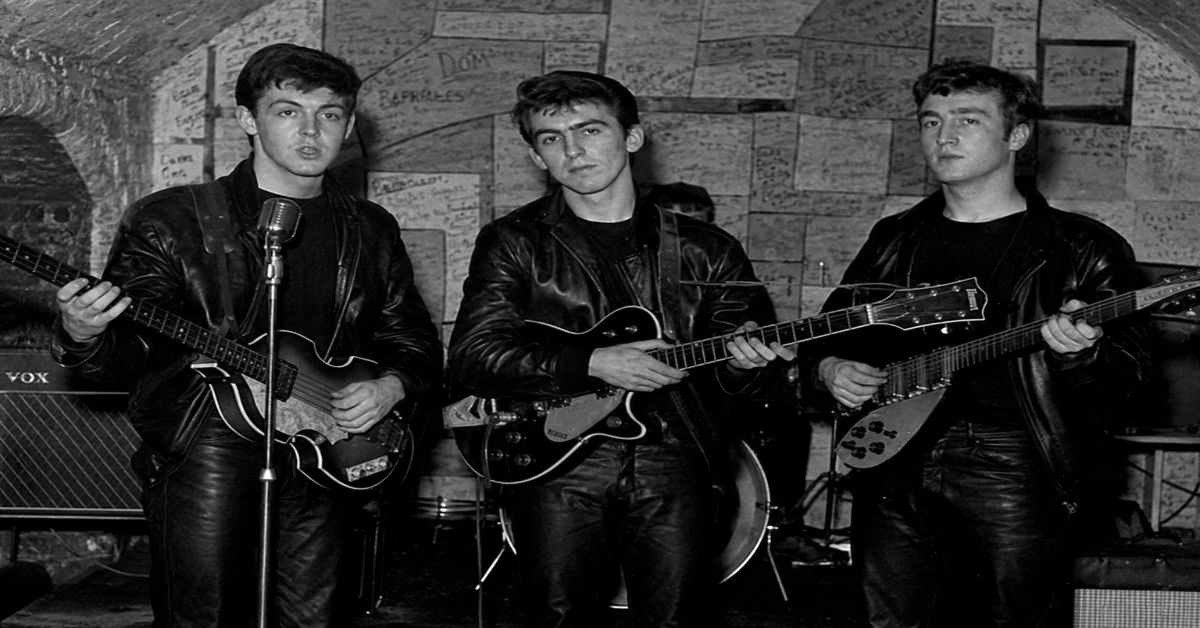
Before the Beatles had matching suits, global fame, or a recording career that would remake popular music, they were a hard-working club band absorbing influences in Liverpool and Hamburg. One of the people at the center of that unfinished version of the group was Stuart Sutcliffe, a Scottish-born painter who became the Beatles’ original bassist and then walked away before the world knew their name.
Stuart Sutcliffe matters because his story connects three parts of the Beatles’ beginnings that are often separated: the group’s formative Hamburg performances, the visual influence of photographer Astrid Kirchherr, and the art-school world that shaped John Lennon and the people around him. He joined the group in 1960, played alongside Lennon, Paul McCartney, George Harrison, and Pete Best, and left in 1961 to return to the vocation that had always been more central to him: painting.
I find Sutcliffe most revealing when he is not treated as a tragic extra in Beatles mythology. His short life shows how the band’s identity was being built from music, fashion, photography, friendship, and modern art at the same time. That wider view also helps answer the questions people still search for today: how Kirchherr changed the Beatles’ look, what is actually known about Sutcliffe’s fatal brain hemorrhage, where his paintings can be seen, how Eduardo Paolozzi influenced his artistic development, and why Sutcliffe appears on the cover of Sgt. Pepper’s Lonely Hearts Club Band.
His life ended in Hamburg on April 10, 1962, at only 21. The Beatles’ worldwide breakthrough came later, but Sutcliffe’s place in their pre-fame story was already fixed.
Who was Stuart Sutcliffe, and why does he matter?
Stuart Sutcliffe was a painter, art student, close friend of John Lennon, and the original bass guitarist in the early Beatles. He joined in 1960, worked through the group’s demanding Hamburg period, then left in 1961 to pursue painting in Hamburg, where he became engaged to photographer Astrid Kirchherr.
The concise answer is that Sutcliffe helped shape the Beatles before they became the Beatles the public remembers. His importance is less about a long recording legacy and more about being present at the point when a Liverpool rock-and-roll group was becoming a visually distinctive, culturally ambitious band.
That distinction matters. Calling him only the ‘lost Beatle’ or ‘fifth Beatle’ can make his life sound like an unfinished music career. In reality, art was not his fallback plan. He had studied at Liverpool College of Art, built a serious body of work, and chose to leave the band so he could continue developing as a painter.
This snapshot separates the fixed biographical facts from the mythology that later grew around Sutcliffe.
| Fact | Detail |
| Born | 23 June 1940, Scotland |
| Beatles role | Original bassist; joined in 1960 |
| Hamburg lineup | John Lennon, Paul McCartney, George Harrison, Pete Best, Stuart Sutcliffe |
| Left the Beatles | 1961, to pursue painting in Hamburg |
| Partner | Engaged to photographer Astrid Kirchherr |
| Died | 10 April 1962 in Hamburg, aged 21, from a brain hemorrhage |
How did Stuart Sutcliffe become the Beatles’ original bassist?
Sutcliffe’s path into the group began through art school rather than through an established career as a musician. At Liverpool College of Art he became close friends with John Lennon, whose musical ambitions were accelerating. In 1960 Sutcliffe joined the developing group on bass, alongside Lennon, McCartney, Harrison, and, for the Hamburg period, drummer Pete Best.
This early lineup matters because Hamburg forced the band to become more durable performers. They played long club sets, repeated material, learned how to hold difficult rooms, and developed the confidence that later defined their stage presence. Sutcliffe was part of that apprenticeship, even though painting remained the discipline in which he had deeper training and stronger ambitions.
Why the Hamburg years matter
Hamburg was more than a touring stop. It put the young band inside a different visual and cultural environment. The musicians met art students, designers, and photographers who looked unlike the Teddy Boy world they had known in Liverpool. Sutcliffe, already an art student, was especially receptive to that setting.
The result was a creative exchange rather than a simple makeover. The Beatles became tighter as performers while their appearance became less provincial and more deliberately modern. Sutcliffe sits at the intersection of those changes because he belonged to both worlds: the stage and the studio, rock and painting, Liverpool friendship and Hamburg modernism.
How did Astrid Kirchherr influence the Beatles’ style?
Astrid Kirchherr influenced the Beatles by helping move their image away from greased-back rock-and-roll convention toward the sharper, art-school look associated with their Hamburg circle. Her influence came through hair, clothing, photography, and, just as importantly, the way she presented the young musicians as visual subjects rather than merely nightclub performers.
The haircut was only part of the change
Kirchherr is strongly associated with the early version of the Beatles’ famous mop-top. Sutcliffe was the first member of the group to adopt the brushed-forward style after encountering it in Kirchherr’s circle. George Harrison followed, while John Lennon and Paul McCartney adopted related versions later. Jürgen Vollmer, another friend in the Hamburg art scene, also played a role in the hairstyle’s wider adoption, so the most accurate account credits the look to the circle rather than to a single dramatic haircut moment.
Kirchherr’s own appearance also mattered. Her short hair, dark clothes, leather, and minimalist style looked sophisticated and continental to the young Liverpool musicians. The appeal was not simply fashion. It offered a new model of how a modern artist or musician could construct an identity.
Her photographs created an early visual language
Kirchherr’s black-and-white photographs of the Beatles in Hamburg became some of the defining images of the pre-fame group. She photographed Sutcliffe, Lennon, McCartney, Harrison, and Best with a seriousness that contrasted with routine promotional photography. Her images used industrial settings, strong contrast, and composed poses to make the band look self-aware and modern.
That visual discipline gave the group an identity before the machinery of international pop promotion arrived. The following table separates the main areas of Kirchherr’s influence so the relationship is easier to understand.
| Area | Kirchherr’s influence | Why it mattered |
| Hair | Helped introduce the brushed-forward style first adopted by Sutcliffe | Moved the group away from greased-back Teddy Boy styling |
| Clothing and attitude | Part of a Hamburg art-school circle with a dark, minimalist, continental look | Gave the band a more modern visual reference point |
| Photography | Created stark black-and-white portraits in Hamburg | Presented the band as deliberate visual subjects before fame |
| Creative network | Connected the Beatles with artists and designers such as Klaus Voormann and Jürgen Vollmer | Expanded the band’s cultural world beyond the club stage |
Why did Stuart Sutcliffe leave the Beatles?
Sutcliffe left the Beatles in 1961 because painting was his primary vocation. By then he had formed a serious relationship with Kirchherr, was living in Hamburg, and had the opportunity to continue formal art study there. Leaving the band was therefore not simply a reaction to musical pressure. It was a decision to commit to the career for which he had been training.
This choice also corrects a common hindsight problem. Knowing what the Beatles became makes leaving them look unimaginable. Sutcliffe made the decision before Beatlemania, before the band’s major studio albums, and before global fame was a realistic certainty. From his position in 1961, pursuing art in Hamburg was not walking away from a guaranteed fortune. It was choosing the field in which he already had a strong identity.
His engagement to Kirchherr made Hamburg personally important as well. The city had become the place where his artistic and private life aligned, even as his musical life was moving in another direction.
What role did Eduardo Paolozzi play in Stuart Sutcliffe’s art?
Eduardo Paolozzi was an important teacher and mentor during Sutcliffe’s Hamburg art studies. Paolozzi, a major Scottish-born artist associated with the emergence of British Pop Art, served as a visiting professor at the Hamburg art school during the period when Sutcliffe studied there.
The relationship matters because it places Sutcliffe inside a serious modern-art environment. Paolozzi did not merely know him socially. He taught him, evaluated his work, and described him in a school report as highly gifted and intelligent, eventually regarding him as one of his best students.
Paolozzi as mentor, not ghostwriter
It would be misleading to say Paolozzi created Sutcliffe’s style. Sutcliffe already had an artistic direction before Hamburg, and his later paintings are usually discussed in relation to European abstraction and Abstract Expressionism. Paolozzi’s role was more valuable than simple imitation: he provided criticism, structure, and contact with an artist working at an international level.
One specific link is visible in the grid-like organization noted in discussions of Sutcliffe’s Hamburg paintings. In works such as Hamburg Painting No. 2, textured surfaces and subtle shifts in color create a dense, energetic field. Paolozzi’s influence can be understood as part of that developing formal vocabulary, while Sutcliffe’s heavy surfaces and compressed shapes remained his own artistic problem to work through.
The most useful conclusion is that Paolozzi confirms Sutcliffe’s seriousness as an art student. His later reputation should not rest only on his friendship with Lennon or his months on bass. He was being assessed within an art school by an established modern artist who saw substantial promise in him.
What caused Stuart Sutcliffe’s fatal brain hemorrhage?
Stuart Sutcliffe died in Hamburg on April 10, 1962, from a brain hemorrhage. He was 21. That is the documented immediate cause of death.
What is known and what remains uncertain
The harder question is what caused the hemorrhage itself. Sutcliffe had suffered severe headaches before his death, and accounts have sometimes connected his condition to an earlier fight in which he was reportedly struck on the head. That explanation remains a theory, not a conclusively established medical finding.
Contemporary doctors reportedly examined him during periods of illness but did not identify the underlying problem before his final collapse. For that reason, a careful account should separate two statements: the fatal event was a brain hemorrhage, while the initiating cause of that hemorrhage was never proved with certainty.
This distinction matters because popular histories often turn uncertainty into a dramatic causal story. It is accurate to mention the possible head injury as part of the historical record, but not to state that a particular fight definitively caused his death.
Where are Stuart Sutcliffe’s paintings displayed today?
Sutcliffe’s art is not concentrated in one permanent public museum display. His surviving work is spread across museum holdings, private collections, loans, and the Stuart Sutcliffe Estate. For a visitor in 2026, Liverpool is the clearest place to begin.
Liverpool is the clearest place to start
National Museums Liverpool holds Hamburg Painting No. 2, a 1961 work in the Walker Art Gallery collection. The Walker’s modern displays can rotate, so anyone traveling specifically to see it should confirm that the work is on view before visiting.
A second Liverpool option became especially relevant in 2026. On January 29, four previously unseen Sutcliffe works went on public display at the Liverpool Beatles Museum. The loan included a student drawing from his Liverpool period and three abstract works associated with Hamburg. Because museum loans can change, current display status is worth checking close to a visit.
The larger picture is broader than Liverpool. Works connected with the Stuart Sutcliffe Estate have appeared in exhibitions in Britain, Europe, and the United States. Two paintings were lent to the Guggenheim Museum’s Artistic License exhibition in New York in 2019-2020, a significant example of Sutcliffe being presented in a modern-art context rather than only a Beatles context.
| Place or collection | What is known | Visitor note |
| Walker Art Gallery, Liverpool | National Museums Liverpool holds Hamburg Painting No. 2 | Displays rotate, so confirm before visiting |
| Liverpool Beatles Museum | Four previously unseen works went on public display on 29 January 2026 | Loan status can change; check current exhibition information |
| Stuart Sutcliffe Estate and private holdings | A larger body of work survives outside permanent museum display | Works may appear through loans and temporary exhibitions |
| Guggenheim Museum, New York | Two Sutcliffe paintings appeared in Artistic License in 2019-2020 | Historical exhibition example, not a current permanent display |
How was Stuart Sutcliffe featured on Sgt. Pepper?
Stuart Sutcliffe was included as one of the faces in the celebrated crowd collage on the cover of the Beatles’ 1967 album Sgt. Pepper’s Lonely Hearts Club Band. His presence was visual and commemorative. He did not contribute to the recording, having died five years before the album was released.
That appearance is important because the Sgt. Pepper cover was built as a gathering of cultural figures, personal heroes, and people connected to the band’s imaginative world. Including Sutcliffe placed an intimate figure from the Beatles’ earliest years inside the visual mythology of their most elaborate album era.
The gesture is especially resonant in relation to John Lennon. Sutcliffe had been one of Lennon’s closest friends from art school, so the cover connects the band’s psychedelic 1967 identity to a friendship that predated fame. It is a compact memorial hidden in one of popular music’s most recognizable images.
Why Stuart Sutcliffe’s legacy is bigger than the ‘fifth Beatle’ label
The phrase ‘fifth Beatle’ is useful for recognition, but it can also flatten Sutcliffe into a trivia answer. He is more interesting as a bridge between scenes that helped create the early Beatles: Liverpool art school, Hamburg nightlife, European modernism, photography, fashion, and rock-and-roll performance.
His most lasting musical importance may therefore be cultural rather than technical. He was part of the lineup that endured Hamburg, and his closeness to Kirchherr’s world helped connect the band to a visual language that made them look different. At the same time, his decision to leave reinforces the fact that he saw himself primarily as an artist.
His paintings make that point concrete. The work did not vanish after his death. It has been preserved, exhibited, collected, and reassessed, including in settings such as the Walker Art Gallery and the Guggenheim. That history gives Sutcliffe an afterlife independent of the question of what kind of bassist he might have become.
There is also something revealing about the timing of his life. Sutcliffe died just before the Beatles’ commercial rise, so every later reference to him carries the knowledge that he never saw Beatlemania. Yet reducing the story to tragedy misses the decisions he actually made. He had already chosen painting, already entered a serious art-school environment, and already begun a life in Hamburg with Kirchherr.
Conclusion: the most useful way to remember Stuart Sutcliffe
Stuart Sutcliffe belongs in Beatles history, but he should not be trapped inside it. He was the original bassist during a formative period, a close friend of John Lennon, and a link to Astrid Kirchherr’s visual world. He was also a painter who left the band deliberately to pursue art and who earned the respect of Eduardo Paolozzi in Hamburg.
The strongest way to understand him is to hold both identities at once. His short time with the Beatles helps explain how the group became visually and culturally distinctive, while his surviving paintings show the career he was trying to build on his own terms. The tragedy is not simply that he missed fame. It is that a promising artistic life ended at 21, just as it was becoming more focused.
Frequently Asked Questions
How old was Stuart Sutcliffe when he died?
Stuart Sutcliffe was 21 years old when he died in Hamburg on April 10, 1962. He had been born on June 23, 1940.
Was Stuart Sutcliffe married to Astrid Kirchherr?
No. Sutcliffe and Astrid Kirchherr were engaged, but they did not marry before his death in 1962.
Did Stuart Sutcliffe appear on the Beatles’ famous studio albums?
No. Sutcliffe left the group in 1961, before the Beatles’ major EMI album career and worldwide breakthrough. His place in Beatles history comes from the pre-fame lineup and Hamburg period.
Why is Stuart Sutcliffe called the ‘lost Beatle’?
The label reflects his early membership, departure before fame, and death shortly before the band’s commercial breakthrough. It is evocative, but it can obscure the fact that he consciously chose painting over continuing as a Beatle.
Was Stuart Sutcliffe taken seriously as a painter?
Yes. He trained at art college, continued his studies in Hamburg, received strong praise from Eduardo Paolozzi, and left a substantial body of work. His paintings have later appeared in museum and gallery exhibitions, including a 2019-2020 Guggenheim presentation.
What is the best place to start if I want to see Stuart Sutcliffe’s art?
Liverpool is the most practical starting point. National Museums Liverpool holds Hamburg Painting No. 2, and the Liverpool Beatles Museum placed four additional works on public display in January 2026. Check current display information before traveling because collections and loans can rotate.


Vegamovies is linked to unauthorized movie streaming, yet the biggest trap for searchers is that the name does not reliably identify one safe, official destination. In March 2026, the U.S. Trade Representative published its 2025 Notorious Markets review, recording right-holder reports of more than 40 related domains. That is a concrete identity problem, not merely a theoretical warning about “free movies.”
Someone searching for a Hindi-dubbed film may see a familiar movie catalog, a page declaring itself the newest domain, and a separate Android APK advertised as the latest version. The apparent continuity is deceptive: similar branding cannot establish common ownership, a license to show the movie, or a clean software package. The sensible approach is to test those claims separately.
This guide follows that chain from demand and domain turnover to copyright, intrusive advertising, malware and recovery steps. It explains what current primary evidence actually establishes, where uncertainty remains, and why a reputable free, ad-supported service can be safer than an attractive page with no accountable publisher. It does not publish working piracy addresses or provide download instructions. Nor does it assume that anyone who briefly opened a suspicious page has an infected device. Exposure depends on what happened: a passive visit, a permission grant, a file installation or a payment submission.
What the Name Refers To—and What It Does Not
The name is widely associated with unauthorized access to movies and television, including Indian and international releases. The USTR review describes the network as advertising-supported and says rights holders report frequent domain changes. The review identifies alleged market activity; it is not an individualized malware test of every page or file bearing similar branding.
The primary evidence is the 2025 USTR Notorious Markets report, issued in March 2026. It identifies more than 40 reportedly associated domains without certifying any address as the legitimate current site.
A brand is not a publisher identity
An old name on a fresh domain is like a store sign moved to a different building without proof of who owns the lease. Copying a logo is easy; confirming a licensed distributor, registered publisher and trustworthy update source is harder. A similarly named entertainment-information app might also be entirely unrelated to a movie-download page.
Why Searchers Keep Looking
The appeal is understandable: subscription services split catalogs, films move between providers, regional dubbing is uneven, and some viewers cannot justify another monthly charge for one title. Search engines and social sharing make a no-cost result look convenient. The mismatch between what users want—one particular film in one language—and how streaming catalogs are licensed is the demand-side pressure behind many searches.
However, price is not the right licensing test. Free viewing can be lawful when a broadcaster or distributor is authorized and pays for the service with advertising. A costly-looking site can be unauthorized; a genuinely free public-domain or licensed catalog can be legitimate. Checking who holds rights to the particular title matters more than whether a page displays a price.
The Domain-Change and Clone-Site Problem
A 2025 Motion Picture Association submission described rotating domains, advertising revenue and link-based distribution arrangements connected with this name. Those observations explain why a search result may lead to multiple “new home” claims. A replacement domain can also be an independent impersonator. A report about one hostname cannot be projected onto every similarly named address.
Four identities users often confuse
| Result type | What it may represent | What remains unproved |
| Previously reported domain | Site associated with a right-holder complaint | Current operator, safety and continuing availability |
| Mirror or replacement | New address claiming continuity | Same ownership or legitimacy |
| Lookalike clone | Copied layout and catalog | Connection to the original operator |
| APK listing | Android installation package under a familiar name | Developer provenance, code integrity and license |
This separation matters because “official,” “v2.0,” a padlock symbol or a copied review can imply reassurance without supplying evidence. HTTPS protects the connection to a domain; it does not establish copyright permission or validate an installer.
A useful comparison is the site’s own Bollyflix safety and fake-app analysis, which likewise separates domain identity, distribution rights and app provenance rather than treating a search term as one operator.
Is It Legal to Stream or Download?
A film or series is generally protected by copyright. The rights holder can license a cinema release, broadcast, subscription service, rental service or free advertising-supported stream. Offering copies or streams without authorization can infringe those rights. What a particular viewer risks depends on local law and conduct: uploading, running a distribution service, downloading, and merely streaming are not identical legal acts.
Copyright questions are title-specific
A domain’s disclaimer does not demonstrate that a studio licensed its catalog. Conversely, a legal streaming service may lawfully offer a movie at no charge if it has secured the necessary permission. Claims of illegality should be tied to actual conduct and applicable law, not to the fact that entertainment is available for free.
For related ownership issues, the site also covers intellectual-property rights and who controls creative work; the legal principles differ for AI-created works, but the core point remains that distribution rights cannot be inferred from an online listing.
Fake APKs Add a Different Kind of Risk
An APK is a package used to install Android software. A third-party listing can show a familiar logo and a plausible version number while offering a modified or unrelated file. An installed application can seek sensitive permissions or execute code well beyond the activity of opening a web page. That does not mean every sideloaded app is malicious, but it does mean the name of the app is insufficient proof of safety.
Permissions are a practical test
A simple film-search or video app should be able to explain any request for contacts, SMS messages, accessibility privileges, device administration or the ability to install additional apps. Some legitimate apps require permissions for clearly stated features, but an unknown entertainment APK demanding access to private messages or broad screen control deserves strong suspicion.
The Federal Trade Commission has warned that apps and add-ons carrying pirated streams have been used to spread malware, including threats that can affect other devices on the same home network. This is a general risk warning, not a claim that a specific file with this name was independently scanned for this article.
Read the FTC consumer warning about malware in illegal streaming apps for the agency’s examples of credential theft and unwanted device behavior.
Seven Security Risks Around Unauthorized Streaming
A stream can arrive alongside advertisements, redirects, permission prompts and unrelated installers. The following table distinguishes how those exposures happen from what they might cause; none is guaranteed merely because a site loaded.
| Risk | Typical trigger | Potential result |
| Phishing | Fake sign-in or identity check | Stolen account credentials |
| Malvertising | Deceptive advertisement or redirect | Scam landing page or malicious file |
| Malware | Untrusted APK, extension or player | Device compromise |
| Notification abuse | Allowing unfamiliar browser notifications | Persistent fraudulent alerts |
| Financial fraud | False upgrade or verification payment | Card exposure or charges |
| Tracking/data collection | Unknown forms and ad partners | Loss of privacy |
| Account takeover | Reused password entered into fake page | Access to other accounts |
Streaming without downloading is not automatically safe
A person who plays video in a browser may avoid the added risk of installing an APK, but the surrounding page can still attempt phishing or trick the visitor into enabling notifications. Simply opening a web page is not equivalent to granting its requests. The useful distinction is what the site persuaded the device or user to do.
Seven Red Flags to Check Before Trusting a Page
- An “official” claim without an accountable company or publisher.
- A stream that requires a new player, extension, codec or APK.
- Several download buttons that open unrelated pages.
- Notification requests before any legitimate feature needs them.
- Payment or password prompts from an unverified operator.
- App permissions unrelated to viewing or film discovery.
- Rapid redirects, conflicting domains or copied trust seals.
These are warning signs, not a formal certification system. A polished design and working playback are particularly weak evidence because neither proves that content is licensed or the infrastructure is trustworthy.
What to Do if You Already Clicked
Avoid one-size-fits-all panic. The next action should match the actual exposure. If nothing was installed and no data was submitted, closing the page and checking browser permissions may be enough. If an app was installed or credentials entered, respond to those changes directly.
| What happened | Immediate response | Follow-up |
| Opened a page only | Close tabs; ignore pop-ups | Update browser and review permissions |
| Allowed notifications | Revoke notification permission | Check whether alerts stop |
| Downloaded a file | Do not open an unknown installer | Remove file and run trusted security scan |
| Installed an APK | Uninstall if untrusted; check permissions | Run device security scan; update OS |
| Entered a password | Change it using the official service | Enable MFA; rotate reused passwords |
| Entered card details | Contact card issuer via official number | Review transactions and fraud controls |
For additional context about how online data can be exposed, read privacy and data-removal risks in people-search services; the services differ, but the lesson about limiting unnecessary personal-data disclosure applies here too.
What Piracy Changes for Creators
Unauthorized access can divert spending away from cinema tickets, rentals, subscriptions and licensed advertising. That matters to distributors and right holders who finance production and acquisition. It also matters to smaller filmmakers who have fewer release windows and less ability to absorb lost income. The exact revenue displaced by any single viewing event cannot reliably be calculated: not every unauthorized view equals a purchase that would otherwise have happened.
An accurate discussion must hold both realities: viewers have genuine affordability and availability problems, while a low price or hard-to-find dubbed edition does not by itself create distribution rights. Better licensed availability can reduce the incentive to look elsewhere, but it cannot erase the security hazards of unverified operators.
Safer Ways to Find a Specific Movie
Instead of trying to locate the “real” version of a changing unauthorized website, search for the film’s official distributor, the licensed services available in your country, and authorized rental or purchase offers. Availability shifts by territory and date. A service’s existence does not guarantee that a particular film is included in its current catalog.
Choose by access model, not brand familiarity
| Viewing option | Why it may help | Limit to check |
| Licensed ad-supported catalog | Free viewing funded by ads | Regional availability and title rights |
| Official platform or broadcaster | Clearer provider identity | Subscription or geographic restrictions |
| Digital rental | One-time access for one film | Rental expiry and language options |
| Public library streaming | Potentially free with library eligibility | Location and library participation |
| Official studio/channel release | Direct right-holder source | Not every title is released free |
The site’s Disney movie discovery guide can help with official film choices, though titles and licensing must still be checked in the reader’s region.
The Future of Movie Piracy and Safety in 2027
The 2025 USTR review, released in 2026, portrays piracy as a cross-border enforcement issue involving domains, hosts, link networks and advertising. That context suggests identity verification will remain difficult for users in 2027. New names and mirror claims may appear faster than reports can be updated, but the precise technical shape of any future network cannot be predicted from today’s evidence.
Two developments are likely to matter. First, legal catalogs will remain fragmented by region, so consumers may continue to search beyond the services they already pay for. Second, software distribution and browser protections may improve while attackers adapt their lures. Neither trend justifies claiming that every third-party Android app is malicious or that every legal service can provide every film.
The durable skill is source verification: distinguish an operator from a logo, a licensed film from an accessible file, and a browser page from installed software. Those checks remain useful even when domain names and app version labels change.
Key Takeaways
- A U.S. government report records right-holder allegations of a large, frequently changing piracy network.
- The name on a search result does not authenticate a domain or Android publisher.
- A licensed free stream is possible; lack of payment does not determine legality.
- APK installation generally creates a different exposure from passive browsing.
- Respond to an incident according to the permissions, software or data actually shared.
- When in doubt, locate the rights holder or authorized service for the specific title.
Conclusion
The most useful way to understand Vegamovies is as a name associated with a shifting unauthorized-streaming ecosystem, not a single page whose safety can be judged once and for all. Rights holders have documented domain proliferation, and regulators have noted the copyright concerns. That evidence is meaningful, but it should not be stretched into claims that every similarly named app contains malware or that every visitor faces the same legal penalty.
The more practical distinction is between three questions: who operates the exact destination, whether it has permission to distribute the content, and what it asks the viewer or device to do. A movie thumbnail says nothing about those points. Neither does an HTTPS padlock or a convincing version number. Readers can reduce risk by avoiding unverified downloads, keeping browser permissions tight, and using official distribution channels where possible.
There is no shortcut around regional licensing, cost and catalog gaps. There is, however, a reliable decision rule: when ownership, permissions or the reason for a requested installation cannot be explained, the content is not worth the uncertainty.
Frequently Asked Questions
Is Vegamovies legal?
Sites distributing copyrighted films without authorization can infringe copyright. The legal position of a viewer depends on local law and whether the activity involves streaming, copying, uploading or distribution.
Is Vegamovies safe to use?
A brand name cannot certify any particular domain. Assess the exact operator, redirects, prompts and software offered. No current address or app was independently security-tested for this article.
Why do its domains change?
The USTR reports right-holder claims that the network changes domains to evade enforcement and blocking. A similar address may also belong to an unrelated imitator.
Are Vegamovies APK downloads safe?
An APK advertised with that name is not verified by its title or version label. Untrusted sideloaded packages can contain unwanted behavior or request excessive permissions.
Can streaming without downloading expose a device?
Yes, through deceptive advertisements, credential forms, redirects or notification abuse. Risk depends on interactions and device protections; a page visit alone does not prove compromise.
What should I do after entering a password?
Open the legitimate service directly, change the affected password, change reused passwords elsewhere, and enable multifactor authentication. Review account activity for unfamiliar sessions.
Where can I watch a film legally for free?
Check licensed ad-supported catalogs, a studio’s official channel, public-library programs where available, and authorized promotional releases. Confirm local availability for the exact title.
Methodology and Limitations
This article draws on the March 2026 USTR Notorious Markets publication, the Motion Picture Association’s October 2025 filing and FTC consumer-security guidance. Search-result examples were used to identify recurring framing, but no streaming mirror or APK was visited, installed or tested. Rights-holder submissions describe allegations and reported activity, not a malware diagnosis of every related domain. Legal outcomes vary by jurisdiction and circumstance.
AI assistance was used to draft this article. A human editor must review all claims, check links, and verify references before publication; that review has not been represented as completed.
References
Office of the United States Trade Representative. (2026, March 3). 2025 review of notorious markets for counterfeiting and piracy.
Motion Picture Association. (2025, October). MPA notorious markets 2025 submission.
Federal Trade Commission. (2019, May). Malware from illegal video streaming apps: What to know.
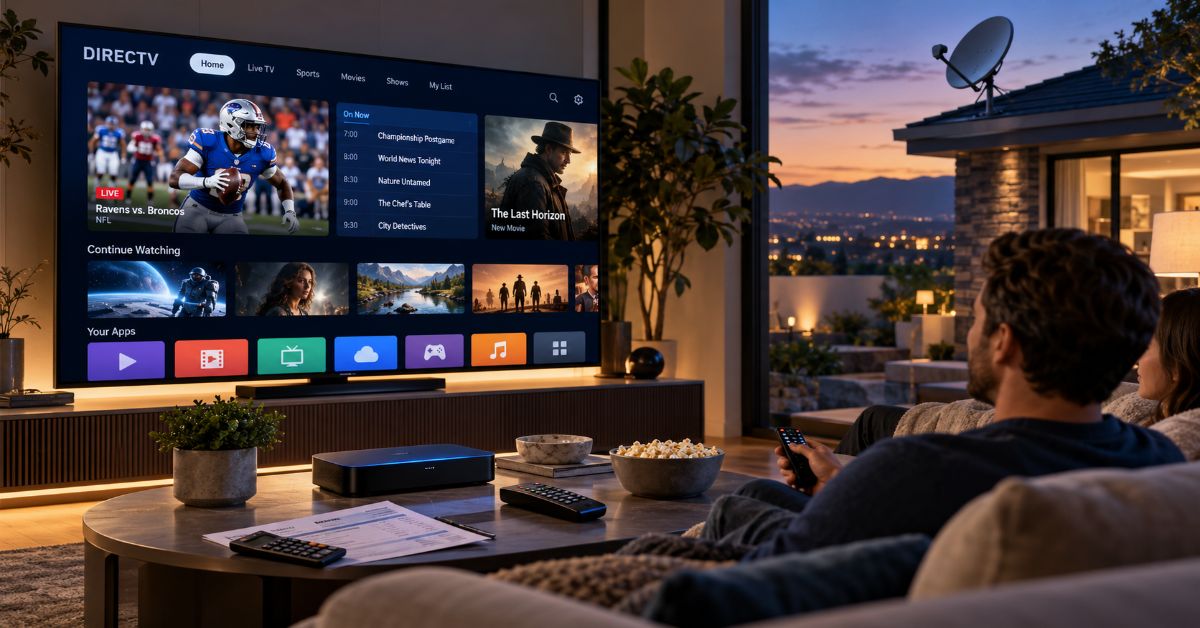
DIRECTV in 2026 is not just a satellite-TV service; it is a hybrid television platform, and that shift matters because two customers can buy “DIRECTV” yet receive fundamentally different products, equipment, fees, and viewing experiences. The brand now spans satellite delivery, internet-based live TV, smaller Genre Packs, free ad-supported channels, sports products, and Gemini hardware that can place DIRECTV content beside third-party streaming apps.
That makes the old question — “How many channels do I get for the price?” — too narrow. A better buying decision starts with five questions: How is the signal delivered? Which channels are genuinely included at the address? What equipment or internet does the plan require? Which sports rights matter to the household? And what does the bill look like after mandatory and optional charges are added?
Current search results often answer those questions on separate pages. Pricing guides focus on package tables, satellite reviews emphasize installation and contracts, and streaming reviews compare DIRECTV with YouTube TV or Hulu + Live TV. That information is useful, but the product has moved toward one brand with multiple ways to buy television. This guide therefore treats DIRECTV as one system with several delivery and packaging choices, then shows where those choices create real advantages, hidden friction, or unnecessary expense.
What DIRECTV Actually Is Now
DIRECTV launched in the 1990s as a satellite television provider, but its current model is broader. Customers can still subscribe through satellite hardware, yet they can also receive live television over an internet connection, use the DIRECTV app on compatible devices, choose narrower Genre Packs, or watch free ad-supported channels through MyFree DIRECTV.
The strategic change is not merely “satellite plus an app.” DIRECTV is increasingly trying to become the layer through which a household finds live channels, on-demand programs, sports, free channels, and separate streaming apps. In 2025, the company expanded its Genre Packs and described them as an alternative to the traditional one-size-fits-all bundle. Its current package pages also let buyers choose between satellite, streaming with a Gemini device, and app-only internet delivery.
That broader catalog also changes what viewers discover. A family browsing movies may still want a content-first guide such as Aperplexity’s Disney Movies Guide 2026, because a TV platform can aggregate access without solving the separate problem of what is actually worth watching.
Satellite, Internet TV, and App-Only Access
The most important distinction is delivery. Satellite and internet-based DIRECTV can share familiar package names, but they fail differently, require different infrastructure, and suit different homes.
| Decision factor | Satellite DIRECTV | Internet / app DIRECTV |
| Signal path | Dish and receiver bring live TV to the home | Home internet connection delivers channels and on-demand content |
| Installation | Outdoor equipment and installation are normally part of setup | No dish; device setup can be self-service |
| Internet dependence | Lower for core live satellite channels | High; weak broadband or Wi-Fi can affect viewing |
| DVR model | Receiver / Genie-based recording | Cloud DVR for streaming plans |
| Moving homes | Equipment and line-of-sight make moves more involved | Usually easier for renters and frequent movers |
| Weather exposure | Severe weather can interrupt satellite reception | Internet outages or congestion are the larger risk |
| Best fit | Rural homes, traditional channel surfers, households with limited broadband | Renters, app-first viewers, homes with reliable broadband |
The real trade-off is failure mode
Satellite avoids using the household’s broadband for every live channel, which can matter in rural areas or homes with data limits. The trade-off is physical infrastructure: the dish needs an adequate signal path, weather can interfere, and moving service can involve installation work.
Streaming removes the dish and makes multi-device viewing easier, but it transfers reliability to the home network. A fast internet plan does not guarantee a good TV experience if Wi-Fi coverage is poor, several devices compete for bandwidth, or the connection is unstable during peak hours.
Packages, Genre Packs, and the End of One Big Bundle
DIRECTV still sells large Signature packages such as ENTERTAINMENT, CHOICE, ULTIMATE, and PREMIER. The more interesting change is Genre Packs: smaller products organized around a viewing interest rather than a traditional channel ladder.
DIRECTV currently markets five Genre Pack families — MySports, MyEntertainment, MyNews, MiEspañol, and MyKids — with mini-packs and bundled streaming services varying by product and promotion. The idea is sensible: a household that mostly watches sports should not automatically have to fund dozens of unrelated lifestyle or entertainment channels.
| Household pattern | Better starting point | Why |
| Mostly one category | Genre Pack | Reduces unrelated channels and can lower the entry price |
| Several viewers with different tastes | Signature package | Broader shared lineup may cost less than stacking multiple narrow products |
| Sports-first household | MySports or CHOICE/above | Choice depends on local RSNs, league networks and add-ons |
| Young family | MyKids or broader package | Useful if children’s programming dominates, less so if adults need broad live TV |
| General channel surfer | Signature package | Traditional guide and wider selection fit the behavior better |
Where Genre Packs save money — and where they do not
The savings are strongest when the household’s viewing is concentrated. If most weekly viewing falls into one category, the smaller bundle can remove channels that carry no practical value. But the calculation can reverse when a household starts adding sports, premium networks, movie channels, and separate streaming subscriptions.
A useful rule is to compare the final bundle, not the first package. If a customer needs MyEntertainment plus extra sports plus a premium movie service, the apparently cheaper starting price can converge with or exceed a larger all-in package. That is why package design matters more than the advertised entry price.
Gemini: The Interface Layer That Changes the Product
Gemini matters because it turns DIRECTV from a channel distributor into a navigation layer. The device can surface DIRECTV programming and supported third-party apps in one television experience, reducing input switching and giving users a more unified search-and-remote workflow.
DIRECTV support documentation says Gemini can access the Google Play Store and popular streaming apps. It also makes an important distinction that buyers can miss: third-party apps can require their own subscriptions and logins. A title appearing inside the broader interface therefore should not be interpreted as proof that the title is included in the DIRECTV package.
This is similar to the discovery problem described in Aperplexity’s GIPHY 2026 guide: an interface can make media easier to find without changing who owns it, what subscription unlocks it, or how it is distributed.
Three questions to ask before paying for Gemini
- Will the household actually use one interface for live TV and streaming apps, or does everyone already prefer a Roku, Apple TV, smart-TV home screen, or game console?
- Does the selected offer require a monthly Gemini lease or receiver charge, and is that cost already reflected in the price being compared?
- Which third-party services shown in the interface are included, promotional, or entirely separate subscriptions?
DIRECTV for Sports Fans: Strong, but Not Universal
Sports is still where DIRECTV can justify a premium price for the right household. Current packages emphasize national sports networks, league networks, local stations where available, and regional sports networks on qualifying tiers. The important word is regional: sports availability is controlled by rights, geography, package level, and blackout rules rather than by the DIRECTV brand alone.
The safest way to evaluate the service is team-first, not channel-count-first. Start with the teams and leagues the household watches, list the networks that actually carry those games, then verify those networks for the exact ZIP code and plan. A national package can still fail one local fan if the needed regional network is missing or blacked out.
People searching for unofficial sports streams often arrive there because a legitimate package did not carry a local game. Aperplexity’s Koora Live guide explains why “finding a stream” and verifying a safe, legal, reliable source are different problems; a paid provider should be judged partly by how often it prevents that frustration in the first place.
A sports checklist before checkout
- Verify local ABC, CBS, FOX and NBC affiliates for the service address.
- Check the regional sports network that carries the local NBA, NHL or MLB team.
- Confirm national networks such as ESPN, ESPN2, FS1, TNT, TBS, CBS Sports Network or league channels as relevant.
- Check whether a league product, out-of-market package, or premium sports add-on is separate.
- Read blackout and territorial restrictions instead of assuming every game on a listed network will be viewable.
The Real Monthly Cost: Use the Checkout Number
DIRECTV’s advertised package price is only the first number. Current official package pages show examples in which a Gemini lease fee and, for some sports-heavy plans, a Regional Sports Fee are added to the base rate. Promotions can also change across the first month, first three months, or a longer 24-month period.
A better comparison uses an effective monthly cost: base package + required device fees + Regional Sports Fee + premium add-ons + taxes and regulatory charges + separate streaming subscriptions + home internet cost for streaming, minus temporary promotional credits.
| Cost layer | Why it matters | Buyer action |
| Base package | Headline price is easiest to compare but can be promotional | Record both promo and post-promo price |
| Gemini / receiver | Can add a recurring hardware charge | Confirm whether device is optional or required for the offer |
| Regional Sports Fee | Can materially raise CHOICE/ULTIMATE/PREMIER in eligible areas | Check ZIP-specific amount |
| Premium networks | Free introductory periods can auto-renew | Write down renewal date and regular rate |
| Internet service | Streaming requires broadband that satellite core channels do not | Include the portion of internet cost attributable to the household’s needs |
| Taxes / regulatory fees | Vary by address and service type | Use final checkout, not marketing copy |
Worked example: why a smaller package can cost more
Imagine a household choosing a lower-cost entertainment-focused pack, then adding a sports product, a premium movie network, and a separate streaming subscription. The base package may look cheaper than a Signature tier, yet the combined bill can be higher. The reverse can also happen: a sports-first household that truly ignores entertainment channels may save by buying a narrower product. The only defensible comparison is the full monthly stack after the exact extras are known.
Local Availability Is Part of the Product
Live television is unusually local. Two customers on the same national plan can receive different local affiliates or regional sports access because carriage agreements and rights vary by market. That makes a ZIP-code check more important than a generic national channel list.
Before subscribing, verify local broadcast stations, regional sports networks, Spanish-language channels if relevant, installation availability for satellite, internet quality for streaming, promotional terms, contract length, cancellation conditions, and the final checkout total.
For viewers comparing hardware around the TV rather than the service itself, Aperplexity’s Crutchfield review is a useful reminder that support, compatibility, setup friction, and return policies can matter as much as headline hardware specifications.
Who Should Choose DIRECTV?
Rural households with limited broadband
Satellite can still make practical sense where home internet is too slow or inconsistent for several hours of daily live streaming. The key constraint is physical: the property needs suitable installation and line of sight.
Sports fans who need regional coverage
DIRECTV is most compelling when it carries a local regional sports network or sports combination that cheaper services do not. That advantage is address-specific, so it should be verified rather than assumed.
Traditional TV viewers who still want streaming apps
Gemini is designed for people who like a channel grid, dedicated remote, and live TV but also want Netflix, Max, Prime Video and other apps in the same device experience.
Renters and frequent movers
Internet-delivered DIRECTV avoids satellite installation and is easier to move between homes with compatible broadband and devices.
Who Should Probably Avoid It?
DIRECTV is a weak fit for households whose main goal is the absolute lowest monthly price, especially if they only watch a few on-demand services and do not care about live news, sports, or a large channel grid. It is also less attractive when a customer dislikes promotional pricing complexity or when the needed sports networks are absent in the local market.
Streaming plans are also a poor match for unreliable broadband. Conversely, satellite is unnecessary friction for a renter who already has excellent internet and rarely watches traditional live channels.
The same principle applies to movie discovery: if the household mostly wants specific films rather than live TV, broad channel access may be less important than choosing the right catalog. Aperplexity’s Bollyflix safety and legality guide also shows why cheap or free access should never be evaluated without considering legitimacy, privacy and security.
The Future of DIRECTV in 2027
The most plausible 2027 direction is continued convergence rather than a return to a satellite-only identity. Three trends already support that view. First, DIRECTV has broadened Genre Packs and free ad-supported programming, giving it more entry points than the traditional large bundle. Second, the company has expanded native app access to more smart-TV platforms, reducing dependence on a dedicated box for internet customers. Third, Gemini and the DIRECTV app increasingly position the service as a place to navigate multiple content sources.
That does not mean satellite disappears. Its value remains strongest where broadband is weak, where households prefer a conventional receiver workflow, or where a specific sports and channel combination is difficult to reproduce elsewhere. The likely future is therefore a layered product: satellite remains an important delivery path, while the brand, interface, billing relationships, Genre Packs, free channels and streaming distribution become more software-driven.
The uncertainty is content economics. Sports rights, retransmission fees, regional networks, and programmer negotiations can change the value of any package quickly. A 2027 buyer should expect the platform architecture to keep simplifying while the rights layer remains complicated.
Key Takeaways
- DIRECTV should be evaluated as a platform with multiple delivery and packaging options, not as one satellite product.
- Satellite and streaming solve different infrastructure problems; neither is automatically better.
- Genre Packs are most valuable when a household’s viewing is concentrated in one category.
- Gemini reduces app and input switching, but third-party subscriptions can still cost extra.
- Sports value depends on the exact ZIP code, team, rights package and blackout rules.
- The checkout total matters more than the advertised starting rate because device, sports, premium and tax charges can change the economics.
- The best plan is the one that covers the household’s actual weekly viewing without paying for a broad bundle merely out of habit.
Conclusion
DIRECTV has changed enough that calling it “a satellite company” now hides more than it explains. Satellite remains part of the product, but the brand also sells internet-delivered live TV, smaller Genre Packs, free ad-supported channels, app-based access, and Gemini hardware that tries to unify traditional television with streaming.
That flexibility is useful, but it also creates more ways to misread the offer. A low starting rate can expand after fees and add-ons; a sports channel can be available nationally but not for one local team; an app visible through Gemini can still require a separate subscription. The strongest buying process is therefore not to start with the package name. Start with the household’s must-have channels, teams, internet quality, equipment preference and final checkout price. DIRECTV can be an excellent fit for sports-heavy, rural, or traditional-TV households, but only when those specific advantages justify its full cost.
Frequently Asked Questions
Does DIRECTV require a satellite dish in 2026?
No. DIRECTV offers internet-delivered service that can be watched through compatible apps and devices without a satellite dish. Satellite service still requires the relevant outdoor equipment and installation.
Is DIRECTV STREAM the same as satellite DIRECTV?
No. The brand has consolidated its consumer-facing identity, but satellite and internet delivery remain different technologies. Satellite relies on a dish and receiver; internet service relies on broadband and cloud/app delivery.
What is the DIRECTV Gemini device?
Gemini is DIRECTV hardware designed to combine live DIRECTV programming, on-demand content, and supported third-party streaming apps in one interface. Third-party apps may still require separate subscriptions or logins.
Are DIRECTV Genre Packs cheaper than regular packages?
They can be, especially when a household mainly watches one content category. They are not automatically cheaper once multiple Genre Packs, sports extras, premium networks, or separate streaming services are added.
Is DIRECTV good for sports?
It can be one of the stronger live-TV options for sports, particularly where regional sports networks matter. Buyers should verify local affiliates, RSNs, league channels, add-ons, and blackout rules for their ZIP code before subscribing.
How much does DIRECTV really cost?
The real cost is the package price plus any required device or receiver charge, Regional Sports Fee where applicable, premium add-ons, taxes, and separate subscriptions. Streaming customers should also consider the cost and quality of their home internet.
Can I use DIRECTV without Gemini?
Yes. Some internet customers can use the DIRECTV app on supported smart TVs and streaming devices. Whether Gemini is required, optional, or bundled depends on the selected offer and service configuration.
Methodology
This article was researched on October 6, 2026. The SERP review covered a representative sample of high-visibility DIRECTV results from CableTV.com, Reviews.org, Tom’s Guide, Allconnect, Goal.com, Top10.com, and current DIRECTV pages. Search order varies by location, device, and personalization, so this is a competitive snapshot rather than a claim that one fixed global top-ten order exists.
The recurring strengths in competing pages were package tables, channel counts, sports positioning, and separate satellite or streaming reviews. The recurring gaps were the relationship between all of DIRECTV’s current products, the role of Genre Packs in the company’s strategy, Gemini as an aggregation layer, the difference between discovery and subscription entitlement, and a decision framework that starts from household behavior rather than package names.
Pricing, package names, channel availability, sports rights, promotions, taxes and fees can change. The analysis therefore prioritizes current DIRECTV package pages, Genre Pack materials, and Gemini support documentation for product facts, and treats third-party reviews as comparative context rather than as the final authority on availability.
This article was drafted with AI assistance and reviewed by a human editor before publishing. All data, citations, and claims have been independently verified against primary sources.
References
- DIRECTV. (2026). DIRECTV Streaming Live TV Plans.
- DIRECTV. (2026). Genre Packs: Custom TV Plans Built for You.
- DIRECTV. (2026). All about your Gemini device.
- DIRECTV. (2025, February 27). DIRECTV breaks the traditional cable bundle with new Genre Packs.
- LG Electronics. (2025, December 8). DIRECTV expands access to include LG Smart TVs.
- CableTV.com. (2026). DIRECTV Pricing: Satellite vs. Streaming Plans Compared.
- Reviews.org. (2026, July 19). DIRECTV Satellite Packages Review (2026).
- Tom’s Guide. (2026). DirecTV review: Lots of channels, but at what cost?

Disney movies are not one neat genre, and that is exactly why generic “best of all time” lists become confusing: a 1937 hand-drawn fairy tale, a Pixar computer-animated drama, a live-action musical, and a Marvel blockbuster may all sit under Disney ownership while offering completely different viewing experiences. The most useful 2026 guide is therefore not a single ranking. It is a map of what counts as Disney, how the major creative eras changed, and which films fit a particular viewer, mood, age, or reason for watching.
That distinction matters more now because Disney’s catalog spans multiple studios and decades. The official Disney movie catalog currently mixes Walt Disney Animation, Pixar, live action, and major franchise releases. Pixar itself became part of Disney through the completed 2006 acquisition, yet it remains a distinct creative studio rather than another name for Walt Disney Animation. The Walt Disney Company’s acquisition announcement described Pixar as a separate animation leader whose creative and technological resources would combine with Disney’s broader entertainment portfolio.
This guide takes a narrower editorial approach. It uses Walt Disney Animation and Pixar as the core of the viewing recommendations, then brings in live-action Disney only where it meaningfully changes the choice. Marvel, Lucasfilm, and 20th Century titles are acknowledged as Disney-owned film businesses, but they are not mixed into an animation-first ranking. That keeps the article useful instead of turning “Disney” into a label so broad that it stops helping anyone choose a movie.
What Counts as a Disney Movie?
The phrase is used in at least six different ways. Search results often collapse them together, which makes comparisons misleading. A Disney-owned film is not automatically a Walt Disney Animation Studios film, and a film distributed by Disney can belong to a different creative brand.
| Category | Examples | How to treat it in this guide |
| Walt Disney Animation Studios | Core animated features such as Snow White and the Seven Dwarfs, The Lion King, Frozen, Moana and Encanto | Best fit for a traditional “Disney animation” guide |
| Pixar Animation Studios | Toy Story, Finding Nemo, Ratatouille, Up, Inside Out and related films | Disney-owned since 2006, but creatively distinct |
| Disney live action | Mary Poppins, Enchanted, Pirates of the Caribbean and other Disney-branded productions | Broader family/adventure catalog |
| Live-action reimaginings | The Jungle Book (2016), Beauty and the Beast (2017), The Lion King (2019), Mulan (2020), The Little Mermaid (2023) | Useful mainly when comparing adaptation choices |
| Marvel Studios | Marvel Cinematic Universe films | Disney-owned, but not normally what viewers mean by “classic Disney movies” |
| Lucasfilm and 20th Century Studios | Star Wars, Indiana Jones, Avatar and other acquired/franchise titles | Part of Disney’s corporate film portfolio, not the core animation canon |
This definition is the first major difference from many ranking pages. It prevents a common category error: using one score to compare a hand-drawn musical, a Pixar original, a photorealistic remake, and a superhero film as if they were trying to achieve the same thing.
Disney Animation by Creative Era
Release dates tell you when a film arrived. Creative eras tell you why it feels the way it does. The labels below are editorial groupings rather than official studio classifications, but they are more useful for understanding changes in story design, technology, music, villain writing, and family relationships.
The feature-film breakthrough: 1937–1942
Snow White and the Seven Dwarfs established the commercial possibility of feature-length Disney animation. The Academy later honored Walt Disney with a special award for the film, describing it as a major screen innovation that pioneered a new entertainment field. Pinocchio, Fantasia, Dumbo, and Bambi then showed that the studio was not locked into one visual or narrative formula. The era is defined by hand-crafted character animation, orchestral ambition, fairy-tale or fable structures, and technical experimentation.
The package-film years: 1940s
Wartime conditions pushed Disney toward lower-cost anthology or “package” features made from shorter musical and narrative segments. Make Mine Music, Fun and Fancy Free, Melody Time, and The Adventures of Ichabod and Mr. Toad can feel unusual to viewers expecting one continuous princess-style story, but that is precisely their historical value. They show a studio adapting its production model rather than repeating the prewar formula.
Postwar rebuilding and broader subjects: 1950s–1970s
Cinderella helped re-establish the feature fairy tale, while later films widened the range through animal stories, literary adaptations, adventure, and comedy. One Hundred and One Dalmatians, The Jungle Book, The Aristocats, Robin Hood, and The Many Adventures of Winnie the Pooh are often less structurally grand than later Renaissance musicals, but they are central to Disney’s “comfort viewing” identity.
The Disney Renaissance: 1989–1999
The Little Mermaid through Tarzan created the most recognizable modern Disney formula: Broadway-influenced songs, clearer character wants, romantic or family stakes, theatrical villains, sidekick comedy, and climactic emotional payoff. Beauty and the Beast became the first fully animated feature nominated for the Academy Award for Best Picture, an important marker of how seriously the form was being treated beyond children’s entertainment.
The experimental and CG transition: 2000s
The 2000s are more interesting than their reputation. Lilo & Stitch, Atlantis: The Lost Empire, Treasure Planet, Brother Bear, Meet the Robinsons, and Bolt show a studio testing visual styles and story types while computer animation became dominant across the industry. This is also the period when Pixar’s influence on mainstream animation was impossible to ignore, culminating in Disney’s 2006 acquisition of Pixar.
The modern family-and-identity era: 2010s–2020s
Tangled, Wreck-It Ralph, Frozen, Big Hero 6, Zootopia, Moana, Encanto, Strange World, Wish, and Moana 2 move the center of gravity away from the old “princess meets prince” template. Romance still exists, but sibling relationships, community responsibility, inherited expectations, grief, cultural identity, and family systems increasingly drive the plot. That change is one reason modern Disney films often work better for adult viewers than their marketing suggests.
A Better Way to Rank Disney Movies
No single score can turn taste into fact. Still, a transparent framework is more useful than an unexplained ranking. For this guide, the editorial score is a decision aid, not a scientific measure: 30% story design, 20% visual craft, 15% music/sound, 15% cultural or historical importance, 10% rewatch value, and 10% fit for the intended audience.
| Film | Editorial score /100 | Why it stands out |
| Beauty and the Beast (1991) | 93 | Best all-round Renaissance musical |
| The Lion King (1994) | 92 | Epic scale, music, family conflict |
| Toy Story (1995) | 92 | Animation-history landmark and efficient storytelling |
| Ratatouille (2007) | 91 | Adult-friendly theme, craft, rewatch value |
| Moana (2016) | 90 | Adventure, music, cultural setting, family duty |
| Pinocchio (1940) | 89 | Visual craft and historical importance |
| Lilo & Stitch (2002) | 88 | Chosen family, comedy, unusual tone |
| Encanto (2021) | 88 | Family systems, music, emotional specificity |
| The Emperor’s New Groove (2000) | 86 | Comedy timing and distinctive voice |
| Treasure Planet (2002) | 84 | Adventure, visual identity, overlooked ambition |
The point is not that 93 is objectively “better” than 92. The point is that readers can see what is being rewarded. A parent choosing a gentle first film should not use the same criteria as an animation student studying technical breakthroughs or an adult looking for a story about ambition and identity.
The Disney Movie Compass: Choose by Mood, Not Prestige
A more practical system is to classify how a film feels. This is where many current rankings leave search intent unanswered. People rarely sit down thinking, “Show me the historically most important Disney title.” They think, “I want something funny,” “nothing too scary,” or “give me a movie that will actually hit emotionally.”
| Viewing mood | Typical feel | Good starting films |
| Comfort Disney | Gentle humor, familiar rhythm, lower intensity | Winnie the Pooh, The Many Adventures of Winnie the Pooh, Ratatouille |
| Chaos-comedy Disney | Fast jokes, oddball characters, comic momentum | The Emperor’s New Groove, Lilo & Stitch |
| Adventure Disney | Travel, discovery, danger, big environments | Treasure Planet, Atlantis, Moana |
| Reflective Disney | Identity, grief, family pressure, growing up | Encanto, Inside Out, Coco |
| Epic Disney | Destiny, kingdoms, large conflict, mythic scale | The Lion King, Hercules, Mulan |
| Dark Disney | Fear, death, villainy, gothic or intense imagery | The Black Cauldron, The Hunchback of Notre Dame, parts of Pinocchio |
| Music-first Disney | Songs carry character and plot | Beauty and the Beast, The Little Mermaid, Encanto, Moana |
For a couple building a themed movie night, the same mood-first logic also works with a broader date-night planning framework: choose the social energy first, then the film, food, and setting around it.
For a longer home marathon, Aperplexity’s staycation guide already recommends turning a private film festival into an intentional event rather than endless scrolling; Disney eras are an easy theme for that format.
Underrated Disney Movies Worth Reconsidering
“Underrated” should not mean “a film the writer personally likes.” A more useful definition is a movie whose current reputation or visibility is lower than the value it offers to a specific audience.
The Great Mouse Detective
A compact mystery with strong atmosphere and one of Disney’s more theatrical villains. Best audience: Viewers who want a brisk detective story rather than a princess musical.
Atlantis: The Lost Empire
A pulpy ensemble adventure with angular visual design and less emphasis on songs. Best audience: Viewers who like exploration and science-fiction/fantasy worldbuilding.
Treasure Planet
A science-fiction reworking of Treasure Island with a strong Jim Hawkins–Silver relationship. Best audience: Older children, teens, and adults who want adventure with emotional weight.
Meet the Robinsons
A messy but sincere story about invention, failure, and belonging. Best audience: Families who want a hopeful film without a conventional fairy-tale structure.
The Princess and the Frog
A late hand-drawn feature with a New Orleans setting, strong music, and a protagonist defined by work and ambition. Best audience: Musical fans and viewers interested in the end of Disney’s modern hand-drawn era.
Winnie the Pooh (2011)
A short, low-stakes alternative to louder modern animation. Best audience: Young children or adults looking for calm comfort viewing.
Recurring Story Patterns That Explain Why Disney Feels Like Disney
Home versus the outside world
Ariel wants the human world. Belle wants a life beyond her small town. Rapunzel leaves the tower. Moana leaves the reef. The specific culture and stakes change, but the dramatic engine is similar: safety is also limitation, and growth requires crossing a boundary.
The misunderstood outsider
Dumbo, Quasimodo, Hercules, Lilo, Elsa, and several Pixar protagonists are treated as strange, dangerous, inadequate, or out of place. The repeated appeal is not simply “be yourself.” It is the tension between social judgment and self-definition.
Chosen family and repaired family
Modern Disney storytelling increasingly distinguishes biological family from healthy connection. Lilo & Stitch is the clearest chosen-family example, while Encanto is about repairing an existing family system rather than escaping it. Big Hero 6, Toy Story, and Finding Nemo approach belonging from different angles but use relationships as the engine of change.
The villain as a form of control
Classic villains often externalize a social threat: Ursula turns desire into a predatory contract, Mother Gothel uses emotional control, Scar weaponizes betrayal and legitimacy, and Cruella turns obsession into cruelty. Newer films sometimes replace a single villain with systems, fear, family expectations, or internal conflict, which changes the shape of the climax.
Cultural Context Matters More Than a “Representation” Score
Cultural setting should be discussed with more precision than a simple good/bad label. The right questions are: what source material or tradition inspired the story, who was consulted, what was changed for adaptation, and where criticism remains reasonable.
Moana offers a useful documented example. Disney says filmmakers began research trips to Pacific islands in 2011 and formed the Oceanic Cultural Trust with anthropologists, historians, cultural experts, and wayfinders from across Oceania. That does not make every creative choice immune from criticism. It does show a formal consultation process that can be evaluated rather than guessed at.
Other films require different context. Mulan adapts a legendary Chinese figure through a distinctly Disney musical structure. Pocahontas turns a real historical person and colonial history into romance, which creates a much more serious accuracy problem. Coco, Encanto, and The Princess and the Frog each use place, family, music, and cultural detail differently; they should not be treated as equivalent examples merely because their settings are culturally specific.
Originals Versus Live-Action Remakes
The useful question is not “Which version is better?” It is “What changed, and did that change create new value?” Remakes often add runtime, backstory, visual realism, new songs, or revised character motivation. Those additions can deepen a story, but they can also reduce stylization or simply repeat a familiar plot at greater scale.
| Story | Versions | Main adaptation question |
| The Jungle Book | 1967 / 2016 | Photorealistic animals, more continuous adventure plot, darker danger |
| Beauty and the Beast | 1991 / 2017 | Expanded backstory, added songs, more literal worldbuilding |
| The Lion King | 1994 / 2019 | Photorealistic look, less facial elasticity, near-identical story architecture |
| Mulan | 1998 / 2020 | Major plot, tone, music and mythology changes |
| The Little Mermaid | 1989 / 2023 | Expanded character motivations, new songs, longer live-action structure |
A remake earns its place when the new medium changes the experience in a meaningful way. Visual realism alone is not automatically improvement, especially in stories that depend on exaggerated facial expression, musical rhythm, or impossible physical comedy.
Disney Movies for Different Audiences
For young children
Start with emotional intensity, not just age ratings. Winnie the Pooh, The Many Adventures of Winnie the Pooh, Cars, and parts of Toy Story are easier entry points than films built around death, separation, transformation, or frightening villains. Parents should still check individual sensitivities; “family film” is not the same as “stress-free film.”
For adults who think Disney is only for children
Ratatouille, Inside Out, Coco, The Hunchback of Notre Dame, Encanto, Up, and Lilo & Stitch are strong counterexamples because their central conflicts involve purpose, grief, family pressure, prejudice, identity, or responsibility. The stories remain accessible to children, but much of their meaning is aimed at adult experience.
For viewers who dislike princess romance
Try The Lion King, Lilo & Stitch, Big Hero 6, Zootopia, Ratatouille, The Incredibles, Inside Out, or Treasure Planet. Disney’s catalog is much broader than the princess brand that dominates merchandise and cultural shorthand.
For viewers who do not like musicals
Pixar is the easiest route because most of its films use score and songs without functioning as musicals. Within Walt Disney Animation, Atlantis, Treasure Planet, Zootopia, and Raya and the Last Dragon are better fits than Beauty and the Beast, Frozen, Encanto, or Moana.
Four Watch Orders That Actually Teach You Something
Beginner order
- The Lion King
- Beauty and the Beast
- Toy Story
- Lilo & Stitch
- Ratatouille
- Moana
- Encanto
This order moves quickly across musical, non-musical, hand-drawn, CG, Disney, and Pixar styles without forcing a new viewer through a complete chronology.
Animation-history order
- Snow White and the Seven Dwarfs
- Fantasia
- One Hundred and One Dalmatians
- The Little Mermaid
- Beauty and the Beast
- Toy Story
- The Princess and the Frog
- Tangled
- Spider-Man: Into the Spider-Verse as a non-Disney comparison point
- Encanto
The Spider-Verse entry is intentionally a comparison, not a Disney title. It helps show how the wider animation industry continued to change visual language after Disney and Pixar had normalized CG feature production.
Comfort-to-intensity order
- Winnie the Pooh
- Ratatouille
- The Emperor’s New Groove
- Lilo & Stitch
- Encanto
- The Lion King
- The Hunchback of Notre Dame
Underrated-adventure order
- The Great Mouse Detective
- Atlantis: The Lost Empire
- Treasure Planet
- Meet the Robinsons
- The Princess and the Frog
How Disney Movie Discovery Is Changing
Movie choice is increasingly shaped by search interfaces, recommendation systems, short-form clips, GIFs, fan edits, and platform catalogs rather than by a video-store shelf or a theatrical re-release. That matters because visibility is not the same as quality. A film that produces strong memes or recognizable songs can stay culturally present while a quieter title disappears from recommendation loops.
Aperplexity’s GIPHY guide is useful background on how searchable animated media, APIs, and distribution networks shape what people discover and share online; movie culture now travels through those small media fragments as much as through trailers.
Disney also markets films as franchise ecosystems rather than isolated releases: theatrical campaigns, streaming placement, merchandise, theme parks, music, short-form social media, and cross-brand promotion can all reinforce one title. That commercial reach can preserve a film’s visibility, but it is not proof of artistic quality.
The distinction between attention and actual audience behavior also appears in Aperplexity’s analysis of innovative marketing campaigns in 2026, which separates reach, participation, action, and business impact instead of treating buzz as a complete result.
The Future of Disney Movies in 2027
The clearest 2027 trend is not a total reinvention of Disney’s formula. It is portfolio balancing: sequels and familiar franchises will continue alongside selective originals and studio-specific bets. Disney’s official movie catalog currently lists Frozen 3 for November 24, 2027, Pixar’s Gatto for 2027, and other major family releases across the wider company slate. Those dates can move, so release information should be rechecked before publication.
Creatively, the pressure is harder to solve. Audiences have demonstrated that familiarity can still generate enormous attention, but repeated remakes and sequels create a long-term risk if brand recognition replaces surprise. The most durable path is likely a mix: recognizable worlds for commercial stability, distinctive original concepts for creative renewal, and stronger differentiation between Walt Disney Animation, Pixar, and live action so each label means something.
There is also a preservation story. Disney’s film archive and restoration work show that older animation is being remastered with modern scanning and color tools. That keeps early films visually accessible to new audiences and makes the catalog less dependent on nostalgia alone. The competitive advantage in 2027 may therefore be unusually broad: Disney can market a new Frozen film while simultaneously reintroducing an 80-year-old animated feature in restored form.
Key Takeaways
- Do not use “Disney” as if it names one studio; Walt Disney Animation, Pixar, live action, Marvel, Lucasfilm, and 20th Century serve different creative purposes.
- Creative eras explain the catalog better than a release-year dump because they reveal changes in music, animation technology, villain design, family relationships, and narrative structure.
- A transparent ranking framework is useful only when readers can see the criteria; taste should not be disguised as mathematical certainty.
- Mood, age, romance level, musical intensity, and emotional weight are better decision tools than prestige for choosing a film tonight.
- Underrated titles become easier to defend when the recommendation names the right audience and the specific value being overlooked.
- Cultural consultation is evidence to examine, not a shield against criticism; source material and historical adaptation still need context.
- For 2027, Disney’s biggest creative challenge is balancing franchise familiarity with enough original visual and narrative risk to keep the brand from feeling repetitive.
Conclusion
The Disney catalog is too large and too varied for one ranking to settle the question of what is “best.” A better guide starts by defining the studio, then asks what changed across eras and what the viewer actually wants from the next two hours. That is why Snow White, Toy Story, Lilo & Stitch, Ratatouille, Moana, and Encanto can all be essential for different reasons without needing to defeat one another in a universal list.
The strongest way to explore Disney is to build small, purposeful paths through the catalog. Watch the Renaissance if you want theatrical songs and villains. Watch the 2000s experiments if you want stranger visual and narrative choices. Use Pixar for adult-friendly emotional storytelling. Compare a remake with its animated source when you want to study adaptation rather than simply relive a familiar plot.
That approach makes the catalog less overwhelming and more interesting. Disney’s history becomes a set of creative decisions—not just a stack of titles—and the next movie choice becomes easier because the question changes from “What is the best Disney movie?” to “What kind of Disney movie fits this viewer right now?”
Frequently Asked Questions
What was the first full-length Disney animated movie?
Snow White and the Seven Dwarfs, released in 1937, was Walt Disney’s first feature-length animated film and a landmark in the development of feature animation. The Academy later gave Walt Disney a special award recognizing the film as a major screen innovation.
What is the difference between Disney and Pixar movies?
Walt Disney Animation Studios and Pixar are separate animation studios with different histories and creative cultures. Disney completed its acquisition of Pixar in 2006, so Pixar is Disney-owned, but Pixar films are not Walt Disney Animation Studios films.
Which Disney movies are best for adults?
Ratatouille, Inside Out, Coco, Encanto, Lilo & Stitch, Up, The Hunchback of Notre Dame, and Beauty and the Beast all offer adult-level themes involving ambition, grief, family systems, identity, responsibility, or prejudice.
What are good Disney movies without princess romance?
The Lion King, Lilo & Stitch, Big Hero 6, Zootopia, Treasure Planet, Ratatouille, The Incredibles, and Inside Out are strong choices when romance is not the main appeal.
What are the most underrated Disney movies?
The Great Mouse Detective, Atlantis: The Lost Empire, Treasure Planet, Meet the Robinsons, The Princess and the Frog, and Winnie the Pooh (2011) are useful starting points because each offers a distinct style or audience value that receives less attention than Disney’s biggest franchises.
Are Disney live-action remakes better than the originals?
Not automatically. A remake is more useful when it changes the story, performance style, worldbuilding, or emotional detail in a way the original medium could not. Visual realism alone can add spectacle while reducing the expressive exaggeration that makes animation powerful.
What Disney movie should a first-time viewer start with?
The Lion King is the safest all-purpose starting point because it combines music, humor, family stakes, a clear villain, and strong visual storytelling. For a younger child, Winnie the Pooh may be gentler; for an adult skeptic, Ratatouille is a stronger introduction.
Methodology
Research was conducted on October 5, 2026. Before drafting, a representative ten-result competitive sample for “disney movies” and close-intent variants was reviewed, including Time Out, Disney’s official movie catalog, Rotten Tomatoes, StudioBinder, Screenwise, Film Chop, DocumentaryTube, and other high-visibility results. Search order varies by location, personalization, device, and index freshness, so this is a current competitive benchmark rather than a permanent global top ten.
The recurring strengths were obvious: broad title coverage, critic scores, nostalgic rankings, age guidance, and recognizable franchise picks. The recurring gaps were more useful. Many pages mixed Walt Disney Animation, Pixar, Disney-branded live action, and the wider corporate portfolio without clear inclusion rules. Rankings often hid their criteria. Few pages combined creative eras, mood-based selection, adaptation analysis, cultural context, and multiple watch orders in one coherent decision system. This article was therefore structured independently around definitions, creative change, and viewer choice rather than mirroring any competitor’s H2 order.
Primary validation came from Disney’s official movie catalog, The Walt Disney Company’s Pixar acquisition record and Oceanic Cultural Trust reporting, and the Academy of Motion Picture Arts and Sciences for Snow White and Beauty and the Beast milestones. Internal links were verified as live aperplexity.com pages and were included only where the connection was direct. The editorial ranking is a transparent judgment framework, not a scientific or audience-survey score. Streaming availability is deliberately not presented as permanent because catalogs vary by country and change over time.
This article was drafted with AI assistance and reviewed by a human editor before publishing. All data, citations, and claims have been independently verified against primary sources.
References
Academy of Motion Picture Arts and Sciences. (1939). The 11th Academy Awards: Snow White and the Seven Dwarfs special award.
Academy of Motion Picture Arts and Sciences. (1992). The 64th Academy Awards memorable moments: Beauty and the Beast.
The Walt Disney Company. (2006, May 5). Disney completes Pixar acquisition.
The Walt Disney Company. (2024, December 6). How the Oceanic Cultural Trust took Moana 2 to new depths.
The Walt Disney Company. (2024). Preserving a legacy: Inside the Walt Disney Studios Film Archive.
Disney. (2026). Disney Movies: Official movie catalog. Retrieved October 5, 2026.
-

 Technology2 months ago
Hitomi la in 2026: Domain Status, Safety and Risks
-

 Technology1 month ago
Scrolller in 2026: How It Works, Risks and Alternatives
-

 General2 months ago
Voozon.com: What It Is and How the Platform Works
-

 Technology2 months ago
ThomsonKids.com: Website Guide, Topics & Trust Check
-

 Business2 months ago
incabizgrowth.com Review: Content, Trust & Use
-

 Technology1 month ago
Filetype:pdf Windows Update: Find Better Microsoft Guides
-

 General1 month ago
Elizabeth Fraley Kinder Ready Court Case: What the Public Record Supports
-

 Technology2 months ago
thesindi com Review: What TheSindi.com Really Offers