
General
NBA League Pass Review: Blackouts, Plans & Real Value

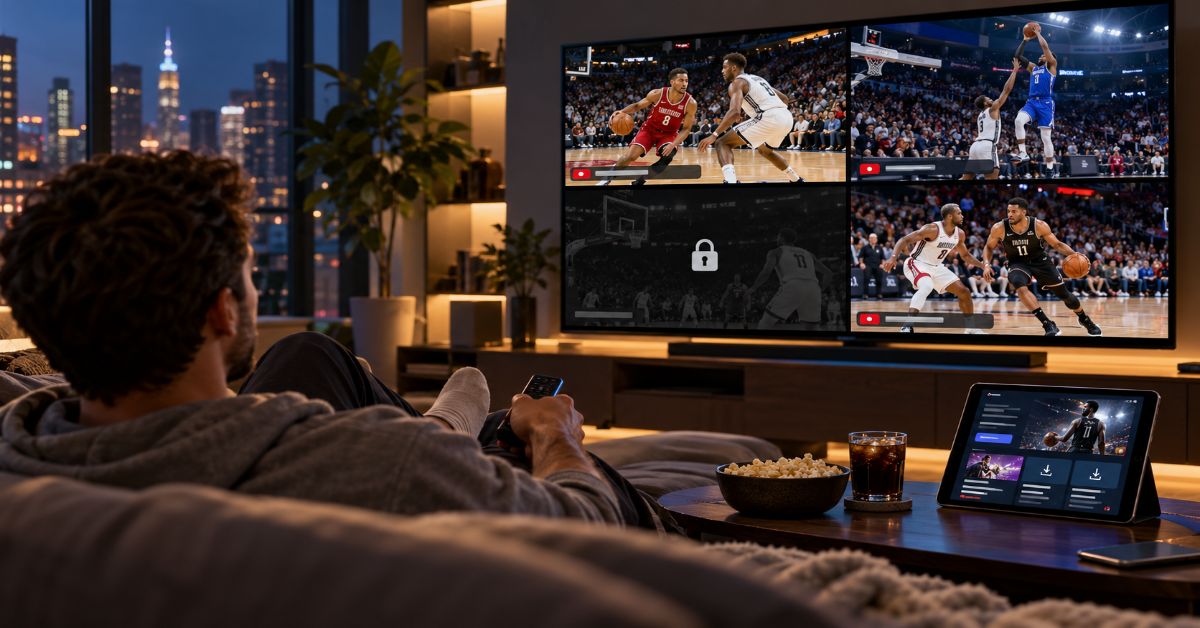
NBA League Pass is best for fans who want a lot of out-of-market NBA games, but its biggest promise is also its biggest trap: it can offer hundreds of games without guaranteeing that the one game you care about tonight is available live. In 2026, the buying decision is less about raw game count and more about your location, favorite team, national-TV habits, screen setup, and tolerance for replay delays.
That distinction matters because current U.S. pricing looks simple—Standard is $16.99 per month or $109.99 for the season, while Premium is $24.99 per month or $159.99 for the season—but the value can swing sharply between two fans paying the same price. A Lakers fan in Chicago, a Bulls fan in Chicago, a fantasy player watching four games at once, and an international fan in Pakistan can all have materially different experiences from the same product.
Most League Pass reviews stop after price, devices, and a generic warning that “blackouts apply.” This guide goes further. It maps what actually happens by game type, explains the difference between multiview and simultaneous devices, separates U.S. rules from international access, and gives a three-game test that can expose a bad purchase before you subscribe. For broader context on how sports viewers compare licensed services with less predictable streaming sources, see Aperplexity’s NFLBite safety and legality guide.
What NBA League Pass Actually Is
NBA League Pass is the NBA’s direct-to-consumer subscription for live and on-demand games, replays, alternate feeds, archived games, statistics, and related NBA programming. In the United States, the cleanest mental model is not “all NBA games.” It is “most live out-of-market games, plus replays and extra viewing features.”
That out-of-market distinction is the hinge. Local team games can be blacked out, nationally televised games can be unavailable live through League Pass, and Premium does not override those rights restrictions. The service becomes more attractive when your favorite team is outside your local market or when you follow several teams rather than one hometown team.
This rights-first way of evaluating streaming is also useful beyond basketball. Aperplexity’s The TV App guide makes a similar distinction between the page a viewer uses and the actual source or rights holder behind a stream.
Plans, Pricing, and the Features That Change the Decision
NBA pricing varies by country, purchase channel, promotion, and point in the season. The U.S. figures below were checked on NBA.com on October 6, 2026 and should be rechecked before publication or purchase.
| Plan | Current U.S. price | Best fit | Main limitation |
| League Pass | $16.99/mo or $109.99/season | One viewer following multiple out-of-market teams | One concurrent stream; commercials; no offline downloads |
| League Pass Premium | $24.99/mo or $159.99/season | Households, travelers, and viewers who value fewer interruptions | Higher price; blackout rules still apply |
| Team Pass | $13.99/mo | One out-of-market team | Small savings versus Standard; same blackout problem |
| NBA TV | $8.99/mo | Studio coverage and NBA TV programming | Not a substitute for broad live-game access |
| League Pass Audio | $9.99 listed option | Audio-first fans | No live video |
Standard vs Premium: where the extra $50 per season goes
Premium is not a better rights package. It is a better viewing package. The practical upgrades are up to three concurrent devices, offline downloads on supported Android and iOS devices, and in-arena coverage during breaks instead of conventional commercials. Both Standard and Premium advertise multiview for up to four games at once on supported experiences, so multiview should not be confused with the number of separate devices that can stream simultaneously.
For one person watching from a television or laptop, Standard usually wins on value. Premium becomes easier to justify when several people in the household watch at the same time, when a traveler wants offline full games or condensed games, or when commercial-break presentation matters enough to pay for it.
How Blackouts Work in the United States and Canada
Blackouts are the core purchasing risk. The NBA says U.S. League Pass restrictions include local NBA teams and nationally broadcast games. Local broadcasts become available on demand three days after the live broadcast concludes; nationally broadcast games become available at 6:00 a.m. Eastern Time the following day. In Canada, national blackout rules also apply, and local or broadcaster arrangements differ from the U.S. model.
| Game situation | Live result in U.S. League Pass | Replay timing / note |
| Out-of-market, not nationally televised | Usually available live | On demand afterward |
| Your local-market team | Usually blacked out live | NBA says three days after the live broadcast |
| Nationally televised game | Unavailable live via League Pass in affected U.S. market | Available at 6:00 a.m. ET next day |
| Audio for a blacked-out game | Available live | Useful when video rights block the game |
| International viewer outside U.S./Canada | Generally broader live access | Country rights still need verification |
The three-game blackout test before you subscribe
Do not test League Pass with a random Tuesday game. Test it against your real viewing life. Before buying, check the NBA’s current purchase or blackout tool for three specific upcoming games:
- A game involving your local team. If this is your main reason for subscribing, a blackout warning is a strong signal that League Pass alone will disappoint you.
- A nationally televised matchup you genuinely want to watch live. This shows whether your normal “big game” habit conflicts with League Pass rights.
- An out-of-market, non-national game involving a team you follow. This is the scenario where League Pass usually delivers its clearest value.
If only the third game works live, that is not a technical failure—it is the product design. The question is whether that design matches your habits.
What Games and Season Phases Are Included?
League Pass content spans regular-season games, on-demand replays, NBA TV programming, archived games, and selected special-event coverage. The 2025–26 NBA materials also describe access across the Play-In Tournament, Playoffs, Finals, Summer League matchups, and NBA Cup contexts, but live rights still determine whether a particular game is available in a given market at the moment it airs.
That nuance is easy to miss. A subscription can continue through the postseason and still not function as a complete live Playoffs or Finals replacement in the United States because national partners control live windows. Think of “included in the subscription period” and “available live in your market” as separate questions.
Hidden Features That Matter More Than the Marketing Headline
Home and away broadcast feeds
For selected games, viewers can choose among home, away, Mobile View, language feeds, and alternate presentations. That is more than a cosmetic perk. Local announcing crews frame teams differently, and fans who strongly prefer one broadcast team can make League Pass feel more personalized than a single national feed.
Multiview and live stats
Multiview can put up to four games on one screen on supported setups, while in-game overlays can surface player statistics, other scores, and live information without leaving the stream. For fantasy players, analysts, or anyone following a crowded slate, this changes the product from a single-game stream into a monitoring dashboard.
Offline downloads
Premium subscribers can download full games, recaps, or condensed games on supported Android and iOS devices. This is one of the few Premium features that can materially change how the service works away from home: flights, commutes, unreliable connections, and data-limited travel are obvious use cases. The limitation is equally important—offline viewing is not a blanket capability across every device or every live stream.
Game archives and audio
League Pass includes full-game archives dating back to the 2012–13 season according to current NBA help material, and subscriptions include live radio broadcasts. That makes the service more useful for scouting, rewatching, and audio-first use than a simple “live games” label suggests.
For readers comparing how different sports ecosystems handle live discovery, rights, and stream reliability, Aperplexity’s Koora Live guide provides a useful football-side comparison of licensed and unlicensed access patterns.
Supported Devices, Simultaneous Streams, and a Common Confusion
The NBA App supports a wide range of devices, including iPhone, iPad, Android, Android TV, Apple TV, Roku in selected markets, Chromecast, Amazon Fire TV and Fire Stick, Hisense, Comcast, selected Xbox and PlayStation consoles, Peloton, and web browsers. Availability can vary by country and platform.
| Viewing feature | Standard | Premium | What it actually means |
| Concurrent devices | 1 | Up to 3 | How many separate devices can stream at once |
| Multiview | Up to 4 games | Up to 4 games | Several games inside one supported viewing experience |
| Offline downloads | No | Yes | Download supported game content on Android/iOS |
| In-arena break feed | No | Yes | Arena activity replaces conventional commercial breaks |
| Alternate broadcasts | Yes | Yes | Home/away and selected alternate viewing options |
A five-minute device test
- Confirm the NBA App is available on the device you actually use most.
- Sign in with the NBA ID tied to the subscription or restore the purchase if you bought through an app store.
- Play a replay before game night to confirm video and audio work reliably.
- Check whether the specific feature you care about—multiview, downloads, alternate feeds, AirPlay, or casting—is supported on that device.
- If several people will watch at once, test concurrent streams before assuming that multiple logged-in devices equal multiple simultaneous streams.
NBA League Pass Outside the U.S.: Often Better, Still Not Universal
International viewing is one of League Pass’s strongest advantages. The NBA’s July 2026 blackout guidance states that every NBA game is available live with League Pass in every country except the U.S. and Canada because of blackouts, while its global availability page lists a smaller set of regions where League Pass itself is unavailable. That gives many international fans a much broader live package than U.S. viewers receive.
Still, international should not be read as “identical everywhere.” Pricing, payment methods, app availability, language feeds, and local media-rights arrangements can differ. A reader in Pakistan, for example, should check the local NBA purchase page at checkout rather than copying a U.S. price into a buying decision.
Is NBA League Pass Worth It? Use Cost per Watched Game
A season package can look cheap when divided by hundreds of theoretically available games and expensive when divided by the games you actually watch. The more honest metric is cost per meaningful watched game.
Using the current $109.99 U.S. Standard season price, a fan who watches 55 meaningful games pays about $2.00 per watched game. A fan who watches only 15 meaningful games pays about $7.33 per watched game. Premium at $159.99 works out to about $2.91 per game at 55 games, before assigning any value to three-device streaming or offline downloads.
| Viewer profile | Likely value | Why |
| Follows multiple out-of-market teams | High | League Pass solves the exact rights gap it is built for |
| Follows one local team | Low to mixed | Local blackouts can block the main reason for subscribing |
| Watches mostly national marquee games | Low to mixed | National live windows can sit outside League Pass |
| Watches on demand after work | High | Replay access weakens the pain of live blackouts |
| Household needs 2–3 streams | Higher with Premium | Concurrent devices create practical household value |
| Travels or commutes often | Higher with Premium | Offline downloads can matter more than ad removal |
| International fan outside U.S./Canada | Often high | Broader live access can make the package more complete |
A second-screen habit can also change value. Some fans watch the game while following live conversation and news elsewhere; Aperplexity’s Threads vs X comparison explains why X remains useful for real-time sports discussion while Threads is more feed-driven.
Who Should Not Buy League Pass?
The service is a poor fit when the marketing promise sounds broader than your actual rights situation. Skip or delay the purchase if most of your viewing falls into one of these patterns:
- You mainly watch your local team and expect that team to be available live every night.
- You mainly watch nationally televised marquee games and already pay for the services carrying those broadcasts.
- You need more than three simultaneous streams in one household.
- You expect Premium to remove blackouts.
- You rarely watch replays and become frustrated when a live game is delayed by rights restrictions.
- You only want a few games per month and cannot justify the cost per watched game.
How to Avoid Buying the Wrong Plan
Check rights before features
Start with the games, not the feature list. A beautiful multiview experience is irrelevant if your primary team is blacked out. Verify your location, local team restrictions, and national broadcasts first.
Check the purchase channel
Billing and cancellation follow the channel where you subscribed. NBA.com purchases can be managed through the NBA account flow, while Apple, Google Play, Amazon, Roku, or a TV provider may require cancellation in that platform. This matters because “cancel League Pass” is not one universal button.
Check renewal timing
Monthly subscriptions can generally be paused or canceled for the end of the current billing cycle. Season-long or annual subscriptions can be set not to renew at the end of the term. Save the cancellation confirmation and verify the next billing date rather than assuming access stops immediately.
The Future of NBA League Pass in 2027
The most credible 2027 trend is not the disappearance of League Pass but deeper integration into the NBA’s fragmented media environment. The 2025–26 national-rights reset brought ABC/ESPN, NBC/Peacock, and Amazon Prime Video into a new distribution era, while the NBA simultaneously continues to sell direct League Pass access. That makes the product increasingly valuable as an out-of-market layer rather than a one-subscription replacement for national and local rights.
The NBA is also leaning into features that make a direct app more differentiated from a conventional channel: multiview, alternate broadcasts, player data, Mobile View, in-arena feeds, archives, and offline viewing. Those are durable advantages because they improve the experience around the game even when rights fragmentation remains.
The uncertainty is local distribution. Regional sports rights continue to change team by team, and a broader industry shift toward direct-to-consumer local options could either reduce League Pass frustration or create even more subscription decisions. For 2027, the safest expectation is that the NBA will keep improving the product while rights geography remains the real constraint.
Key Takeaways
- League Pass is an out-of-market product first; treating it as “every NBA game live” is the easiest way to buy the wrong service.
- Current U.S. pricing makes Standard the default value choice for one viewer, while Premium earns its price through three streams, offline downloads, and in-arena break coverage.
- U.S. local blackouts and national broadcast restrictions are different rules with different replay timing.
- Multiview and simultaneous streams are separate features: four games on one screen is not the same as four devices watching at once.
- International viewers often receive broader live access, but local checkout and rights terms still need verification.
- The three-game pre-purchase test is more useful than any generic “is it worth it?” verdict.
- Cost per watched game exposes whether a season plan fits real behavior rather than theoretical access.
Conclusion
NBA League Pass is a strong product when it solves the problem it was actually built to solve: watching lots of out-of-market basketball. It becomes a weak purchase when a fan expects it to replace local and national broadcasters without friction. That difference is why two readers can look at the same $109.99 season price and reach opposite conclusions.
For most solo viewers, Standard is the rational starting point. Premium is a targeted upgrade for households, travelers, and viewers who value offline access or in-arena break feeds. The harder question is not Standard versus Premium. It is whether League Pass has the live rights to the games that matter to you. Check three real matchups, calculate your likely cost per watched game, and verify your device setup. If those three checks work, League Pass can be excellent value. If they fail, no amount of extra features will fix the mismatch.
Frequently Asked Questions
Can I watch my local NBA team on NBA League Pass?
In the United States, local team games are generally blacked out live on League Pass. The NBA says locally blacked-out games become available on demand three days after the live broadcast concludes. Use the current ZIP-code blackout checker before subscribing.
Does NBA League Pass include nationally televised games?
The subscription includes broad season access, but nationally televised games are not available live through League Pass in affected U.S. markets. The NBA says those games become available on demand at 6:00 a.m. Eastern Time the following day.
Does League Pass Premium remove blackouts?
No. Premium adds viewing features, not broader rights. Blackout restrictions still apply. Its main upgrades are up to three simultaneous streams, offline downloads on supported mobile devices, and in-arena coverage during commercial breaks.
Can I watch NBA League Pass on multiple devices?
Standard supports one concurrent stream. Premium supports up to three concurrent devices. Both can support multiview with up to four games in one supported viewing experience, which is different from streaming on four separate devices.
Can I download NBA games to watch offline?
Yes, with League Pass Premium on supported Android and iOS devices. The NBA says subscribers can download full games, recaps, or condensed games. Offline support is not the same as downloading every live stream on every device.
Is NBA League Pass better for international fans?
Often. NBA blackout guidance says every game is available live in countries outside the U.S. and Canada, subject to service availability and local rights. Pricing, payment methods, and available feeds can still differ by country.
Is NBA League Pass worth it for one team?
It depends on whether that team is local to you. An out-of-market fan may get excellent value. A local fan can face frequent live blackouts, making Team Pass or Standard poor substitutes for the broadcaster that actually holds local rights.
Methodology
Research was conducted on October 6, 2026. I reviewed a current high-visibility search sample for “NBA League Pass” and close commercial-intent variants. The sample included NBA.com and NBA Help Center pages plus competitor coverage from CableTV.com, LiveSportsOnTV, Cord Cutters News, TechRadar, Tom’s Guide, Forbes, and related current search results. Search order changes by location, device, personalization, and freshness, so this is a competitive sample rather than a claim about one permanent global top 10.
The recurring competitor pattern was price → plan comparison → blackout warning → devices → “is it worth it?” verdict. The strongest pages add firsthand viewing experience or detailed plan tables. The recurring gaps were scenario testing, clear separation of local versus national replay timing, multiview versus concurrent-device confusion, international rights treatment, and a method for calculating value from actual viewing behavior. This article was structured around those gaps rather than mirroring any single source.
For factual validation, primary sources were prioritized: the NBA League Pass purchase page, NBA League Pass Help Center, blackout guidance, student discount guidance, global availability, NBA App documentation, purchasing guidance, and terms. Pricing and rights can change, so volatile figures should be rechecked before publication. No firsthand subscription test was claimed.
This article was drafted with AI assistance and reviewed by a human editor before publishing. All data, citations, and claims have been independently verified against primary sources.
References
- National Basketball Association. (2026). NBA League Pass purchase and subscription page.
- National Basketball Association. (2026, July 30). League Pass Blackouts. NBA Help Center.
- National Basketball Association. (2026, April 22). NBA League Pass Student Discount. NBA Help Center.
- National Basketball Association. (2026). NBA League Pass. NBA Help Center.
- National Basketball Association. (2026). Global NBA League Pass Availability. NBA Help Center.
- National Basketball Association. (2026, April 23). Purchasing NBA League Pass. NBA Help Center.
- National Basketball Association. (2026). What is the NBA App? NBA Help Center.

Amor Fati means “love of fate,” but the serious philosophical claim is more demanding than simply accepting what happens: it asks whether a person can stop fighting the reality of what has already occurred without surrendering the power to choose what comes next. That tension is what motivational versions often erase. The Stanford Encyclopedia of Philosophy places the idea inside Nietzsche’s broader commitment to life-affirmation rather than simple calmness.
The phrase is also often presented as an ancient Stoic slogan. That is historically sloppy. Stoics taught a close relative of the attitude, but Nietzsche gave the Latin phrase its distinctive modern philosophical force. The difference matters because Stoicism and Nietzsche do not ground acceptance, fate, emotion, and meaning in exactly the same way.
The most useful modern reading therefore needs two guardrails. Acceptance is not moral approval, and fate is not an excuse for passivity. Recognizing that betrayal, grief, illness, discrimination, or failure happened does not require calling the event good. It means beginning from reality rather than spending present agency on an impossible attempt to rewrite the past.
What “Love of Fate” Really Asks
The Latin is straightforward: amor means love; fati is the genitive of fatum, fate. The hard word is love. If the phrase meant only “tolerate what cannot be changed,” resignation would be enough. Nietzsche is reaching for a stronger relationship with necessity: not merely bearing what belongs to one’s life, but becoming less alienated from the life that actually exists.
This does not require enjoying suffering. A loss can remain a loss. An injustice can remain wrong. The point is that an unwanted event does not have to become a permanent veto on the value of the whole biography. A person can grieve what happened and still refuse to make the rest of life conditional on its erasure.
That distinction fits well with Aperplexity’s personal development guide, which treats growth as increased capability and choice rather than endless self-optimization. A philosophy of affirmation is useful only when it creates room for better action, not another standard people can fail.
Nietzsche’s Version Is Stronger Than Resignation
Nietzsche introduces the phrase in section 276 of The Gay Science in 1882. The passage connects necessity with beauty and with his ambition to become a “Yes-sayer.” In Ecce Homo, he returns to the expression as a formula for greatness and distinguishes loving necessity from merely bearing it.
A recent scholarly analysis, Nietzsche on Amor Fati, stresses that the passage is not simple. Nietzsche moves from seeing necessity as beautiful to making things beautiful, then introduces love and fate. That makes the concept closer to a creative form of reconciliation than to a command to smile at bad luck.
Resignation says: “This cannot be changed, so I will endure it.” Nietzschean affirmation says: “This is now part of my life, and I will decide how it belongs to the life I continue to create.” The second claim is harder because it asks for interpretation and self-overcoming rather than numbness.
Stoicism Is a Relative, Not an Exact Synonym
The clearest ancient parallel appears in Epictetus, Enchiridion 8, which tells readers not to demand that events happen as wished, but to wish them as they do happen. That sounds close to love of fate, yet the surrounding Stoic system gives the advice a different foundation.
Stoicism centers virtue, disciplined judgment, and action within what depends on us. Nietzsche’s project emphasizes affirmation, self-creation, and overcoming resentment. Calling the phrase “Stoic” is therefore acceptable only as shorthand for a family resemblance; treating Nietzsche and Marcus Aurelius as interchangeable is not.
| Question | Stoic emphasis | Nietzschean emphasis |
| Main goal | Virtue, sound judgment, inner freedom | Life-affirmation and self-overcoming |
| Hardship | Judge accurately and respond well | Incorporate necessity into the life one affirms |
| Agency | Act on what depends on you | Create, choose, resist, and reinterpret within necessity |
| Main risk | Acceptance becomes emotional flattening | Suffering gets romanticized as inherently valuable |
Eternal Recurrence Is the Stress Test
Nietzsche’s eternal recurrence makes the idea more severe. As an existential thought experiment, it asks what it would mean to live the exact same life again and again, with every joy, humiliation, illness, mistake, success, and loss returning.
A person can tolerate an event while still wishing it could be deleted from the biography. Recurrence tests something stronger: can the whole chain be affirmed without editing out the unwanted parts? This need not be read as a claim about the physical universe. It works as a test of whether a life is organized around regret and escape or around a fuller willingness to own what has become necessary.
The progression is useful: acceptance asks whether a fact can be faced; resilience asks whether a person can recover; love of fate asks whether the fact can be included in a life that is still affirmed; recurrence asks whether the whole story could be affirmed again.
Acceptance Is Not Approval
This is the boundary that keeps the idea from becoming cruel. Recognition concerns reality; approval concerns moral judgment. A person can accept that abuse, discrimination, betrayal, or a wrongful decision occurred without approving the person or system that caused it.
The same distinction protects action. Someone can accept a job loss and still appeal a decision, pursue another role, retrain, or change industries. Someone can acknowledge illness and still seek treatment. Someone can recognize an oppressive condition precisely so it can be resisted more effectively.
A practical companion is Aperplexity’s critical thinking exercises: separate the fact, the interpretation, the assumptions, and the next decision. That is where philosophical acceptance becomes operational instead of passive.
amor fati vs Fatalism, Optimism and Toxic Positivity
These attitudes often get blended because each can sound calm from the outside. Their logic is different.
| Approach | Core attitude | Agency | Main risk |
| Fatalism | The outcome is fixed, so effort may be pointless | Often minimized | Giving up before action is tested |
| Resignation | This cannot be changed, so endure it | Limited | Passive endurance becomes the endpoint |
| Optimism | Things will probably improve | Yes | Underestimating uncertainty |
| Toxic positivity | Negative emotion should be replaced by a positive interpretation | Sometimes | Suppressing grief or warning signals |
| Stoic acceptance | Control judgment and response, not externals | Yes | Oversimplifying emotion or social conditions |
| Love of fate | Affirm reality without demanding a different past | Yes, strongly | Romanticizing suffering or imposing the ideal on others |
Fatalism gives up because reality is fixed. Nietzschean affirmation begins from what is already fixed and asks what can still be created from it. If the philosophy reduces agency, it has been turned into the thing it is often confused with.
The Deeper Opponent Is Permanent Resentment
The opposite of affirmation is not sadness. Grief can be honest. Anger can identify a boundary. The deeper opponent is a permanent mental lawsuit against reality: the repeated demand that the past should not be the past.
That loop can turn counterfactual thinking into identity. The mind replays the event, imagines the alternative life, and lets an old fact govern present choices. The challenge is not to forget or forgive automatically. It is to stop assigning an unchangeable event unlimited authority over the life that remains.
This also separates creating meaning from claiming that the universe planted a lesson in every tragedy. A person can reject cosmic purpose and still decide what an event will mean in the life built afterward.
Aperplexity’s invisible string theory explainer makes a related distinction between personally meaningful ideas about fate and claims that can be established as literal forces. Meaning can matter without becoming evidence of cosmic causation.
A Five-Step Practice Without Forced Positivity
A practical method should reduce wasted conflict with facts while preserving judgment and choice.
1. Name the fact
Describe what happened in one sentence without adding a verdict about identity or the future. “I was rejected for the role” is a fact. “My career is over” is a forecast.
2. Separate fact from story
List the conclusions added to the event. Mark which are supported, which are guesses, and which are emotional predictions.
3. Identify remaining agency
Find the next controllable move: ask for feedback, seek care, set a boundary, gather evidence, rest, appeal, change direction, or deliberately wait.
4. Incorporate rather than glorify
Ask what the event changes about knowledge, priorities, boundaries, capability, or direction. The goal is not to praise the event; it is to stop treating it as unusable.
5. Act without demanding certainty
Take the best available step without requiring proof that the next outcome will be better.
Real-Life Cases Where the Distinction Matters
Career failure
A layoff can be faced without being reframed as a blessing. The useful question becomes what is required now: income protection, feedback, a narrower search, retraining, or a different field. Aperplexity’s career change framework uses the same evidence-first logic: test the next move instead of treating frustration as destiny.
Grief
Mourning does not prove that someone has failed at philosophy. A person can affirm life while still feeling the absence of someone or something irreplaceable. The mistake is turning “love your fate” into an order not to feel pain.
Illness
Facing the body’s actual condition can support intelligent decisions about treatment, adaptation, support, and limits. It does not replace medical care or require someone to call illness good.
Regret
A bad decision can remain a bad decision while becoming part of later judgment. Regret is informative when it changes future choices; it becomes corrosive when it keeps reopening a trial whose verdict cannot alter the past.
What Modern Psychology Can and Cannot Say
A 2026 study in The Journal of Positive Psychology treated amor fati as a measurable positive existential variable in adults from the United States and India. Researchers used a six-item Amor Fati Scale centered on affirmation of one’s life as a whole, including good and bad experiences, and reported associations with aspects of happiness beyond positive and negative affectivity.
The result is interesting but limited. It does not prove that adopting the philosophy causes happiness. It does not establish a treatment for depression, trauma, anxiety, or grief. It does not prove cultural universality. The strongest conclusion is narrower: a related attitude can be operationalized and studied rather than discussed only as a quotation.
| Claim | Current evidence supports | Current evidence does not support |
| The attitude can be measured | A six-item existential life-affirmation scale has been used in research | That one scale captures Nietzsche’s entire philosophy |
| It relates to well-being | 2026 cross-cultural data found associations with aspects of happiness | That it causes happiness |
| It may generalize across cultures | The study included U.S. and Indian samples | Universal validity across all cultures and situations |
| It may guide reflection | The construct can frame responses to good and bad life experiences | Replacing therapy, medical care, social support, or structural change |
Ethical Limits: When “Love Your Fate” Becomes Harmful
The phrase is safest as a discipline a person applies to their own relationship with reality. Used as a command aimed at somebody else, it can become cruel. Telling a grieving, abused, discriminated-against, or traumatized person to love what happened can erase accountability and shift responsibility toward the person who suffered.
There is also a danger of romanticizing pain. Suffering does not automatically create wisdom or strength. Sometimes it simply damages health, trust, safety, or opportunity. Growth may follow, but it is not morally required.
Finally, acceptance can become spiritual bypassing if it is used to avoid treatment, anger, legal remedy, political action, grief, or a necessary boundary. Recognition of reality can be the first step toward changing preventable harm, not a reason to comply with it.
The Future of amor fati in 2027
The most credible development by 2027 is better measurement, not a scientific verdict on Nietzsche. The 2026 happiness research and other emerging work using the six-item scale suggest that researchers are beginning to compare existential affirmation with variables such as affect, grit, hope, and self-congruence.
That creates an opportunity to distinguish affirmation from optimism, resilience, acceptance, and emotional suppression. It also creates a risk: a demanding philosophical ideal can be reduced to a wellness score. Future work will be more useful if it is longitudinal, culturally careful, and explicit about circumstances in which acceptance becomes maladaptive or is used to excuse avoidable harm.
Takeaways
- “Love of fate” is stronger than tolerance but does not require moral approval of everything that happens.
- Nietzsche gave the phrase its distinctive modern force; Stoicism offers close relatives rather than an exact synonym.
- Acceptance concerns facts, while approval concerns values. Action can follow acceptance rather than disappear because of it.
- Eternal recurrence tests whether a person can affirm the total shape of a life rather than merely survive isolated events.
- The practical enemy is permanent negotiation with an unchangeable past, not ordinary sadness or grief.
- Recent psychology can measure a related attitude and report associations with well-being, but causation and clinical value remain unproven.
- Use the idea as a personal discipline of reality and agency, not as a demand that other people praise their suffering.
Conclusion
amor fati matters because it refuses the false choice between accepting reality and acting on it. A person can admit what is already true without pretending it was pleasant, deserved, fair, or good. From there, the question changes from “How do I make the past different?” to “What can I make from a life in which this is now part of the truth?”
Nietzsche pushes that question beyond composure. The ambition is to develop an affirmative relationship with the life that contains necessity. Used carefully, that can loosen resentment and restore agency. Used carelessly, it can romanticize suffering or silence justified resistance. The defensible version keeps both sides intact: do not deny the fact, and do not surrender the next choice.
Frequently Asked Questions
What does “love of fate” mean in simple words?
It means “love of fate”: affirming the reality of one’s life, including unwanted events, instead of remaining trapped in the wish that the past had been different. It does not require approving injustice or refusing to change what can still be changed.
Is it a Stoic idea?
It has strong Stoic relatives, especially Epictetus’s advice to align desire with events as they actually occur. The exact Latin phrase is associated with Nietzsche, whose version is tied to life-affirmation and self-overcoming.
What is the difference between love of fate and fatalism?
Fatalism often weakens agency by treating effort as pointless. Love of fate begins with what is already real and asks how to affirm and use it while continuing to act. Accepting starting conditions is not the same as giving up on future choices.
Does it mean loving suffering?
Not necessarily. Pain can remain painful, and harm can remain wrong. The ethical limit is crucial: the idea should not be used to pressure another person to approve abuse, grief, illness, discrimination, or injustice.
How does eternal recurrence relate to the idea?
Eternal recurrence intensifies the test of affirmation. Instead of asking whether one can tolerate one event, it asks whether one could affirm the entire life if every detail returned. It exposes the gap between surviving a biography and saying yes to its total shape.
How can someone practice it daily?
Name the fact, separate it from the story added to it, identify what remains controllable, decide what the event changes, and take the next action without demanding certainty. The point is not to praise the event but to stop trying to rewrite the past.
Is it good for mental health?
A 2026 study found associations between the measured attitude and aspects of happiness in U.S. and Indian adults, but that does not prove causation or establish treatment value. Philosophy should not replace therapy, medical care, social support, or practical intervention when those are needed.
Methodology
Research was completed on October 7, 2026. I reviewed a representative ten-result current search sample for the focus query and close variants, including Stoicism Now, The Stoic Shelf, Stoic Fundamentals, Stoicism Explained, Applied Stoic, Stoic Handbook, Dictionary.com, The Lexicon of Feeling, Wikipedia, and current scholarly/philosophy results. Search order varies by country, device, personalization, and index freshness, so this is a competitive benchmark rather than a permanent global ranking.
The repeated competitor structure was definition, Stoicism, Nietzsche, quotations, and practical advice. The main gaps were historical blending of Nietzsche and Stoicism, weak treatment of acceptance versus approval, limited ethical criticism, and little engagement with emerging psychological measurement. The article’s structure was built independently around those gaps.
Validation prioritized Nietzsche scholarship, the Stanford Encyclopedia of Philosophy, Epictetus’s Enchiridion, and the 2026 Journal of Positive Psychology research by Edward C. Chang and Shanmukh V. Kamble. Older scholarship is retained where it remains directly relevant to interpretation. Four Aperplexity internal destinations were verified as live before insertion.
This article was drafted with AI assistance and reviewed by a human editor before publishing. All data, citations, and claims have been independently verified against primary sources.
References
Chang, E. C., & Kamble, S. V. (2026). Beyond affect, examining amor fati as a distinct and useful positive existential variable in accounting for happiness in US and India. The Journal of Positive Psychology. Source
Elgat, G. (2016). Amor Fati as Practice: How to Love Fate. The Southern Journal of Philosophy, 54(2), 174–188. Source
Han-Pile, B. (2011). Nietzsche and Amor Fati. European Journal of Philosophy, 19(2), 224–261. Source
Stern, T. (2013). Nietzsche, Amor Fati and The Gay Science. Proceedings of the Aristotelian Society, 113(2pt2), 145–162. Source
Stanford Encyclopedia of Philosophy. Friedrich Nietzsche. Source
Epictetus. Enchiridion, Chapter 8. Source

Art history is the study of more than famous artists, dates, and movements: it asks how objects were made, who financed and used them, how materials and ideas moved, why some works survived, and how institutions now shape what people see. That matters because the standard “cave painting to contemporary art” timeline can make the field look like a parade of styles when the deeper story is a network of labor, trade, ritual, power, preservation, and changing audiences. The British Academy’s overview of the discipline explicitly challenges the old survey model, while current teaching resources also emphasize context, materials, technique, and reception.
A useful way to think about an artwork is as the visible endpoint of hidden infrastructure. A blue robe may point to mineral extraction and trade. A marble monument may depend on quarrying, transport, engineering, and teams of carvers. A devotional image may have been touched, carried, lit by candles, or seen only by a restricted audience. A museum object may have crossed borders through sale, inheritance, excavation, seizure, collecting, or restitution before reaching a glass case.
This approach does not replace formal analysis. Line, color, scale, texture, composition, and iconography still matter. It simply refuses to treat visual form as self-contained. The strongest art-historical reading connects what the eye sees to the material, social, economic, religious, political, and institutional conditions that made the object possible.
Art Is More Than Style
Why Period Labels Can Mislead
Many introductory pages rank because they offer a clean timeline: Renaissance, Baroque, Romanticism, Impressionism, modernism, and so on. That is useful orientation, but it can also create a false sense that one period cleanly replaces another and that Europe supplies the default clock for the rest of the world.
A Better Alternative: Study Processes as Well as Periods
Period labels are tools invented by later scholars. They compress uneven change into manageable categories. “Medieval,” “Renaissance,” and “modern” do not begin everywhere at the same date, and many cultures organize historical memory around different political, religious, dynastic, ecological, or social markers. A global history therefore works better when periods are paired with processes: art and ritual, art and empire, art and trade, art and reproduction, art and migration, art and industrialization, art and digital technology.
This also changes the question from “Which movement came next?” to “What changed in the conditions of production and viewing?” That is a better question because it can be asked across regions without forcing every tradition into a Western sequence.
Materials Are Historical Evidence
Pigments, Stone, Metal, and Textile as Evidence
The material of an artwork is not a footnote to its meaning. It can reveal geography, technology, wealth, labor, access, and exchange. Getty’s Art & Architecture Thesaurus describes natural ultramarine as a pigment made from lapis lazuli and notes that it was exceptionally costly in medieval and Renaissance European painting. The Metropolitan Museum of Art also documents fine Persian manuscripts using lapis-rich blue associated with Afghanistan.
That single pigment opens several historical questions: Who controlled the mineral source? How did the stone travel? Who could afford the finished color? Which figures or passages received the expensive blue? Why did a patron accept the cost? Similar questions can be asked of gold leaf, silk, ivory, bronze, marble, paper, cotton, lacquer, glass, photography, plastics, and synthetic paint. For readers interested in how image-making becomes a profession rather than a solitary act, Aperplexity’s guide to photography jobs offers a modern parallel: image production still depends on tools, workflows, clients, post-production, delivery standards, and specialized labor.
How Aging and Conservation Change What We See
Materials also change over time. Pigments fade, darken, react with binders, or shift under light and humidity. The National Gallery of Art’s 2025 peer-reviewed Facture volume focuses on change, including pigment alteration, conservation history, imaging, and the network of makers behind objects. That means a viewer may be looking at a surface materially different from the one first seen centuries ago.
| Material clue | What it can reveal | Historical questions |
| Lapis lazuli / ultramarine | Trade, cost, prestige, source geology | Who could obtain it, and why was it used here? |
| Gold leaf | Sacred authority, wealth, reflectivity | Was light part of the original viewing experience? |
| Textiles | Labor, gendered work, trade, social rank | Who spun, dyed, wove, embroidered, wore, or displayed it? |
| Stone and clay | Local geology, transport, engineering | Was the material local, imported, recycled, or politically symbolic? |
| Synthetic pigments | Industrialization and new markets | Did cheaper color alter who could make art or where they could work? |
The Myth of the Solitary Artist
Workshops, Assistants, and Specialized Labor
A museum label often compresses production into one famous name. Historically, however, many works emerged from workshops and teams. Assistants prepared supports and pigments. Printers translated designs into reproducible images. Foundries cast metal. Carpenters built structures. Weavers, embroiderers, gilders, framers, masons, engineers, photographers, installers, and conservators contributed specialized knowledge.
Authorship Is Not the Same as Total Production
The point is not to deny individual authorship. It is to separate authorship from total physical production. A master could design, supervise, revise, or execute the most important passages while other people performed essential work. The modern cult of the solitary genius can erase those relationships, especially where archival records preserve the patron or celebrated artist but not apprentices, women, enslaved workers, servants, colonial laborers, or craft specialists.
A useful biographical counterexample is Stuart Sutcliffe, whose story becomes richer when painting, music, photography, fashion, friendship, and cultural scene are read together. Art-historical identity is often produced at the intersection of networks rather than inside one medium.
Original Settings Change Meaning
Art Before the White-Wall Museum
Most historical art was not made for the neutral white wall. Objects were produced for temples, churches, mosques, shrines, palaces, tombs, homes, streets, processions, theaters, courts, festivals, markets, political ceremonies, or bodily use. Context could include architecture, incense, music, touch, movement, clothing, spoken text, sunlight, candlelight, restricted access, or collective ritual.
What Is Lost When Context Changes
Removing an object from that setting may preserve it while also changing the conditions through which it was understood. A reliquary behind museum glass is not experienced as it was in ritual. A textile flattened on a wall is not the same as a garment on a moving body. A manuscript folio framed individually is separated from page turning, sequence, text, and handling.
This is why site-specific meaning is not decoration around the artwork. It is evidence. The original environment can help explain scale, visibility, iconography, materials, and who had permission to encounter the object.
Viewers Do Not All See the Same Artwork
The Intended, Permitted, and Modern Viewer
Art history becomes sharper when “the viewer” is divided into at least three categories. The intended viewer is the person or group for whom a work was designed. The permitted viewer is the person who could actually access it because of class, gender, religion, rank, membership, geography, or physical placement. The modern viewer encounters the object through museum display, reproduction, classroom framing, social media, or search.
Why Interpretation Changes Across Audiences
Those audiences do not share the same visual literacy. A symbol that once carried a clear religious or political meaning can become opaque. A court portrait may look decorative after the hierarchy it performed has disappeared. An object considered sacred, ancestral, functional, or communal in its original setting can become “fine art” only after collection and museum classification.
Symbolic meaning also travels. Aperplexity’s Invisible String Theory guide shows how a cultural motif can accumulate new meanings across folklore, popular culture, relationships, and modern media. Art history needs the same discipline: separate an object’s documented historical meaning from later reinterpretation instead of treating them as identical.
Fame Is Constructed Through a Visibility Funnel
The Visibility Funnel
An artwork does not become canonical only because it is visually strong. It first has to survive. Then it has to be identified, documented, collected or archived, studied, photographed, catalogued, displayed, reproduced, taught, indexed, and repeatedly discussed. At every stage, other objects drop out.
That creates a visibility funnel: survival → identification → documentation → collection → scholarship → exhibition → textbook presence → digital indexing → popular reproduction. Each stage is shaped by institutions, funding, politics, climate, collecting histories, copyright, photography, language, cataloguing standards, and searchability.
From Textbooks to Search Engines
Modern popular culture adds another layer. The Disney Movies Guide is not an art-history article, but it demonstrates the same canon-making problem in a contemporary medium: eras, distribution, repeated viewing, corporate archives, and cultural memory influence which works remain visible to later audiences.
The Smithsonian’s Collections Search Center illustrates the scale of digital discoverability: it currently exposes millions of collection records and online media. Once collection metadata becomes searchable, it can connect objects to new audiences—but only if records, names, rights information, and images are sufficiently complete.
Trade Routes Were Artistic Networks
How Objects and Ideas Traveled
Cultures were never as sealed as many survey timelines imply. Trade routes moved raw materials, finished objects, craftsmen, motifs, religious ideas, scripts, technologies, and workshop knowledge. The Metropolitan Museum of Art describes long-distance routes across Europe and Asia as channels not only for goods but also for artistic styles, beliefs, languages, and customs.
Borrowing, Shared Ancestry, or Parallel Invention?
The analytical danger is overclaiming influence. Visual similarity does not automatically prove contact. A strong comparison distinguishes direct borrowing, shared ancestry, trade-based exchange, migration, diplomatic gifting, parallel invention, and similar responses to similar materials or problems. That distinction prevents the lazy habit of treating every resemblance as a transmission story.
Provenance and Conservation Create a Second History
The Biography of an Artwork
After creation, an artwork begins another life. It may be moved, sold, inherited, seized, damaged, overpainted, cleaned, reconstructed, reframed, restored, acquired by a museum, returned to a community, digitized, or reattributed. The object therefore has a biography, not just an origin.
Why Provenance Matters
Provenance—the history of ownership—is one of the clearest ways to trace that biography. The Smithsonian describes provenance as an essential curatorial tool for authentication, ownership research, and contextual understanding, while major museums now publish ownership resolutions and restitution cases. The Metropolitan Museum of Art, for example, lists multiple 2025 returns following provenance research.
Technical Imaging and Hidden Evidence
Conservation adds another layer. Scientific imaging can reveal underdrawings, changes, hidden signatures, earlier compositions, material substitutions, and later interventions. In 2025, Smithsonian conservators described modified-camera imaging as a non-invasive way to study pichwai paintings beyond what visible light reveals. The National Gallery of Art likewise uses x-radiography, ultraviolet light, infrared reflectography, microscopy, and scientific analysis to understand technique and condition.
| Artwork state | What can change | Why it matters |
| Creation | Materials, technique, intended setting | Establishes the first historical context |
| Use | Wear, ritual contact, additions, repairs | Records how people actually interacted with it |
| Movement | Ownership, geography, legal status | Changes audience and provenance |
| Conservation | Cleaning, stabilization, replacement, reconstruction | Can alter appearance and scholarly interpretation |
| Museum display | Lighting, label, frame, placement, neighboring works | Creates a new interpretive context |
| Digital reproduction | Crop, color, scale, metadata, search ranking | Shapes what remote viewers think the object is |
A Six-Layer Method for Reading Any Artwork
The Six Questions
The most practical way to turn this systems approach into analysis is to use six layers. They keep visual evidence central while preventing the object from floating free of history.
| Layer | Core question | Evidence to seek |
| 1. Object | What is it physically made of? | Medium, support, scale, condition, technique, inscriptions |
| 2. Maker | Who designed, commissioned, financed, and physically produced it? | Contracts, workshop records, signatures, guilds, patronage |
| 3. Place | Where was it made and first experienced? | Architecture, route, lighting, ritual, room, landscape, access |
| 4. Purpose | What did it do? | Devotion, status, persuasion, memory, decoration, instruction, exchange |
| 5. Movement | How did it travel or change ownership? | Inventories, sales, seizures, gifts, excavation, provenance |
| 6. Afterlife | How has it been restored, displayed, reproduced, and reinterpreted? | Conservation files, catalogues, labels, photographs, digital metadata |
This method resembles good design analysis in one important way: the visible object is only one layer of a system. Aperplexity’s Design Thinking guide makes the same broader point in another field—surface solutions make more sense when the backstage dependencies, users, constraints, and consequences are visible.
How to Turn the Framework Into an Argument
For a student writing a formal analysis, the six layers should not become six disconnected mini-essays. Start with what can actually be seen. Then use historical evidence to explain why those visual choices matter. The goal is a chain of reasoning: observation → contextual evidence → interpretation.
The Future of Art History in 2027
Open Collections and Technical Data
The strongest near-term change is not likely to be a new grand period label. It is better access to technical, provenance, and collection data. In 2026 the Georgia O’Keeffe Museum launched an open digital catalogue raisonné with more than 2,200 searchable works, high-resolution images, exhibition histories, archival material, and research data. Institutions are also expanding conservation imaging and public-facing technical research.
AI, Image Matching, and Collection Discovery
AI will increasingly help with description, transcription, image matching, clustering, multilingual access, and connections across collection databases. MoMA has already used machine learning with Google Arts & Culture to match works across tens of thousands of historical exhibition photographs. UNESCO has also framed AI as a tool with potential for cultural preservation while emphasizing ethical use.
The Bias Problem in Digital Discoverability
The risk is that better computation can reproduce old visibility biases faster. If collection records are incomplete, colonial names remain unexamined, rights data is inconsistent, or under-documented communities are absent from digitization, an algorithm can make the most catalogued objects even more discoverable. In 2027, the useful question will therefore be less “Can AI identify this?” and more “What evidence, terminology, ownership history, and uncertainty should travel with the identification?”
Key Takeaways
- Timelines are orientation tools, not the full structure of art history.
- Materials can function as historical documents because they record trade, technology, cost, labor, and preservation.
- Authorship should be separated from total production; workshops and specialized labor matter.
- Original setting and audience can be as important as iconography for interpreting meaning.
- Canonical fame is partly an institutional visibility process, not a neutral ranking of artistic quality.
- Provenance, conservation, reproduction, and digitization create later chapters in an artwork’s biography.
- The six-layer model—object, maker, place, purpose, movement, afterlife—offers a repeatable way to analyze almost any work.
Conclusion
A visitor standing in front of a painting sees a finished surface. Art history asks what had to happen for that surface to exist, survive, arrive there, and mean something. The answer may involve a mineral extracted thousands of miles away, a patron’s budget, workshop labor, religious use, transport, political power, damage, restoration, collecting, museum classification, photography, and digital indexing.
That wider frame does not make visual analysis less important. It makes it more precise. Color becomes evidence of material and cost. Scale becomes evidence of setting and audience. Repetition can point to workshop practice or reproduction. Damage can reveal use. A museum label can expose a modern classification rather than an original category.
The most useful art history therefore moves in both directions: close enough to notice what an object physically does, and wide enough to see the systems around it. That is how an artwork stops being an isolated masterpiece and becomes a historical object with a material life, a social life, and an afterlife.
Frequently Asked Questions
What is art history in simple terms?
Art history is the study of visual and material culture in historical context. It examines what objects look like, how they were made, who made and used them, what they meant to different audiences, how they moved, and how later institutions preserved and interpreted them.
How is art history different from art appreciation?
Art appreciation often focuses on looking, enjoyment, style, and basic interpretation. Art history makes historical arguments using visual evidence plus documents, material analysis, provenance, archaeology, religious or political context, and other sources.
Why do materials matter in art history?
Materials can reveal trade routes, technology, cost, labor, geography, patronage, and conservation problems. A pigment, stone, textile, metal alloy, or photographic process can therefore provide historical evidence that is not visible in subject matter alone.
Why are art-history timelines limited?
Timelines simplify a huge field into periods and movements. They are useful for orientation but can imply clean transitions, center Europe as the default chronology, and hide overlap, exchange, regional differences, and long-lived traditions.
What is provenance in art history?
Provenance is the ownership and movement history of an object from its creation to the present. It can help establish authenticity, legal title, collecting history, restitution questions, and changes in meaning caused by relocation.
How do museums shape art history?
Museums influence what is preserved, photographed, catalogued, displayed, researched, and taught. Their labels, lighting, classifications, acquisitions, conservation choices, and digital databases can all shape how later audiences understand an object.
How can a beginner analyze an artwork historically?
Start with direct observation, then ask six questions: What is the object made of? Who made and funded it? Where was it first seen? What purpose did it serve? How did it move? How has conservation, display, reproduction, or scholarship changed its afterlife?
Methodology
Research was conducted on October 7, 2026. I reviewed a representative high-visibility SERP sample for “art history” and close intent variants, including the British Academy, Courtauld Institute, Khan Academy/Smarthistory material, Oxford Academic, The Art Story, StudioBinder, Dummies, university explainers, and current timeline-style guides. Search order varies by country, device, personalization, and index freshness, so this is a competitive sample rather than a permanent ranking claim.
The recurring strengths were clear definitions, movement timelines, formal-analysis basics, and study guidance. The recurring gap was systems thinking: fewer pages integrated materials, labor, trade, original setting, restricted audiences, canon formation, provenance, conservation, restitution, digitization, and search visibility into one practical framework. This article therefore uses an independently structured six-layer method rather than mirroring any competitor’s outline.
Factual validation prioritized museum, university, scholarly, and official cultural-heritage sources, including the National Gallery of Art, The Metropolitan Museum of Art, Getty, Smithsonian, MoMA, UNESCO, Princeton University Art Museum, and the Georgia O’Keeffe Museum. No firsthand museum visit, laboratory test, provenance investigation, or conservation treatment is claimed.
Limitations: art history is too broad for any single article to represent every regional tradition, medium, period, or scholarly debate. Examples are selective and are used to demonstrate methods rather than create a universal canon. Claims about future use of AI and digital collections are trend-based and remain subject to institutional policy, funding, rights, and data-quality constraints.
This article was drafted with AI assistance and reviewed by a human editor before publishing. All data, citations, and claims have been independently verified against primary sources.
References
Berrie, B. H. (2025). Pigment alteration and color change. Facture, 7. National Gallery of Art.
Getty Research Institute. (n.d.). Ultramarine blue (pigment). Art & Architecture Thesaurus.
Glass, R. (n.d.). What is art history and where is it going? Khan Academy.
Metropolitan Museum of Art. (2000, October). Trade routes between Europe and Asia during antiquity.
Metropolitan Museum of Art. (n.d.). About The Met’s collecting practices.
Museum of Modern Art. (n.d.). Identifying art through machine learning.
National Gallery of Art. (n.d.). Painting conservation.
Smithsonian Institution. (n.d.). Provenance. National Collections Program.
Tickner, L. (2019, November 18). What is art history? The British Academy.

What is Coomer? The word has two meanings that search results often blur together: first, “coomer” is internet slang for a caricature of someone seen as obsessively consuming sexual content; second, the name has been used by an unofficial archive associated with creator-platform material. That distinction is the key to understanding the topic, because a meme label and a third-party archive raise completely different questions.
The slang traces back to the “Coomer” Wojak meme. Know Your Meme records the character’s origin on 4chan in December 2018, with wider use during 2019. The label is deliberately mocking and exaggerated. It should not be treated as a clinical diagnosis or as a precise description of a person’s mental or sexual health.
The website meaning is more concrete. Coomer.su became associated with a public archive that organized or republished material originating on creator subscription services. It was not simply another subscription platform. Current WHOIS data shows the coomer.su domain remains registered through August 25, 2027, but is listed as “REGISTERED, NOT DELEGATED.” In plain English, registration does not prove an active service.
This guide keeps those meanings separate, then looks at the issues most shallow explainers skip: archive versus platform, public access versus reuse rights, creator consent, clone-domain risk, safer browsing decisions, and what creators can do when their work is copied.
The Two Meanings Behind the Word
Coomer as internet slang and a meme
In internet culture, “coomer” is a derogatory or self-mocking slang term associated with a Wojak character. The meme exaggerates pornography consumption and masturbation into a stereotype. Know Your Meme dates the earliest known image to December 23, 2018, and says the character spread more widely during 2019. Dictionary.com similarly describes the term as a crude riff on sexual slang and the “-oomer” family of Wojak labels. The useful takeaway is simple: the word is cultural shorthand, not a diagnosis.
That matters because search pages sometimes slide from “meme about compulsive behavior” into medical-sounding claims. A meme can reflect real anxieties about compulsive habits, but using “coomer” to label a person does not establish a recognized disorder, severity level, cause, or treatment need.
Coomer as a website reference
The same word is also used to refer to Coomer.su and related archive identities. High-ranking 2026 pages largely agree on the broad category: an unofficial archive or mirror that organized creator content originating elsewhere. They disagree more sharply on current domains, operational status, ownership, and how confidently a successor domain should be described. That disagreement is a warning against treating any “new Coomer URL” claim as permanent fact.
| Meaning | What it refers to | Main question to ask |
| Slang / meme | A mocking internet archetype tied to excessive sexual-content consumption | Is the term being used as satire, insult, or self-description? |
| Archive / mirror | A third-party service associated with republished creator-platform material | Where did the material come from, and was redistribution authorized? |
| Lookalike / clone | A domain using similar branding or search terms | Is there reliable evidence it is connected to the earlier service? |
Archive, Platform and Search Engine Are Not the Same Thing
A major source of confusion is calling every content website a “platform.” The business and rights model changes depending on what the site actually does. A subscription platform normally gives creators official accounts, controls memberships and payments, and publishes under documented terms. A search engine points users toward material hosted elsewhere. An archive or mirror stores, indexes, or republishes copies.
| Type | Main function | Typical creator relationship | Rights risk |
| Subscription platform | Hosts creator accounts, memberships and payments | Creator usually controls an official account | Depends on platform terms and uploads |
| Search engine | Helps users discover pages or media | Usually redirects to source pages | Indexing and snippet rules vary |
| Archive or mirror | Indexes, stores or republishes copies | Creator authorization may be unclear or absent | Higher copyright, consent and provenance uncertainty |
| Social platform | Enables publishing and interaction | Users post under platform rules | Moderation and takedown policies apply |
This distinction is also why the site should not be treated as an official companion to OnlyFans, Fansly, Patreon, or another creator service unless the original platform itself says so. A third-party archive can display familiar creator names while remaining completely separate from the source platform.
Aperplexity’s Fapello guide reaches a similar conclusion for another adult-content aggregation service: the visible website can be evaluated, but licensing history, consent, and backend provenance should not be assumed from presentation alone.
Publicly Visible Does Not Mean Free to Reuse
One of the most important distinctions in this topic is between access and authorization. A photo, video, or post can be visible on the internet while still being protected by copyright, covered by platform terms, or subject to privacy and consent restrictions. “I can see it” is not the same statement as “I can copy and redistribute it.”
| Layer | Question | Why it matters |
| Public access | Can someone view the material? | Visibility says little about reuse rights. |
| Copyright | Who owns the work? | The owner may control copying and distribution. |
| Redistribution permission | Did the owner authorize this copy or mirror? | Authorization can differ from original publication. |
| Consent | Did the depicted person agree to this third-party publication? | Intimate-image abuse can exist alongside copyright issues. |
| Platform rules | Did acquisition or reposting violate source-platform terms? | Terms can restrict scraping, sharing, or account misuse. |
The U.S. Copyright Office explains that Section 512 creates a notice-and-takedown system for qualifying online service providers. A copyright owner can send a compliant notice identifying the protected work and the allegedly infringing material. But copyright is only one legal layer, and laws differ by jurisdiction. A person depicted in an intimate image may have privacy or non-consensual-intimate-image remedies even when that person is not the copyright owner.U.S. Copyright Office Section 512 resources
Consent Is a Separate Question From Copyright
Copyright and consent often overlap, but they are not interchangeable. A creator may own the copyright in a self-produced image and object to an unauthorized mirror. In another case, a person may appear in an intimate image without owning the copyright, yet still have privacy, image-abuse, or other legal protections. The same repost can therefore trigger more than one type of complaint.
This is the part many ranking pages underdevelop. They focus on whether a site loads, what it archives, or which domain is current. For creators, the harder problem is persistence: removing a post from the original subscription account does not automatically erase third-party copies, search indexes, caches, screenshots, or later reuploads.
Google now provides a dedicated flow for requesting removal of personal sexual images from Search, including real images shared without consent and certain fake sexual images using a person’s likeness. Google also makes clear that removing a result from Search does not remove the material from the source website.Google’s personal sexual image removal guidance
For adults facing non-consensual intimate-image abuse, StopNCII.org can create a digital fingerprint, or hash, of an image on the user’s device. Participating platforms can use those hashes to identify matching uploads. The service does not remove content from the entire internet, so it should be treated as one layer of a broader response.
What Happened to Coomer.su?
The old domain is a good example of why status claims need dates. WHOIS data checked in October 2026 lists coomer.su as registered on August 25, 2022, paid through August 25, 2027, and in the state “REGISTERED, NOT DELEGATED.” A registered domain can therefore exist without functioning as the normal public service.current WHOIS record for coomer.su
Several 2026 articles claim that a .st domain became the successor during 2025. That may reflect a real migration, but readers should separate observed continuity from permanent identity. Mirror sites change domains, clones imitate familiar branding, and search results can preserve outdated URLs long after operations move. A domain that resembles an earlier service is not automatically official, safe, or controlled by the same operator.
This is the same problem described in Aperplexity’s Hitomi domain-status guide: domain continuity and service continuity are different facts. A familiar name can survive while infrastructure, operators, redirects, or rights policies change underneath it.
A Five-Part Trust Test for Unofficial Archives
Instead of asking only “is Coomer safe?”, a better question is whether the specific domain and interaction can pass five trust checks. This avoids the false confidence of a single yes-or-no safety label.
- Identity: Who operates the site, and is there a credible legal or support identity?
- Content provenance: Where did the material come from, and can the site show a legitimate source or license?
- Consent: Is there evidence creators or depicted people authorized redistribution?
- Security: Does the site ask for passwords, downloads, browser extensions, notification access, crypto, or card details?
- Removal: Is there a clear, usable process for copyright, privacy, or intimate-image complaints?
A polished interface does not answer these questions. Neither does a padlock icon. HTTPS encrypts the connection between a browser and a server; it does not prove honest ownership, safe ads, creator consent, clean downloads, or lawful redistribution.
For practical warning signs, Aperplexity’s Thothub safety guide explains why redirects, surprise downloads, notification prompts, fake login forms, and “free verification” payment requests deserve more attention than cosmetic design. The Incestflix privacy guide adds a useful privacy point: adult-content browsing can expose sensitive behavior through site permissions, account reuse, trackers, and third-party scripts even when no malware is installed.
What Users Should Never Do on an Unofficial Mirror
- Never enter an OnlyFans, Fansly, Patreon, email, or payment password into a third-party archive or lookalike login page.
- Never install a browser extension, executable, codec, “player,” or verification app just to view a page.
- Do not treat HTTPS, a familiar logo, or a similar domain name as proof that a site is official.
- Do not download or redistribute intimate material when permission or provenance is unclear.
- Do not allow browser notifications because a page claims they are required for age checks, CAPTCHA, or video playback.
- If a redirect chain keeps opening unrelated pages, close it rather than continuing to test the flow.
- If content may involve a minor, coercion, or non-consensual intimate imagery, do not save or share it. Use appropriate reporting channels instead.
What Creators Can Do if Their Content Was Copied
A useful removal strategy works in layers because no single complaint reaches every copy. The goal is to reduce the source, search visibility, reuploads, and account exposure without spreading the material further.
1. Record the page address, date found, creator name or handle shown, and other identifying context. Preserve only the evidence needed for a complaint.
2. Use the source platform’s reporting tools if an account, subscriber, or scraped post can be identified.
3. If the creator owns the copyright, consider a copyright notice to the relevant service provider, host, search engine, or other intermediary where applicable.
4. If intimate imagery was shared without consent, use privacy or NCII reporting routes in addition to copyright tools.
5. Request removal from search results where the search engine’s policy applies; remember that de-indexing does not erase the source page.
6. Use hash-based services such as StopNCII when eligible, while recognizing that coverage is limited to participating platforms.
7. For serious, repeated, cross-border, or threatening cases, seek advice from a qualified lawyer or digital-rights organization in the relevant jurisdiction.
The U.S. Copyright Office says a copyright registration is not required before sending a Section 512 takedown notice, although registration rules matter if a U.S. copyright owner later wants to sue. It also warns that a takedown notice should not contain knowing material misrepresentations. That is another reason to document carefully and distinguish “I appear in this image” from “I own this copyright.”
The Future of Coomer in 2027
The most likely 2027 story is not one stable domain winning the category. It is continued fragmentation. Archive names can persist while hostnames rotate, mirrors appear, search results lag behind, and clones compete for the same navigational query. That makes identity verification harder for users and takedown work more repetitive for creators.
At the same time, the pressure on adult-content services is moving beyond copyright. Search engines are expanding personal-image removal tools, age-assurance rules are tightening in several jurisdictions, browsers and security products are increasingly aggressive about abusive notifications and deceptive downloads, and platforms are investing in hash matching for intimate-image abuse. None of that guarantees disappearance of unofficial archives. It does raise the operating cost of being anonymous, unstable, and difficult to contact.
The durable reader takeaway is therefore less about memorizing the “current Coomer domain” and more about learning the trust boundaries. If the operator, provenance, consent, security behavior, or removal process cannot be verified, the uncertainty itself is useful information.
Key Takeaways
- “Coomer” is first an internet slang term and meme; using it as a medical label is inaccurate.
- Coomer.su is better understood as an unofficial archive reference than as an official creator subscription platform.
- The old .su domain is registered but currently listed as not delegated, so domain ownership and live service status should be separated.
- Public access does not grant redistribution rights; copyright, consent, and platform rules are different layers.
- HTTPS protects transport, not trust. Credentials, downloads, notification prompts, and redirects are stronger risk signals.
- Creators may need a layered response combining source removal, copyright tools, search de-indexing, and NCII resources.
- Avoid permanent claims about successor domains unless the relationship can be independently verified at the time of publication.
Conclusion
The clearest answer to “what is coomer?” is that the word belongs to two different internet stories. As slang, it is a mocking meme term for a person stereotyped as consumed by sexual content. As a website reference, it points to an unofficial archive ecosystem associated with republished creator material. Treating those as the same thing produces weak explanations and worse safety advice.
The more useful way to evaluate the archive side is through evidence. Ask who operates the domain, where the content came from, whether redistribution was authorized, what the site asks a visitor to install or disclose, and whether creators have a credible removal route. Those questions remain useful even when domains change.
For users, the safest rule is not to trade credentials, software installs, payments, or personal data for access to an unverified mirror. For creators, copyright and consent remedies should be treated as complementary rather than interchangeable. The domain name may change; those principles do not.
Frequently Asked Questions
What does coomer mean?
Coomer is internet slang and a Wojak-style meme label for someone portrayed as excessively focused on pornography, masturbation, or sexual stimulation. It is usually mocking, insulting, or self-deprecating. It is not a formal medical diagnosis.
What is Coomer.su?
Coomer.su was associated with an unofficial archive model that organized or republished creator content originating on subscription platforms. It was not the same type of service as a normal creator platform where creators control official accounts, pricing, and memberships.
Is Coomer.su still working in 2026?
The domain is still registered, but current WHOIS data lists it as “REGISTERED, NOT DELEGATED.” That means registration continues while the old domain is not operating as a normally delegated public website. Claims about replacement domains should be rechecked before publication.
Is Coomer affiliated with OnlyFans or Fansly?
No reliable evidence found in this research shows that Coomer is an official service operated by OnlyFans or Fansly. A site can archive material associated with a platform without being affiliated with that platform.
Is it safe to enter a password on an unofficial archive?
No. Do not enter creator-platform, email, payment, or reused passwords on an unofficial archive or lookalike login page. If you already entered a reused password, change it on the legitimate service and anywhere else that password was reused.
Can a creator remove copied content?
Sometimes, but removal may require several routes. Depending on the facts and jurisdiction, a creator may use platform reports, copyright takedowns, privacy or NCII processes, search-result removal, and host or intermediary complaints. No single tool guarantees removal from the whole internet.
Is downloading reposted creator content legal?
There is no universal yes-or-no answer. Copyright, authorization, local law, and the nature of the material matter. A publicly accessible copy is not automatically licensed for downloading or redistribution, and intimate-image or privacy laws may create separate issues.
Methodology
I researched this article on October 6, 2026. I reviewed a current ten-result competitive sample for “what is coomer” and close Coomer.su variants, including coomer.org.uk, its Coomer.su explainer, a Google Sites page, Zoe Perry, Ranktracker, BuzEmpire, LiveMag, SFM Compile, Trimd, and TechSpoto. Search order varies by location, device, personalization, and index freshness, so this is a competitive sample rather than a permanent ranking claim.
The recurring structure was definition → archive description → current-domain claim → safety/legal section. The biggest gaps were the failure to keep slang and website intent separate, overconfident successor-domain claims, weak treatment of creator consent, and the tendency to collapse copyright, privacy, and non-consensual intimate-image abuse into one issue. This article uses those gaps to build a different structure around meaning, provenance, trust boundaries, and removal layers.
For factual validation, I prioritized Know Your Meme and Dictionary.com for meme history; current WHOIS data for coomer.su; the U.S. Copyright Office for Section 512; Google Search Help for personal sexual-image removals; and StopNCII.org for hash-based NCII support. I also verified the four Aperplexity internal links used in the body as live at the research cutoff.
Limitations: I did not access explicit archived content, create an account, download files, test logins, inspect private infrastructure, or verify the ownership of every clone or successor domain. Legal outcomes vary by jurisdiction, and a domain’s technical status can change after publication. Where sources disagree, the article labels the uncertainty rather than forcing a single claim.
This article was drafted with AI assistance and requires human editorial review before publishing. All data, citations, and claims should be independently verified against primary sources before publication.
References
- Know Your Meme. (2026, May 8). Coomer.
- Dictionary.com. (n.d.). Coomer.
- U.S. Copyright Office. (n.d.). Section 512 of Title 17: Resources on online service provider safe harbors and notice-and-takedown system.
- Google Search Help. (2026). Remove personal sexual images from Google Search results.
- StopNCII.org. (2026). How StopNCII.org works.
- Whois.com. (2026, October). Whois coomer.su.
-

 Technology1 month ago
Hitomi la in 2026: Domain Status, Safety and Risks
-

 Technology1 month ago
ThomsonKids.com: Website Guide, Topics & Trust Check
-

 General1 month ago
Voozon.com: What It Is and How the Platform Works
-

 Business1 month ago
incabizgrowth.com Review: Content, Trust & Use
-

 Technology1 month ago
thesindi com Review: What TheSindi.com Really Offers
-

 Technology2 weeks ago
Scrolller in 2026: How It Works, Risks and Alternatives
-

 Business1 month ago
5starsstocks.com Review: Features, Trust and Safety
-

 Technology3 weeks ago
Web Development Best Practices: A 2026 Quality System