General
Minneapolis Shooting: Latest Verified Facts

Minneapolis Shooting: Latest Verified Facts, Key Incidents and How to Check Updates
Updated: August 24, 2026
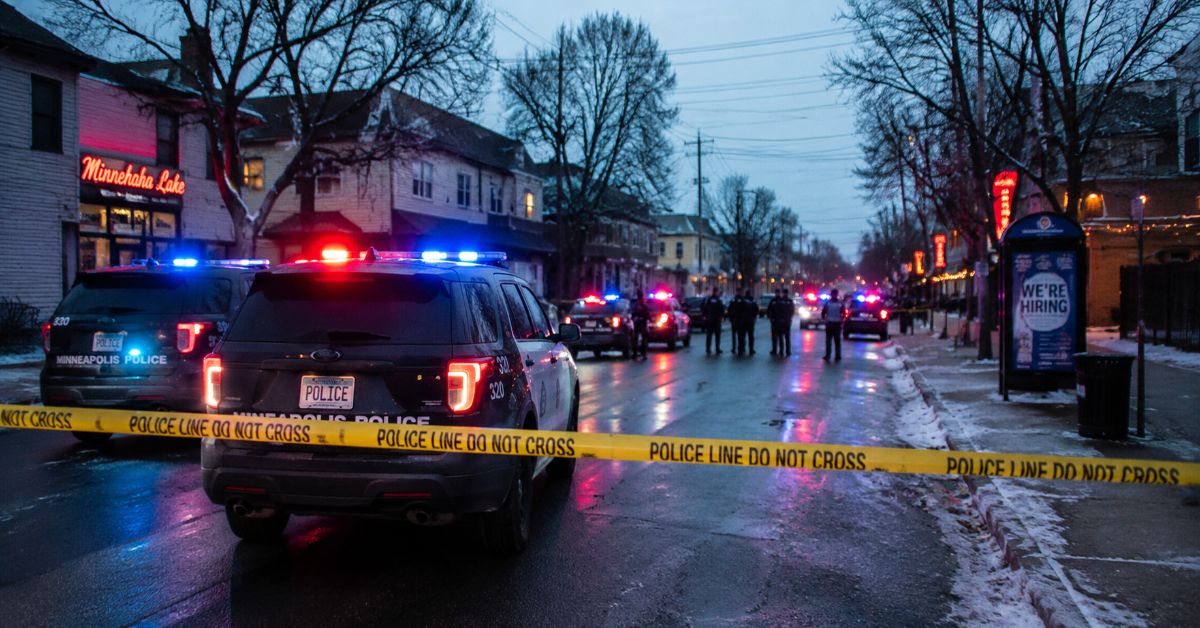
A breaking-news alert that says “Minneapolis shooting” can send a reader into a maze of reports that describe different places, different dates, and different investigations. The key point is that the phrase does not identify one single event. As of August 24, 2026, it can refer to recent city shootings, the July 19 multiple-victim shootings in Uptown and near Nicollet Avenue, the January 2026 federal-agent shootings, or the August 2025 attack at Annunciation Catholic Church and School.
I reviewed current Minneapolis Police Department releases, City of Minneapolis updates, Hennepin County Attorney material, Minnesota Bureau of Criminal Apprehension information available through public records and agency updates, and recent local reporting to separate those events. For a reader searching the focus keyphrase, the fastest way to understand any result is to match three details first: the date, the exact location, and the agency leading the investigation. Those three identifiers prevent an older high-profile case from being confused with a newer neighborhood shooting.
The most recent fatal Minneapolis shooting covered in an official police release before this article was published occurred on August 7, 2026, in the 2000 block of 3rd Avenue South, where police said a man in his 30s was found with fatal gunshot wounds inside a vehicle. The most prominent recent multiple-victim cases occurred on July 19, when nine adults were wounded outside the Reign Event Center and, later the same day, five men were shot near the 1800 block of Nicollet Avenue, one fatally. This guide explains what is confirmed, what remains unresolved, why numbers sometimes change, and where to check the next update without relying on recycled social posts or mismatched headlines.
Quick answer: “Minneapolis shooting” is an ambiguous news search, not the name of one current case. The safest reading is to identify the date and location first, then use the Minneapolis Police Department or the agency responsible for that incident to confirm casualties, arrests, and investigative status.
What does “Minneapolis shooting” refer to right now?
The phrase spans several separate incidents with local or national coverage. A result may concern a recent homicide, the July multiple-victim shootings, a January federal use-of-force case, or the 2025 Annunciation attack. Treat the date as part of the event name, even when a headline does not.
The table below is a practical disambiguation guide. It uses the latest official or well-sourced status available for each event at the time of writing, and it distinguishes an initial police release from later reporting so readers do not mistake an early snapshot for a final case record.
| Date and event | Location | Verified impact | Status to recognize |
| Aug. 7, 2026, fatal shooting | 2000 block of 3rd Avenue South | One man in his 30s died | No arrests in MPD’s Aug. 8 release; investigation ongoing |
| July 19, 2026, Reign Event Center shooting | 2900 block of Hennepin Avenue, Uptown | Nine adults shot; two initially described as having potentially life-threatening wounds | MPD said the shooting followed a reported altercation; KSTP reported on Aug. 21 that no arrest had been made |
| July 19, 2026, Nicollet Avenue shooting | 1800 block of Nicollet Avenue | Five men shot; one 28-year-old man died | MPD said there was no known connection to the earlier Reign shooting in its initial release |
| Jan. 2026 federal-agent shootings | Several Minneapolis locations | Renée Good and Alex Pretti were killed in separate incidents; Julio Sosa-Celis was wounded in another | State and county investigators later obtained previously withheld evidence; legal and investigative proceedings continued |
| Aug. 27, 2025, Annunciation attack | Church of the Annunciation, south Minneapolis | Two children killed; City update listed 21 people injured by gunfire as of Aug. 31 | A major school and church shooting with a separate investigative record from 2026 cases |
What happened in the July 19, 2026 Minneapolis mass shootings?
Two multiple-victim shootings occurred in Minneapolis on July 19, 2026, less than 24 hours apart. Police said there was no known connection between them in the initial investigation. Together, they left one person dead and 13 others wounded, which is why many search results from that period use the phrase “Minneapolis mass shooting” even though they are describing two separate crime scenes.
What happened outside the Reign Event Center in Uptown?
At approximately 12:27 a.m., Fifth Precinct officers responded to a report of a shooting with multiple victims outside the Reign Event Center on the 2900 block of Hennepin Avenue. The Minneapolis Police Department said the first officers arrived in less than one minute. Four wounded people were found at the scene, and five additional victims later arrived at hospitals, bringing the total to nine.
The victims were adults between 18 and 27 years old. MPD initially described two men as having potentially life-threatening gunshot wounds and the other seven victims as having apparent non-life-threatening injuries. Investigators said gunfire erupted after a reported altercation while a large crowd was outside, and they examined whether shots may have been fired from a vehicle. The department assigned Firearm Assault Shoot Team investigators and listed case number 26-200782.
One month later, KSTP reported that Minneapolis police confirmed no arrest had been made. Separate reporting documented severe long-term injuries for at least one victim, showing why an early phrase such as “serious condition” should not be treated as a final medical outcome.
What happened later on Nicollet Avenue?
At approximately 8:20 p.m. the same day, officers responded to the 1800 block of Nicollet Avenue after gunfire outside a business. Police found four injured men at the scene, and a fifth man later arrived at Hennepin Healthcare on his own. A 28-year-old man died after being taken to the hospital. A 24-year-old man was initially described as having potentially life-threatening injuries, while the other victims were described as having apparent non-life-threatening wounds.
MPD said homicide investigators were working to determine the sequence of events and that there was no known connection between this shooting and the earlier Hennepin Avenue case. That wording is important. “No known connection” means investigators had not established a link at that stage; it is stronger and more precise than speculating that the events were connected because they occurred on the same day. The incident number was 26-201604.
Why can Minneapolis shooting reports show different numbers?
Breaking-news casualty counts are often provisional. Some wounded people reach hospitals in private vehicles, and investigators may link them to the same incident later. Medical descriptions can also change after surgery or further assessment.
The Annunciation shooting demonstrates this clearly. Early national reports on August 27, 2025, listed lower injury totals. By August 31, the City of Minneapolis said two children had been killed and 21 people had been injured by gunfire, including 18 children ages 6 to 15 and three adults in their 80s. A reader comparing an early alert with a later city update could see different numbers even when both reports were accurate at the time they were published.
Terminology can create a second source of confusion. The FBI defines an active shooter as one or more individuals actively engaged in killing or attempting to kill people in a populated area, while its reporting separately defines a mass killing as three or more killings in a single incident, excluding the shooter from its statistics. News outlets and independent databases may use the term “mass shooting” with different victim thresholds, so the label itself should not be used to infer a specific federal classification.
| Detail in a breaking report | Why it can change | Best way to verify |
| Number of people shot | Some victims arrive at hospitals separately or are linked to the incident later | Check the newest MPD or City update with a timestamp |
| Injury severity | Initial triage language can change after surgery or further medical assessment | Use later official statements or attributable family/hospital reporting |
| Arrest status | A case may move from no arrest to arrest, charge, or release as evidence develops | Check MPD first, then Hennepin County charging records for filed criminal cases |
| Motive or relationship | Investigators may not know motive or connections during the first hours | Do not infer; wait for an identified investigative finding |
| “Mass shooting” label | Different organizations use different counting rules | Read the underlying casualty facts and the definition used by the source |
How do the January 2026 federal-agent shootings fit into the Minneapolis shooting search?
National searches can also surface three January 2026 incidents involving federal immigration enforcement personnel. They are legally distinct from MPD homicide or assault investigations and should not be merged with the July shootings.
On January 7, the City of Minneapolis reported that a 37-year-old woman, later publicly identified as Renée Good, was fatally shot in the area of East 34th Street and Portland Avenue during an incident involving a federal agent. On January 14, Julio Sosa-Celis was shot and wounded during another federal law-enforcement encounter. On January 24, 37-year-old ICU nurse Alex Pretti was fatally shot by federal agents near 26th Street and Nicollet Avenue.
The investigative history is unusually important. State and local authorities publicly disputed access to evidence during the early stages. On July 13, 2026, the Hennepin County Attorney’s Office announced that its office, the BCA, and the Minnesota Attorney General’s Office had received hard drives containing previously withheld evidence in the Good and Pretti killings and the Sosa-Celis shooting. The office also said the BCA shared its files with the U.S. Attorney’s Office. That update shows why a January headline may be outdated even when the underlying event has not changed: jurisdiction, evidence access, and legal proceedings can evolve for months.
What should readers know about the 2025 Annunciation Minneapolis shooting?
The August 27, 2025 attack at the Church of the Annunciation remains one of the most prominent events associated with the phrase “Minneapolis shooting.” The attack occurred during a school-wide Mass at the church connected to Annunciation Catholic School in south Minneapolis. The City’s August 31 update said two children were killed by gunfire and 21 people were injured by gunfire, including 18 children and three older adults.
The event generated national coverage that still appears prominently in search results. A reader looking for a 2026 incident can therefore land on a 2025 explainer. Date-stamping the event in the first sentence is essential context for search accuracy.
The same principle applies to casualty counts and investigative claims. Use the latest dated City of Minneapolis or law-enforcement update for the factual baseline, and label earlier numbers as preliminary rather than presenting them as competing versions of the truth.
How can I verify a Minneapolis shooting update before sharing it?
A reliable verification routine starts with the agency responsible for the scene, then moves to court or prosecutor records, and finally to established local reporting. This reduces the chance of repeating a stale victim count, arrest status, or unsupported motive.
| Source | Best use | Important limitation |
| Minneapolis Police Department public releases | Time, location, initial victim count, incident number, arrest status | Early releases are explicitly preliminary |
| City of Minneapolis emergency and public-safety pages | Consolidated updates, public instructions, press conferences, dashboards | City pages may summarize information from several agencies |
| Hennepin County Attorney’s Office | Charging decisions, evidence-access litigation, prosecutor updates | A charge is an allegation, not a conviction |
| Minnesota BCA | State-level investigative updates and officer-involved shooting information | Jurisdiction can vary by incident |
| Established local newsrooms | Follow-up reporting, interviews, later medical status, court context | Always check publication and update timestamps |
Match the date and location. A headline that says only “Minneapolis shooting” is incomplete. Look for the block, intersection, venue, or institution.
Find the investigating agency’s newest release. For most city shootings, start with the Minneapolis Police Department and the City of Minneapolis public information pages.
Check whether the wording is preliminary. Phrases such as “preliminary information,” “apparent non-life-threatening injuries,” and “no known connection” signal that facts can still change.
Separate arrest from charge and charge from conviction. Police announce arrests; prosecutors file charges; courts determine guilt. Do not collapse those stages into one claim.
Cross-check major developments with at least one reputable local newsroom. Local reporters often confirm later medical status, victim identities released by the medical examiner, court filings, and whether an arrest has occurred since the first police bulletin.
Use city dashboards for context, not as a substitute for a case file. Minneapolis warns that a single incident can appear as multiple icons on its shots-fired map, so map counts should not automatically be treated as incident counts.
What information is still unresolved in recent Minneapolis shooting cases?
Several high-interest details remain unresolved. In the Reign Event Center case, authorities examined whether gunfire came from a vehicle, and no arrest had been reported one month later. The Nicollet Avenue release did not establish a connection to the Uptown shooting. The August 7 homicide release said investigators were still determining the sequence of events.
Readers should resist filling those gaps with assumptions about gang involvement, motive, or the identity of a shooter. A neighborhood’s crime history, a victim’s age, or the fact that several people were struck does not prove a motive. The most useful article language is explicit: say what investigators have confirmed, identify what they have not confirmed, and attach a date to the status statement.
That approach is especially important for federal-agent shootings, where legal disputes over evidence and jurisdiction became part of the story. By July 2026, evidence sharing had changed materially from the situation reported in January. A static summary that ignores those later developments can be technically accurate about the day of the shooting but misleading about the state of the investigation.
How were these Minneapolis shooting facts verified?
This article prioritizes first-party public records for dates, locations, casualty counts, incident numbers, and investigative status. Core sources include MPD releases from July 19, July 20, and August 8, 2026; the City’s Annunciation update; and Hennepin County materials on the January federal-agent cases.
For later developments, I cross-checked established local reporting, including KSTP’s August 21 follow-up on the Reign Event Center case. I also used the FBI glossary to distinguish “active shooter” and “mass killing” terminology from the broader media phrase “mass shooting.”
Primary and official reference links:
Minneapolis crime maps and dashboards
City of Minneapolis Annunciation shooting updates
Hennepin County Attorney evidence-sharing update, July 13, 2026
Minneapolis Police July 19 Reign Event Center release
Minneapolis Police July 20 Nicollet Avenue release
Minneapolis Police August 8 fatal shooting release
Conclusion: the most useful detail is the date
“Minneapolis shooting” is too broad to function as a complete event label. The best way to get an accurate answer is to pair the phrase with a date and location, then verify the newest official status before relying on a headline. That simple habit prevents the most common errors in fast-moving coverage: mixing separate incidents, repeating an outdated casualty count, and treating an early investigative theory as a confirmed finding.
For the July 19 shootings, remember that Minneapolis police described two separate scenes, one outside the Reign Event Center and another near Nicollet Avenue. For the January federal-agent cases and the 2025 Annunciation attack, use their own timelines and investigative records. Precision is more useful than speed when the subject is an active or unresolved shooting investigation.
Frequently Asked Questions
Was there a recent mass shooting in Minneapolis in 2026?
Yes. On July 19, 2026, nine adults were shot outside the Reign Event Center in Uptown. Later that day, five men were shot near the 1800 block of Nicollet Avenue, and one died. Police initially said there was no known connection between the two incidents.
Have police arrested anyone in the Reign Event Center shooting?
As of an August 21, 2026 KSTP follow-up, Minneapolis police said no arrest had been made in the July 19 Reign Event Center shooting. Because arrest status can change quickly, readers should check the newest MPD release or local follow-up before republishing that status.
What happened in the Annunciation Catholic Church shooting in Minneapolis?
On August 27, 2025, a gunman attacked the Church of the Annunciation during a school Mass. The City of Minneapolis later reported that two children were killed and 21 people were injured by gunfire as of its August 31 update.
Why does “Minneapolis shooting” sometimes bring up ICE or Border Patrol cases?
Search engines also associate the phrase with January 2026 shootings involving federal immigration-enforcement personnel, including the deaths of Renée Good and Alex Pretti and the shooting of Julio Sosa-Celis. Those cases have separate legal and investigative timelines from MPD homicide cases.
Why do different articles list different victim totals?
Early reports may be published before all hospital arrivals are connected to the same incident, and injury classifications can change after medical evaluation. Compare timestamps and prioritize the newest official update rather than assuming the reports contradict each other.
Where can someone submit information about a Minneapolis shooting?
For the July 2026 cases, MPD directed people with information to policetips@minneapolismn.gov or 612-673-5845. The department also directs anonymous tipsters to CrimeStoppers at 1-800-222-TIPS (8477). Use the latest police release to confirm current contact instructions for a specific case.

Hayden Panettiere cause of death was ruled an accidental overdose involving fentanyl and four additional substances, but the official finding answers a narrower question than many headlines suggest: what caused her death medically, not precisely how each drug reached her. The Greenville County Coroner’s Office identified the combined toxic effects of fentanyl, 4-ANPP, alprazolam, methocarbamol and quetiapine after the actor died at age 36 in Greenville, South Carolina, on August 16, 2026.
That distinction matters. Early reporting described an unexplained death after emergency responders were called to a cardiac-arrest incident. By September 22, officials had announced a toxicology-based cause and classified the manner as an accident. The medical investigation could be completed while a separate police inquiry remained open. Collapsing those timelines into one story creates confusion about what authorities actually established.
Panettiere was known for Heroes, Nashville and films including Remember the Titans. She had also discussed addiction and mental-health difficulties in public. Those experiences belong to her wider biography; they are not medical proof of how the final events unfolded. This explainer separates the coroner’s conclusions, the pharmacology behind the drug names, the open questions and the practical health information readers may be seeking. It also identifies why an accidental classification cannot be treated as either a complete narrative or a finding about another person’s responsibility.
What Did Hayden Panettiere Die From?
The official cause was the toxic effects of five named substances: fentanyl, 4-ANPP, alprazolam, methocarbamol and quetiapine. Greenville County released that determination on September 22, 2026. The announcement called the manner of death an accident and said the autopsy found no trauma contributing to her death. The wording is important: the finding concerns combined toxicity rather than a confirmed single-drug mechanism. The text of the coroner announcement is reproduced in the local Greenville coroner statement reported by WYFF.
Cause, manner and investigation are different findings
“Cause of death” records the disease, injury or toxic process responsible for death. “Manner of death” classifies the circumstances, commonly as natural, accident, suicide, homicide or undetermined. Police investigations can address separate issues, including the source of substances and whether a crime occurred. A medical examiner or coroner can conclude an overdose was accidental without resolving those later questions.
| Official finding | What it supports | What it does not prove |
| Combined drug toxicity | The identified toxic effects contributed to the fatal outcome | Which named substance was first taken or exactly when |
| Accident | The death was classified as unintentional | Whether substances were prescribed, counterfeit or knowingly used |
| No contributing trauma | Examination found no injuries contributing to death | Every detail of events inside the apartment |
| Police inquiry open on Sept. 22 | Investigators still had separate questions | That the coroner ruling was invalid or that a crime occurred |
Official Toxicology Findings Explained
The list is best understood as a mixture of a potent opioid, a fentanyl-associated chemical and medicines capable of causing sedation. It should not be turned into a claim that five prescriptions were taken together. A toxicology finding identifies relevant chemicals; a complete account of dose, timing, route and source needs additional evidence that was not provided in the public summary.
| Substance | What it is | Why its presence matters |
| Fentanyl | Very potent synthetic opioid | Can suppress breathing and produce fatal overdose |
| 4-ANPP | Chemical intermediate/byproduct associated with fentanyl production | May accompany fentanyl; does not by itself establish a separate drug taken |
| Alprazolam | Benzodiazepine marketed as Xanax | Sedation and greater respiratory danger when combined with opioids |
| Methocarbamol | Muscle relaxant | May cause drowsiness and compound central-nervous-system depression |
| Quetiapine | Antipsychotic medicine | May have sedating effects; listed in the combined toxicology conclusion |
Why 4-ANPP needs special care
4-ANPP is not simply another brand-name medicine. It is a chemical used in fentanyl manufacture and can be encountered as a related byproduct. Describing the result as “five pills” would therefore distort the evidence. Likewise, a chemical being detected does not establish whether it came from a legitimate product or from a contaminated or counterfeit drug. That distinction is particularly important when public speculation moves faster than case records.
Why combining depressant drugs raises risk
Opioids can reduce the drive to breathe. Benzodiazepines and some other sedating medications can intensify central-nervous-system depression, impair consciousness and make a dangerous situation harder to recognize. The general risk is well established, but it would be inappropriate to reconstruct Panettiere’s exact physiology from a brief public statement. The CDC fentanyl guidance explains why fentanyl exposure can be especially dangerous, including through counterfeit pills.
Timeline: From the Emergency Call to the Coroner’s Report
A dated timeline avoids a recurring error in celebrity-death coverage: presenting preliminary uncertainty as though it were a contradiction of a later confirmed result.
| Date | Publicly documented event | Evidence status |
| August 16, 2026 | Emergency services responded to a Greenville apartment after a report of cardiac arrest; she was pronounced dead at 2:32 p.m. | Coroner and local reporting |
| August 2026 | Initial reports said the cause was under investigation; authorities reported no clear contributing trauma. | Preliminary updates |
| September 22, 2026 | Coroner announced the toxic-effects cause and accidental manner. | Final coroner classification |
| September 22, 2026 | Greenville police reported the police investigation was still open. | Separate investigative status |
| September 24, 2026 | Local reporting described additional details from an investigative case report. | Reported case records, not a replacement for coroner findings |
The difference between the 2:31 and 2:32 reports
Some early police-report coverage used 2:31 p.m., while the coroner’s September announcement gave 2:32 p.m. The official coroner time is used here because it is the final public statement for the medical determination. Minor timestamp differences in separate emergency records should not be exaggerated into a substantive dispute about the medical cause.
Was There Foul Play or Physical Trauma?
The coroner said no physical trauma contributed to Panettiere’s death, and initial police statements reported no signs of foul play. That is not the same as a finding that all related investigative questions had been resolved. Greenville police said on September 22 that their investigation remained open, and news reports noted DEA involvement. Neither fact permits readers to accuse an identifiable person of a crime.
Reporting about a scene, possible counterfeit pills or interviewed witnesses can be relevant to an investigation. However, it should be presented as attributed reporting, not upgraded into independently established facts about criminal responsibility. A public account can be both accurate about accidental overdose and incomplete about drug provenance.
Why the Death Was Ruled Accidental
In death certification, “accidental” means that available evidence supported an unintentional fatal event. It does not necessarily mean the individual knew nothing about a substance, nor does it establish the opposite. It also says nothing conclusive about the legality of any particular medication. Inferring suicide from earlier emotional distress would disregard the medical ruling and unfairly turn a public health history into a motive.
What the Toxicology Does Not Tell Us
The public announcement does not provide a fully reconstructed sequence of ingestion, the concentrations of each analyte, the precise contribution of each compound or an authoritative account of how the substances were sourced. It does not prove that every listed medicine was prescribed to her, that all were illicit, or that any third party deliberately caused the fatal outcome. Those are distinct evidentiary questions.
Her Earlier Public Comments About Recovery and Mental Health
Panettiere spoke openly about substance use, treatment, depression and the pressures of becoming famous young. Reporting around her 2026 memoir, This Is Me: A Reckoning, brought those topics back into view. They provide context for understanding the public discussion of her life, but cannot replace forensic findings. Recovery is not a fixed identity, and people with histories of addiction should not have every later event explained through a speculative narrative.
Celebrity retrospectives often become simplified stories of a rise, struggle and inevitable end. That tendency can be seen by contrast with Aperplexity’s Michelle Trachtenberg career retrospective, which separates documentation from assumptions about a performer’s personal life. Similar care is useful for Panettiere: her contributions to Heroes and Nashville remain part of the story, while her private medical history deserves a clear evidentiary boundary.
Her career also included many years of acting across television and film, and parenthood. A fair account need not hide difficult experiences, but it should avoid treating them as a single explanation for every aspect of her life. For a different example of assessing an actor through the full work rather than only the final headline, see the Robert Duvall career retrospective.
Three Misreadings That Spread After the Announcement
“Fentanyl was the only cause”
Headlines often shorten multidrug findings to “fentanyl overdose.” This communicates a major ingredient but loses the coroner’s specified combined-toxic-effects wording. Accuracy requires retaining the complete list at least once and explaining the mix without assigning an unsupported percentage of responsibility to each substance.
“The investigation ended with the coroner report”
The medical determination and police inquiry are different processes. The coroner’s completion did not mean police had publicly announced closure on September 22. A good timeline identifies which body issued each update and on which date. A related approach to reconstructing complex public information is explored in the site’s public-figure timeline explainer.
“A public mental-health history explains the death”
Publicly discussed addiction or depression may make a headline feel emotionally understandable, but neither is a substitute for evidence about the specific death. Medical findings can establish a cause even when the experiences or decisions leading to the event are not publicly known. The editorial obligation is to preserve that distinction.
Overdose Prevention and Support Resources
The most constructive use of a case like this is to explain practical emergency response without making assumptions about the individual. Someone who is unresponsive, breathing slowly or not breathing after possible opioid exposure needs immediate emergency help. Naloxone can reverse opioid effects temporarily and may need repeated administration, but it is not a substitute for medical attention. The CDC recommends making naloxone available and taking suspected overdose seriously.
Where to get support
In the United States, call emergency services at 911 for a possible overdose. For confidential substance-use treatment referrals, the SAMHSA helpline directory lists 1-800-662-HELP (4357). For immediate mental-health or substance-use crisis support, call or text 988. Readers outside the United States should use their local emergency and treatment services.
Support should also avoid a simplistic idea that someone must be visibly in crisis to be at risk. The website’s neurodivergent burnout explainer discusses a different issue—why outward appearance and internal strain can diverge—but it is not evidence about Panettiere’s specific circumstances. That distinction between general education and individual diagnosis is essential.
What May Change in 2027
There is no basis to predict a future investigative outcome. New police statements, court records or a fuller officially released case record could resolve currently unanswered questions, and any future update should be dated and attributed. Even if further records emerge in 2027, the existing accidental classification should not be rewritten without new authoritative evidence. The public-health context may also evolve as new CDC overdose surveillance is published; updated national trends should not be presented as evidence about this individual case.
For publishers, the practical 2027 task is maintenance rather than speculation: check whether agencies have issued additional on-record findings; update the “investigation remains open” wording if the status changes; preserve the historical September 22 date; and clearly distinguish an updated source from the original medical ruling. High-quality coverage is sometimes defined by what it refuses to infer.
Key Takeaways
- The official ruling identifies combined toxic effects involving fentanyl and four other listed chemicals.
- Accident is a formal manner-of-death finding, not a complete description of every event.
- 4-ANPP is associated with fentanyl production and should not automatically be described as a separate medication.
- The police investigation remained open when the coroner findings were reported on September 22.
- A public history of mental-health or substance-use treatment is not proof of an individual death’s circumstances.
- Naloxone and rapid emergency response are general overdose-prevention priorities.
Conclusion
Hayden Panettiere’s cause of death has a clear official answer: Greenville County ruled that the combined toxic effects of fentanyl, 4-ANPP, alprazolam, methocarbamol and quetiapine caused an accidental death on August 16, 2026. What remains less clear is the complete sequence of events and the source of the substances. The existence of unanswered questions does not erase the coroner’s finding; equally, the finding should not be stretched into a complete reconstruction.
The strongest coverage respects both limits. It dates official statements, explains drug terminology carefully, avoids turning prior personal struggles into a diagnosis and updates unresolved claims when reliable records change. It also leaves room for a fuller understanding of Panettiere as an actor, parent and public figure rather than reducing her life to one toxicology result. That is a more informative and responsible answer than either a sensational headline or an overconfident guess.
Frequently Asked Questions
What was Hayden Panettiere’s official cause of death?
The Greenville County Coroner’s Office said her death resulted from the toxic effects of fentanyl, 4-ANPP, alprazolam, methocarbamol and quetiapine. The manner was classified as accidental.
When was Hayden Panettiere’s cause of death announced?
The official coroner findings were publicly reported on September 22, 2026, more than a month after her August 16 death.
Where did Hayden Panettiere die?
She died at an apartment in Greenville, South Carolina. Emergency personnel responded to a reported cardiac arrest and were unable to resuscitate her.
How old was Hayden Panettiere when she died?
She was 36 years old at the time of her death on August 16, 2026.
What is 4-ANPP in the toxicology findings?
4-ANPP is a chemical intermediate associated with fentanyl manufacture. Its mention does not by itself show that she separately consumed a medication called 4-ANPP.
Did officials say her death was suicide or homicide?
No. The coroner classified her death as an accident. Authorities reported no contributing trauma, while the separate police inquiry remained open as of September 22.
Can naloxone reverse a fentanyl overdose?
Naloxone can reverse opioid overdose effects, including those of fentanyl, when given promptly. Always call emergency services; naloxone is not a substitute for medical care.
Methodology
This article cross-checked the Greenville County Coroner’s Office statement as reported by WYFF against September 22 coverage from Associated Press, CBS News and ABC News. Pharmacology and harm-prevention context were checked against CDC and SAMHSA guidance. The published coroner summary does not establish complete toxicology concentrations, substance provenance, or the final outcome of a separate police inquiry. No interviews, medical assessments or firsthand reporting were conducted for this article.
References
Ashbaugh, C. (2026, September 22). Actress Hayden Panettiere died of accidental overdose, report says. WYFF. https://www.wyff4.com/article/hayden-panettiere-cause-of-death-overdose/73838744
Centers for Disease Control and Prevention. (2025, June 9). Fentanyl. https://www.cdc.gov/overdose-prevention/about/fentanyl.html
Collins, J. (2026, September 22). Hayden Panettiere died from an overdose involving fentanyl. Associated Press. https://apnews.com/article/229349e2bb6e19d985372d8524b09fc8
Moore, S. (2026, September 22). Toxicology, coroner’s report for Hayden Panettiere released. WYFF. https://www.wyff4.com/article/hayden-panettiere-toxicology-report/73653348
Substance Abuse and Mental Health Services Administration. (n.d.). Mental health and substance use helplines. https://www.samhsa.gov/find-help/helplines

PornZog is often described as an adult-video aggregation or tube-style site, yet that simple label hides the most important question: where does a particular video actually live? If a page only points to content hosted elsewhere, deleting the page and deleting the video are different actions. That distinction matters to someone assessing privacy risk, and it matters even more to someone trying to remove an intimate recording published without permission.
Public reviews discuss a free, advertising-supported experience, but independently verified details about the site’s current ownership, underlying content storage, moderation performance, and links among similarly named domains are limited. A broad category description should therefore not be mistaken for an audit of a specific operator. This guide treats the website as a case study in a wider content-distribution model and separates verifiable platform-neutral procedures from claims that would require direct testing.
The crucial practical split is between a listing, a hosted copy, and a search-engine result. A removal request can succeed at one level while content remains accessible at another. The article explains how that happens, what ordinary visitors should avoid, how copyright differs from consent-based reporting, and where official resources can help. It also sets out the limits of each intervention so readers do not mistake a successful search delisting for permanent erasure. The guidance is informational and is not legal advice.
What an Adult Aggregator Actually Controls
An aggregator is a discovery layer: it may catalog third-party titles, store thumbnails and descriptions, embed players, or direct traffic to a different domain. Some tube sites also host user uploads themselves. The category labels overlap, so the only reliable way to understand a particular page is to identify which service stores the file, which displays it, and which publishes a searchable listing.
Three layers behind one video
Imagine a clip visible on Site A in an embedded player supplied by Site B, with both pages found through Search C. Site A can remove its player or listing without necessarily causing Site B to delete the file. Site B can remove the file while Search C temporarily shows an old snippet or thumbnail. These are hypothetical roles, not verified findings about any particular PornZog page.
That distinction resembles other online indexing problems: a public record and the search result pointing to it are not the same object. The site’s Fast People Search privacy and removal guide makes a comparable distinction between a visible listing and underlying source data.
| Model | Typical control | What a removal can change |
| Aggregator or index | Listing, categorization, outgoing link or embed | Remove the entry; source may remain |
| Video host / tube | Hosted file, account, player and upload record | Disable or delete the hosted copy |
| Paid licensed service | Catalog, access controls and billing | Remove catalog access, subject to contracts |
| Search engine | Indexed result, snippet and thumbnail | Delist result; cannot delete outside host |
Why similar names should not be treated as one company
A search query can surface clone domains, review sites, mirrors, old entries, and unrelated operators using similar wording. Similar branding does not establish shared ownership, common moderation rules, or shared customer support. Check the full domain, its operator details, current terms, reporting route, and whether the video player loads from another address. Avoid entering credentials to establish legitimacy.
There is not enough independently verified public information in the reviewed material to assert that every similarly named domain is connected, to report a fixed size of the catalog, or to certify a particular site’s response speed. Those claims should remain unmade until they can be checked against the actual operator.
The Risk Is the Pathway, Not Just the Page
Visitors often focus on whether a domain receives a “safe” rating. That can be misleading. A legitimate-looking page may display third-party ad creatives, and an otherwise functioning streaming site can still carry misleading download prompts. Browsing risk depends on each external link, permission request, and file offered during a visit. A review is not a live malware scan.
Ads, fake updates and tracking
Pop-unders, deceptive play buttons, requests to install a browser extension, and “codec required” messages are reasons to stop. An up-to-date browser, operating system, reputable tracking protections and conservative download habits reduce exposure but do not eliminate it. Users should not supply payment-card details or identification simply to access a supposedly free video.
For broader defensive steps, see computer virus prevention and malicious-download warning signs. A separate Bollyflix guide on fake sites and confusing mirrors explains why a matching name or logo does not prove a service’s authenticity.
Consent and provenance are different checks
A video can be technically playable without proof that everyone appearing in it consented to publication. A copyright claim also does not establish whether a depicted person consented. Someone who sees suspected abuse should report it through an appropriate channel rather than reproduce, download, or forward it. Never collect or circulate suspected sexual material involving a minor.
| Risk signal | Why it matters | Safer response |
| Unknown download or extension | Can introduce unwanted software | Do not install; close the prompt |
| Unexpected payment / identity form | May harvest sensitive information | Do not provide details |
| External player or redirect | Moves activity to a new operator | Check destination; leave if unclear |
| No visible abuse route | Harder to resolve harmful uploads | Avoid relying on the service |
| Reposted intimate material | May involve serious consent violations | Record the URL and report; do not redistribute |
Removing a Video: Match the Request to the Harm
There is no single universal removal button. First identify the immediate harm: a clip shared without consent, copyright infringement, a misleading search association, or a copy that persists elsewhere. More than one route may be appropriate. The most useful evidence is usually the precise page location and a factual account of the problem—not a graphic description.
Step 1: Record the exact locations
Save the webpage URL, date observed, visible page title, account name if available, and the domain serving the player if it is plainly shown. Keep the records private and organized; do not publish links broadly. If collecting a screenshot would create or retain prohibited material involving a minor, do not make the screenshot. Seek guidance from appropriate reporting authorities instead.
Step 2: Submit a consent or abuse report
Use the current abuse, contact, or report tool on the specific live domain. State that the material depicts you and was shared without consent, identify the exact URLs, and request prompt removal from the page and any copies the operator controls. The existence and effectiveness of a dedicated PornZog reporting tool were not independently verified for every similarly named domain; avoid depending on an unconfirmed email address or promised turnaround time.
A concise message can read: “I am depicted in the content at the listed address. It was published without my consent. Please remove the content and any copies under your control, confirm the action taken, and let me know if another service hosts the underlying file.” Share sensitive identity evidence only through a verified, secure official channel if genuinely required.
Step 3: Use copyright law only when it applies
In the United States, a DMCA notice is generally for the copyright owner or someone authorized to act for that owner. Being shown in a recording does not necessarily confer ownership. The U.S. Copyright Office’s Section 512 guidance explains the standard elements: identification of the work and location, rights-holder contact details, required good-faith and accuracy statements, and a physical or electronic signature. Filing a knowingly inaccurate claim can create consequences.
Copyright enforcement and consent protection should not be merged into one template. The related intellectual-property ownership explainer discusses why the person involved in content and the owner of legal rights are not always the same. Where ownership is uncertain, use the platform’s abuse pathway and seek qualified advice rather than claiming copyright without a basis.
Step 4: Request search-result removal separately
A search engine controls its own index, not independent hosting servers. In February 2026, Google announced a simpler removal request flow for non-consensual explicit imagery, including the option to report multiple images and follow case status. Google’s official announcement about explicit-image removal explains that users can begin from an image result’s menu. An approved delisting may limit discovery, while the page itself can remain online.
Step 5: Use participating-platform hash protection
StopNCII’s official process lets eligible adults create a digital fingerprint of an intimate image or video on their own device; the selected media itself is not uploaded through that process. Participating services can look for matching material and act under their rules. StopNCII does not cover every website and cannot promise internet-wide deletion. Its eligibility criteria also matter: material made when a person was under 18 follows different reporting pathways.
If a Child Is Involved, Use a Different Escalation Route
Do not download, save, circulate, or forward suspected child sexual abuse material for proof. Contact local emergency services if a child is in immediate danger. In the United States, NCMEC provides reporting guidance and the CyberTipline; its help page for explicit content and reporting is a starting point. Adults dealing with intimate imagery have different tools and eligibility rules. Do not assume an adult hashing service is appropriate for imagery recorded when someone was a minor.
A Removal Log That Prevents False Closure
A common failure is to close a case when a single URL disappears. Successful action should instead be logged by layer. Confirm the original host, aggregator page, search result, and any known authorized report status separately. Recheck only what is necessary, without repeatedly searching for or sharing harmful media. Reappearance can stem from other copies or indexing lag; it does not prove that an earlier complaint was ignored.
| Target | Evidence of success | What may still remain |
| Source host | Original file/page no longer accessible | Reuploads elsewhere |
| Aggregator | Listing or embed removed | Original host and mirrors |
| Search engine | Result no longer appears for checked query | Underlying source page |
| Hash-matching network | Participating partner reports action | Nonparticipating sites or altered copies |
Keep a private spreadsheet with a case identifier, target domain, complaint type, submission date, response, and current status. Do not store sensitive media in a shared document. If an operator refuses to respond or threats continue, specialist legal or victim-support services may be more useful than repeated generic emails.
The Future of Adult Aggregation in 2027
The important direction is not a prediction that every aggregator will disappear. It is the widening gap between easy discovery and the ability to prove consent, trace sources, and control copies. Google’s February 2026 change is one example of reducing the work required to request search delisting, while its prior policies distinguish search removal from host-level deletion. That structural separation will still matter in 2027 unless the underlying distribution architecture changes.
Matching technologies can assist with repeated uploads at participating platforms, but their coverage depends on service membership and their ability to detect copies. Changes in editing, re-encoding, or hosting can complicate response. There is no verified basis to forecast a universal cross-platform takedown system by 2027. Similarly, proposed rules and implementation timetables vary among jurisdictions; claims about what every operator must do should be checked locally.
The useful measure of progress will be clearer reporting contact points, quicker removal decisions, better documentation, and fewer paths that require an affected person to repeatedly locate their own material. Platform transparency about which URLs it controls would help more than a vague promise of “zero tolerance.” This is a conditional outlook, not a claim that a particular adult site has announced these changes.
Key Takeaways
- A site described as an aggregator may still require page-by-page verification of where content is hosted.
- A site reputation score does not evaluate every advertisement, redirect, or download in real time.
- Consent complaints and copyright complaints protect different interests.
- Deleting a listing, deleting the file and delisting the search result are three distinct outcomes.
- StopNCII can help eligible adults with matches on participating services, not every website.
- When a minor is involved, do not collect the media as evidence; use specialized reporting routes.
Conclusion
The central question about PornZog is not only whether the name describes an aggregator, but who controls each point where a video can be encountered. Reviews and directory pages can describe an adult website’s general model, yet they do not necessarily verify its current ownership, moderation process, or the storage location of a given file. Those limits should be made visible rather than hidden behind confident safety scores.
For an ordinary visitor, the sensible response is to treat unexplained downloads, redirects, tracking prompts, and payment requests as concrete risks. For someone targeted by unauthorized intimate-content sharing, the response is more focused: document the correct URL privately, report the content to the relevant controller, consider copyright only if rights permit, and separately request removal from search results where eligible. Track outcomes by location rather than accepting one missing link as proof of permanent deletion.
No single tool controls the entire internet. A careful, layered approach is slower to describe than “click remove,” but it gives readers a far more realistic account of what can actually change.
Frequently Asked Questions
Is PornZog an aggregator or a hosting site?
Public descriptions vary. An aggregator can index, link or embed third-party material, while a host stores playable files. A single website can do both. The precise role of an individual page requires verification; the platform name alone cannot settle it.
Is PornZog safe to use in 2026?
A blanket yes or no would overstate available evidence. Like many advertising-supported adult sites, the risks to watch are misleading ads, redirects, tracking and downloads. Avoid installing software or giving personal details in response to unexpected prompts.
How can I request removal of a PornZog video?
Find the current reporting channel for the exact domain, keep the content URL and a private record of the complaint, and say plainly whether the issue is publication without consent or copyright infringement. Contact the actual host separately if it is different.
Can Google delete an adult video from its original website?
No. Google can evaluate requests to remove eligible search results, but an independent host controls its own website and files. Host removal and search delisting may both be required.
Can I send a DMCA complaint if I appear in the recording?
Not necessarily. Copyright ownership usually depends on who created or otherwise owns the work, not simply who appears in it. Use a non-consensual-content reporting route if rights ownership is unclear.
Does StopNCII take copies off every website?
No. The service shares locally generated digital fingerprints with participating platforms to support matching and policy enforcement. It does not control nonparticipating websites.
What if the video was made when someone was under 18?
Do not download or distribute the material. Report through appropriate child-protection channels such as NCMEC’s CyberTipline in the United States and contact local authorities when needed.
Methodology and Limitations
This article compares publicly accessible third-party descriptions of the named site with official resources from Google, StopNCII, the U.S. Copyright Office and NCMEC. It does not claim a direct visit to, content audit of, or security test against the adult site. Search rankings change by location and time, so a reproducible top-ten SERP audit could not be certified from the available public search results. Operator identity, exact hosting arrangements, domain affiliation, and response times remain unverified. Editorial analysis distinguishes general system behavior from verified features of any particular website.
This article was drafted with AI assistance. A human editor must verify every remaining factual claim, source and the final live-page reporting instructions before publication. Do not claim that a completed human review has occurred until it actually has.
References
Google. (2026, February 10). A simpler way to remove explicit images from Search. Google Blog.
Google. (n.d.). Ask Google to remove explicit or intimate content. Google Account Help.
StopNCII.org. (n.d.). How StopNCII.org works.
U.S. Copyright Office. (n.d.). Section 512 of Title 17: Resources on online service provider safe harbors and notice-and-takedown system.
National Center for Missing & Exploited Children. (n.d.). Is your explicit content out there?

The Whalestoe Letters are a series of fictional messages from Johnny Truant’s mother, Pelafina H. Lièvre, and their most unsettling trick is that a loving letter can also ask to be read like a cipher. Published within Mark Z. Danielewski’s House of Leaves and expanded as a separate book in 2000, the correspondence changes how readers judge Johnny’s memories, his prose and his habit of hunting for patterns.
In the story, Pelafina writes from the Three Attic Whalestoe Institute, a psychiatric facility in Ohio. Her letters span 1982 to 1989. Their sentences move between tenderness, erudition, fear and formally strange passages. They do not give a clean answer to every question they raise, but they supply something the novel otherwise withholds: a sustained voice addressing Johnny as a child rather than letting him tell his own story entirely on his terms.
Many explanations stop after naming an acrostic or describing Pelafina’s decline. That misses what makes the material so effective. A reader must decide when an arrangement of letters is an intentional clue, when it is an ambiguous coincidence and when the visible words already say enough. The practical aim here is to give each layer its due: publication facts first, a dated reading map, a reproducible decoding technique, and then a careful account of what the letters do to the larger novel.
Spoiler notice: the following discussion addresses Pelafina’s fate, Johnny’s childhood and possible connections among the novel’s narrative voices.
What Are the Whalestoe Letters?
The publisher describes the work as correspondence sent from 1982 through 1989 by Pelafina H. Lièvre to her son Johnny Truant. The original selection appears in House of Leaves as Appendix II-E, “The Three Attic Whalestoe Institute Letters.” The separate Pantheon paperback appeared on October 10, 2000; its official product page lists 104 pages, a foreword by Walden D. Wyhrta and eleven previously unavailable letters. These are fictional documents, not letters recovered from a real hospital. See the publisher’s bibliographic record.
The shift from appendix to independent volume matters. Inside the novel the reader encounters letters as part of a larger archive whose reliability is already suspect. In the standalone edition, Pelafina holds the stage for longer. Neither presentation cancels the other: the context changes what a reader notices.
| Feature | House of Leaves appendix | Standalone edition (2000) |
| Placement | Appendix II-E within the novel | Separate Pantheon paperback |
| Scope | Selection of the letters | Selection plus 11 previously unavailable letters |
| Frame | Surrounded by Johnny’s notes and other documents | Foreword attributed to Walden D. Wyhrta |
| Best use | Discovering their effect on the novel | Studying Pelafina’s voice more closely |
Pelafina Is More Than a Clue to Johnny
The mother writing across a distance
Pelafina cannot simply sit beside Johnny and explain herself. She has to make a relationship out of dates, salutations, descriptions, memories and the hope of being read. That is the emotional baseline beneath every formal trick. The letters offer affection, education and sometimes frightening intensity; they are not a neutral clinical report of a woman’s condition.
Reading her as a writer matters because her extravagant diction is purposeful on the page. Mythological and religious references, sounds, names, foreign-language play and typographic disruptions are tools with which she tries to stay present. Some passages make that effort moving; others turn attention into pressure. The same sentence can communicate love and demand.
The limits of diagnosis
The novel describes confinement and mental distress, but a reader cannot extract a definitive real-world diagnosis from stylized, selectively presented fiction. It is equally weak to treat every disturbing claim as either proven fact or an empty symptom. These are narratively mediated statements. The credible question is what the text lets Pelafina say—and what prevents readers from checking it.
A Chronological Map of the Correspondence
The publisher verifies the overall 1982–1989 span. The following three phases are interpretive reading bands rather than a list of independently verified letter-by-letter clinical milestones. They help track changes without pretending that each year has a single uniform style.
| Period | Pattern to track | Possible effect on Johnny |
| 1982–mid-1980s | Instruction, affectionate address, learned allusion | He appears as a gifted and vulnerable child living apart from his mother |
| Mid-1980s | Greater attention to hidden meaning, danger and private communication | A lesson in reading affection alongside threat |
| Late 1980s–1989 | More pressured forms, urgency and fragmentation | Later memories become harder to separate from guilt and fear |
Why dates matter more than page numbers
Page references change across editions, while each letter’s own date remains a more portable locator. For a study notebook, record the date, opening subject, typographic disturbance and any proposed code before comparing annotations online. A popular theory about a different edition is not automatically evidence about the exact passage being read.
The correspondence ends in 1989, when Pelafina’s death enters Johnny’s history. The emotional force lies less in solving a tidy chronology than in seeing how an earlier message can change meaning once its recipient knows what happened later. This retrospective re-reading resembles the distinction between coincidence and later interpretation discussed in this guide to the invisible string theory: a newly meaningful connection is not necessarily proof of a predetermined design.
How to Decode the Hidden Messages
A useful decoding method should be repeatable by a second reader. It needs a stated selection rule, a clear starting and stopping point and a record of the letters produced. Without those steps, almost any dense paragraph can generate a suggestive phrase if enough words are skipped.
A six-step acrostic check
- Read the letter for its literal addressee, mood and subject before searching for tricks.
- Record the letter date and exact edition; copy only the short working span needed for private analysis.
- Look for explicit instructions or striking references to initials, names, letters and messages.
- Choose one rule at a time: first letter of every word, line or sentence; do not switch rules midstream merely to make a phrase work.
- Write down the complete output and the boundaries of the selection. Mark uncertain punctuation, abbreviations and ampersands.
- Ask what the result changes: does it reinforce, undercut or redirect the visible message?
An invented example illustrates the technique without borrowing Danielewski’s prose: “Many Owls Visit Every Room” gives M-O-V-E-R when the first letter of each word is taken. That output is not meaningful by itself. A real interpretation also needs a reason for choosing those exact words, a consistent rule and relevance to the surrounding letter.
The difference between a clue and a theory
The book’s reputation for hidden messages is warranted, but decoding discussions are also full of disputed boundaries and elegant reconstructions. Treat an explicit instruction and an independently reproducible result as stronger evidence than a phrase formed after multiple arbitrary deletions. A reader should be able to explain not only what a proposed message says but why this particular procedure, rather than many possible procedures, was chosen.
| Evidence level | What qualifies | How to describe it |
| Strong | Explicit textual prompt plus reproducible extraction | “The letters yield this pattern under a stated rule” |
| Moderate | Stable pattern without an explicit prompt | “A plausible reading is…” |
| Weak | Flexible starting point or discarded letters | “An unconfirmed possibility” |
Some interpretations connect coded language with other figures in House of Leaves, including Zampanò. The existence of a possible connection is not the same as proof that two characters are identical or that the novel has one concealed master author. Treat such claims as hypotheses to test across other textual layers.
How the Letters Change House of Leaves
Johnny’s unreliability becomes personal
Johnny narrates, interrupts and frequently casts doubt on his own account. His mother’s letters add another witness who loves him, fears for him and speaks in structures that resemble the novel’s own disruptions. A reader can see why Johnny might have learned that language carries more than its obvious meaning. That is not a clinical explanation of his later behavior; it is a formal and emotional echo.
The central shift is from asking “Is Johnny telling the truth?” to asking “What does Johnny believe texts can do to him?” That second question is more useful because the novel repeatedly treats reading as an active and sometimes frightening event.
The institution controls the channel
The fictional Whalestoe Institute places distance and potential oversight between sender and recipient. When Pelafina fears that communication is watched or intercepted, the possibility of code becomes narratively sensible: ordinary language may no longer feel private. But the institution is also present to readers through an unstable document record, so the apparent evidence of surveillance cannot simply be certified as objective history.
This adds a political and emotional dimension. Restricting contact can make the remaining channel feel precious; it can also amplify the writer’s need to control how every word is received. The letters reveal the costs of separation without requiring the reader to romanticize suffering.
A second machine for making readers participate
In House of Leaves the architecture of a manuscript keeps asking readers to move, return, compare and doubt. Pelafina’s correspondence performs a similar demand on a smaller scale. Each letter appears to be a private message to Johnny, yet its layout and possible codes also address the outside reader. The document thus has two audiences whose needs need not agree.
The broader interpretive question—how form produces meaning rather than merely decorating it—also informs this introduction to art history as a study of visual systems. Here, too, placement, sequence and material form alter the message.
Reading Order That Preserves Both Stories
There is no single mandatory path. Readers who want the novel’s original sense of discovery should keep the letters in the context where the book points to them. Readers returning for close analysis can use a deliberately comparative route.
| Reader goal | Recommended order | Trade-off |
| First experience | Read House of Leaves; follow its appendix references when they arise | Preserves surprise but may interrupt narrative flow |
| Character study | Read Appendix II-E, revisit Johnny’s footnotes, then read standalone edition | Best comparison; requires backtracking |
| Code study | Read letters once for emotion, then again by date with a decoding log | Slower, but limits pattern-chasing |
On the first pass, avoid decoding every odd word in real time. Follow the relationship. On the second pass, record recurrent terms such as light, house, mother, God, silence and names. On a third pass, compare proposed code outputs with relevant passages of Johnny’s narration. The goal is a falsifiable reading, not a race to the strangest answer.
Mistakes That Make the Book Harder to Understand
One mistake is reducing Pelafina to a puzzle dispenser. Doing so removes the sadness and attention with which she constructs each address to Johnny. Another is assuming that a hidden phrase must override everything on the page; the explicit sentence can be no less important than the initials embedded inside it.
A third mistake is to mistake ambiguity for authorial sloppiness. Unclear boundaries, competing documentary frames and contradictory signals are central to this novel’s reading experience. The better analytical habit is to mark what is certain, what is probable and what remains speculative.
Finally, avoid turning symbolic vocabulary into evidence of destiny. The philosophical vocabulary of accepting or loving fate explored in the site’s Amor Fati explainer may offer a comparison for a reading group, but it does not establish that Johnny’s life follows a fixed design. Cross-text comparison should clarify an idea, not replace proof.
The Future of Whalestoe Letters Reading in 2027
A literary work published in 2000 does not need a prediction of product launches to remain relevant. In 2027, the practical development to watch is how online annotation and searchable discussions affect readers’ methods. Shared decoding logs can make claims more transparent, especially when a proposed solution gives a date, an exact extraction rule and a way for another reader to reproduce it.
The same tools can distort the experience. Searchable discussions often circulate a solution without the visible letter’s context, and automatic pattern extraction may flood a reader with false positives. The danger is easy to understand: when a person tests hundreds of possible initials, something will eventually resemble a word. That resemblance is not self-validating.
A useful future-facing practice is an open annotation template that separates transcription, selection rule, result, uncertainty and interpretation. This is a recommendation for readers, not a claim about a confirmed publisher release or a documented market trend. There is no verified announcement of a new 2027 edition cited here.
Key Takeaways
- The letters are a fictional 1982–1989 correspondence, not genuine historical hospital documents.
- The standalone 2000 edition contributes eleven additional letters and a foreword, expanding the reading experience.
- Pelafina’s craft matters as much as the possibility of a coded message.
- Dates are more transferable than page numbers when checking readers’ solutions.
- A persuasive acrostic requires a stable rule, clear boundaries and thematic relevance.
- The letters complicate Johnny’s narration without solving the novel’s authorship mysteries.
Conclusion
The Whalestoe correspondence does not simply supply missing family history to House of Leaves. It changes what a document can be. A message may be both a mother’s effort to reach her son and a text that refuses to let an outside reader remain passive. The heartbreak is inseparable from the formal intelligence: Pelafina wants to be heard, but her language can also unsettle the person addressed.
That is why a decoding guide needs limits. Some patterns can be demonstrated; others are attractive theories that deserve a question mark. Treating every arrangement as a final answer makes the book smaller, not richer. The more productive approach reads the surface voice carefully, tests a limited number of consistent cipher rules and returns to Johnny’s narration only when there is a meaningful link to examine.
Ultimately, the letters offer something more difficult than a solved puzzle. They make the reader weigh intimacy against control, memory against evidence and interpretation against certainty. Their power survives even when no final key is found.
Frequently Asked Questions
Do I need to read House of Leaves first?
Not strictly. The standalone letters can be read on their own, but much of their force comes from knowing Johnny Truant’s role in the larger novel. For a first experience, the appendix within House of Leaves preserves the surrounding documentary frame.
What are the Whalestoe Letters hidden messages?
Readers find and debate initial-letter patterns and other forms of textual coding. No short list can safely stand in for the entire correspondence. Check each proposed result against the letter’s date, selection rule and visible language rather than accepting every online decoding as definitive.
Is The Whalestoe Letters a standalone book?
Yes. Pantheon published a separate paperback on October 10, 2000. The publisher identifies eleven previously unavailable letters and a foreword by Walden D. Wyhrta.
Are the Three Attic Whalestoe Institute letters real?
No. The institute and the correspondence are fictional elements of Danielewski’s writing. They adopt the look of personal documents to create intimacy and uncertainty.
What is the best Whalestoe Letters reading order?
For a new reader, follow the references in House of Leaves and read Appendix II-E in context. On a second reading, revisit Johnny’s narrative passages and compare the appendix with the expanded standalone edition.
Does the acrostic prove who wrote House of Leaves?
No single proposed acrostic by itself establishes a universal explanation for the novel’s nested authorship. Connections among Pelafina, Johnny and Zampanò should be described as interpretations unless the claim can be independently demonstrated from the text.
Methodology and Sources
This guide uses the publisher’s edition record and Google Books to verify publication and bibliographic facts, while treating interpretation of Pelafina, Johnny and textual patterns as literary analysis. A sample of discoverable explanatory pages and reader discussions was reviewed for common angles, including plot summary, chronology, acrostics and reading order. It is not a claim to have audited a fixed, personalized top-ten search ranking, which varies by region and date.
AI assistance was used to research and draft this article. Human editorial review and independent verification are required before publication; they have not been represented as completed.
References
Danielewski, M. Z. (2000). The Whalestoe Letters: From House of Leaves. Pantheon Books.
Danielewski, M. Z. (2000). House of Leaves. Pantheon Books.
Penguin Random House. (2000). The Whalestoe Letters.
Google Books. (n.d.). The Whalestoe Letters: From House of Leaves.
-
 Technology2 months ago
Hitomi la in 2026: Domain Status, Safety and Risks
-

 Technology1 month ago
Scrolller in 2026: How It Works, Risks and Alternatives
-

 General2 months ago
Voozon.com: What It Is and How the Platform Works
-

 Technology2 months ago
ThomsonKids.com: Website Guide, Topics & Trust Check
-

 Business2 months ago
incabizgrowth.com Review: Content, Trust & Use
-

 Technology1 month ago
Filetype:pdf Windows Update: Find Better Microsoft Guides
-

 General1 month ago
Elizabeth Fraley Kinder Ready Court Case: What the Public Record Supports
-

 Technology2 months ago
thesindi com Review: What TheSindi.com Really Offers