
Guide
How to Change a Tire Safely: 12 Steps That Matter


A safe tire change is not simply “jack up the car and swap the wheel”; it is a controlled roadside procedure, and the wrong location can make an otherwise basic job dangerous. If you need to know how to change a tire, the short answer is: get completely out of moving traffic, secure the vehicle on firm level ground, loosen the lug nuts before lifting, raise only at the manufacturer’s approved jack point, install the spare, lower the car, and tighten the lugs to the vehicle’s specified torque.
I treat the first decision as more important than the wrench work. AAA said in September 2026 that nearly 405,000 drivers needed roadside assistance during the previous Labor Day travel period, with towing, battery problems, and flat tires making up the most common calls. That scale is a useful reminder that roadside problems are ordinary; taking unnecessary risk to prove you can handle one is not.
The mechanical steps are learnable. The variables are what matter: traffic speed, shoulder width, ground stability, visibility, weather, whether the spare is actually inflated, whether the car has locking lug nuts, and where that exact vehicle is designed to be lifted. Ryan Pszczolkowski, Consumer Reports’ tire program manager, put the distinction neatly in September 2026: “Changing a tire is a straightforward task in perfect conditions.” The real world often supplies less-than-perfect conditions.
This guide therefore does two jobs. It gives the full sequence, but it also shows when to stop, which numbers must come from your owner’s manual, what to do when the standard sequence breaks down, and how to make the next flat less disruptive.
Can You Safely Change the Tire Where the Car Stopped?
Before touching the jack, judge the environment. I would attempt a roadside change only on firm, level ground with meaningful separation from traffic and enough visibility for approaching drivers.
Call roadside assistance when you are on a narrow high-speed shoulder, around a blind curve, on a steep grade, on soft ground, in floodwater, or in weather that makes working beside the car unsafe. If the vehicle is controllable, reaching a wider safe area can be better than stopping at the first sliver of shoulder; do not drive farther than necessary on a flat.
Weather belongs in the decision. Before a planned trip, I use the warning-first logic in Aperplexity’s guide to reading tomorrow’s weather: warnings, poor visibility, strong wind, or heavy precipitation can change what is reasonable at the roadside.
| Situation | DIY tire change? | Why |
| Wide, level pull-off with good visibility | Usually | Stable surface and room from traffic |
| Narrow shoulder or blind curve | No | Passing traffic is the dominant hazard |
| Dirt, mud, sand, or steep slope | No | The jack can sink, shift, or tip |
| Two damaged tires with one spare | No | One spare cannot restore four usable wheels |
| Missing wheel-lock key or seized lugs | Usually no | Added force increases risk and hardware damage |
| No spare, only a mobility kit | Damage-dependent | Sealant kits cannot solve many sidewall or wheel failures |
What Tools Do You Need Before You Start?
The factory minimum is usually a usable spare, vehicle jack, and lug wrench. I also treat the owner’s manual as essential because it identifies the approved lift points, spare restrictions, wheel-lock procedure, and lug torque.
Before a trip, confirm you have the spare or mobility kit, jack, wrench, wheel-lock key if fitted, wheel chocks, pressure gauge, flashlight, gloves, and a reflective vest. Store the lock key with the tire tools.
NHTSA’s TireWise guidance says to check every tire, including the spare, at least monthly when cold. The correct pressure comes from the vehicle placard or owner’s manual, not the maximum-pressure number molded into a tire sidewall.
How to Change a Tire in 12 Steps
The sequence matters because the car’s weight helps keep the wheel stable during the first loosening step.
1. Move to firm, level ground away from traffic
Ease off the accelerator, signal, turn on the hazards, and stop at the safest reachable location. Avoid soft shoulders, slopes, drainage edges, and tight traffic exposure.
2. Secure the vehicle
Shift an automatic into Park; for a manual, follow the owner’s manual. Set the parking brake, switch off the engine, and place chocks as appropriate.
3. Take out the spare, jack, wrench, and wheel-lock key
Check that the spare is usable before lifting the car. If it is missing, flat, or damaged, switch to roadside assistance.
4. Remove the wheel cover if it blocks the lugs
Covers vary. Do not force one until you know whether it pulls off, pries off, or has retaining fasteners.
5. Break the lug nuts loose while the tire is on the ground
Fit the wrench squarely and turn counterclockwise from the outside of the wheel. Loosen each lug slightly; do not remove it yet.
6. Position the jack at the approved lift point
Never guess. Use the owner’s-manual diagram because reinforced lift points and underbody layouts vary by vehicle.
7. Raise the vehicle only as high as needed
Lift until the flat clears the ground and the inflated spare can fit. Keep every part of your body out from under a vehicle supported only by the factory jack.
8. Remove the lugs and the flat wheel
Finish removing the lugs, keep them clean, and pull the wheel straight off. If corrosion has seized the wheel, avoid violent roadside impacts that could destabilize the jack.
9. Mount the spare and hand-start every lug
Seat the spare against the hub and thread every lug by hand. If one will not turn easily, realign it instead of forcing a cross-thread.
10. Snug the lugs in a crossing pattern
Tighten progressively across the wheel so it seats evenly. This is only the snugging pass, not final torque.
11. Lower the car and tighten to specification
Lower the tire firmly to the ground, remove the jack, then tighten in the specified crossing sequence. Use the vehicle’s torque specification; with a torque wrench, tighten to that value rather than guessing.
12. Check the spare, stow the tools, and drive conservatively
Confirm pressure if possible, secure the flat wheel and tools, and follow the spare’s speed, distance, and handling restrictions. Arrange professional tire inspection promptly.
What Common Tire-Change Advice Needs More Precision?
Three common shortcuts deserve correction. First, “50 mph for 50 miles” is not a universal temporary-spare rule; read the spare sidewall and owner’s manual. Second, “put the jack under the frame” is too vague for many modern cars; use only the manufacturer-designated lift point. Third, final lug tightening is not “as hard as possible”; use the specified torque.
When the sequence breaks down, stop escalating force.
| Failure point | What not to do | Better response |
| Lug will not move | Jump on the wrench after lifting | Keep the wheel grounded; call for help if safe leverage fails |
| Jack leans or sinks | Continue lifting | Lower immediately and relocate or stop |
| Spare is flat | Install it and hope | Inflate safely to spec or arrange assistance |
| Wheel-lock key is missing | Hammer on random sockets roadside | Use proper roadside/towing help |
| Sidewall is torn or wheel bent | Treat sealant as universal | Use a spare or tow |
| Two tires are damaged | Drive on the second flat | Tow or obtain professional assistance |
AAA’s May 2026 account of technician DeJuan Ware illustrates the point: a call that appeared to be one flat turned out to involve two, including a tire with a large sidewall gash. The correct response was to reassess the situation, not force the standard one-spare procedure.
Temporary Spare, Full-Size Spare, or Mobility Kit?
What sits in the cargo area determines what “fixed” means.
| System | Main advantage | Main limitation | Next step |
| Compact temporary spare | Restores mobility without sealing the flat | Usually has strict operating limits | Follow sidewall/manual limits; go to a tire shop |
| Full-size matching spare | May preserve normal fit and handling | Still needs pressure and age checks | Inspect the damaged tire and verify continued use |
| Full-size nonmatching spare | Often more capable than a compact spare | Tire/wheel differences may limit use | Restore the matched setup promptly |
| Inflator/sealant kit | Compact; may help some tread punctures | Not suitable for many sidewall, blowout, or wheel failures | Follow kit instructions, then obtain inspection |
| No usable onboard solution | None | No DIY replacement path | Roadside assistance or towing |
I would inspect what the vehicle actually carries before a trip. That matters during busy travel periods; Aperplexity’s Memorial Day 2026 guide shows why traffic volume and operating schedules can become part of road-trip planning.
What Should You Do Immediately After the Spare Is Installed?
Treat the swap as the start of the repair process. Drive smoothly and follow the spare’s printed restrictions. If the car pulls, vibrates strongly, makes a new noise, or the wheel does not appear seated correctly, stop safely and reassess.
Have the damaged tire inspected from the inside by a qualified professional; external appearance cannot reveal every internal injury. A technician can also check the wheel, valve, TPMS sensor, and lug hardware.
If a tire is safely repairable, keeping it in service also fits the repair-first logic in Aperplexity’s zero-waste lifestyle guide. If its structure is damaged, safety overrides waste reduction and replacement is appropriate.
How Do You Make the Next Flat Easier?
Once a month, I would check all road tires and the spare when cold, look for cuts, bulges and uneven wear, confirm the wheel-lock key is with the tools, and verify the jack and wrench are present. NHTSA says TPMS does not replace manual pressure checks.
Before a long drive, add a flashlight, reflective vest, gloves, chocks, phone cable, water, and basic first-aid supplies. AAA’s September 2026 road-trip guidance also recommends checking tires and the spare and carrying an emergency kit.
If repairs cannot be completed safely before a leisure trip, change the plan instead of lowering the maintenance standard. Aperplexity’s staycation ideas provide a practical local fallback.
The Future of Tire Changes in 2027
I do not expect the core mechanical sequence to change in 2027. The bigger shift is preparedness for different onboard systems: compact or full-size spares, sealant kits, run-flat strategies, connected roadside service, or no spare at all.
AAA has already integrated some roadside-assistance locations with navigation alerts for approaching drivers, pointing toward better dispatch and warning systems around stranded vehicles. What remains uncertain is equipment standardization; I found no credible 2027 rule requiring one universal spare or mobility system. Vehicle literacy therefore matters more: know the lift points, wheel-lock location, spare or kit limits, and roadside-assistance option before a flat happens.
Key Takeaways
- Safe location selection matters more than mechanical speed.
- Loosen lugs before lifting; remove them only after the wheel is raised.
- Jack points, torque, and spare limits are vehicle-specific.
- A temporary spare should be treated as temporary unless the manufacturer says otherwise.
- Two flats, no usable spare, a missing lock key, or an unstable jack are valid stop points.
- Monthly spare-pressure checks prevent a common failure before the emergency.
Conclusion
Knowing how to change a tire is useful, but the more important skill is knowing when the standard procedure is actually safe to use. On firm, level ground away from traffic, the job is methodical: secure the vehicle, loosen the lugs before lifting, use the approved jack point, mount the spare, tighten in a crossing pattern, lower the car, and finish to the manufacturer’s torque specification.
The places where people get into trouble are usually the edges of that sequence—guessing at a lift point, treating a temporary spare as a normal tire, forcing seized hardware, working too close to traffic, or discovering that the spare is flat only after the car is already disabled.
I would prepare for those edges, not just memorize the middle. Keep the correct tools together, check spare pressure monthly, know whether the car even has a spare, and read the relevant owner’s-manual page before a long trip. That turns a tire change from a roadside improvisation into a controlled decision with clear stop points.
Frequently Asked Questions
How long does it take to change a tire?
On safe, level ground with accessible tools, a basic spare-tire change often takes about 15–30 minutes. A first attempt or stuck hardware can take longer, so speed should not be the goal.
Can I change a tire on the highway shoulder?
Only when the shoulder is wide, level, stable, visible, and separated enough from traffic. A narrow or high-speed shoulder is usually a reason to request roadside assistance.
Do I loosen lug nuts before jacking up the car?
Yes, in the standard procedure you break them loose while the wheel is grounded, then raise the vehicle and remove them. Follow the vehicle manual if it specifies otherwise.
How tight should lug nuts be after changing a tire?
Use the torque specification for that exact vehicle and wheel. There is no universal number. A torque wrench is preferable to “as tight as possible.”
How far can I drive on a spare tire?
It depends on the spare. Read the sidewall and owner’s manual for speed and distance restrictions rather than assuming a universal 50-mile limit.
What if my car does not have a spare tire?
Check for an inflator/sealant kit, run-flat tires, or manufacturer roadside support. If the onboard system cannot address the damage, arrange roadside service or towing.
Methodology
I researched this article on September 23, 2026 and reviewed a representative current 10-result sample for “how to change a tire” and close flat-tire variants: Consumer Reports, AAA Club Alliance, MyCarBasics, Lowe’s, TirePressureCheck, National Kidney Foundation, The Tire Reviews, Calcoras, Discount Tire, and Tire Advise. Search order varies by location, device, personalization, and index freshness, so this is a competitive benchmark rather than a permanent ranking.
The recurring strengths were the basic sequence, tool lists, hazard lights, parking brake, loosening lugs before lifting, crossing-pattern tightening, and a recommendation to visit a tire shop. I used the gaps for information gain: a stop/go safety gate, vehicle-specific lift and torque rules, contingencies for two flats/no spare/wheel locks/unstable ground, and monthly spare readiness.
Validation prioritized NHTSA tire-safety guidance and AAA’s 2026 roadside reporting. Consumer Reports supplied named practitioner commentary but is not linked in the publishable body because it targets the same query. I verified the four Aperplexity internal destinations as live before inserting them.
References
AAA – The Auto Club Group. (2026, May 22). In their own words: AAA roadside technicians share their stories.
AAA – The Auto Club Group. (2026, September 1). Nearly 405,000 drivers needed roadside assistance last Labor Day weekend.
Consumer Reports. (2026, September 11). How to change a car tire. Practitioner commentary from Ryan Pszczolkowski, tire program manager.
National Highway Traffic Safety Administration. (n.d.). Tire safety ratings and awareness: TireWise. Retrieved September 23, 2026.
National Highway Traffic Safety Administration. (n.d.). Summer driving and road trip tips. Retrieved September 23, 2026.

Amex Travel is worth booking when an eligible credit or hotel benefit beats the extra cost and restrictions; it is a poor shortcut when a higher portal price or weaker cancellation control consumes that value. The trap is subtle: a U.S. Platinum Card can earn 5X points on qualifying flights booked directly with airlines as well as through the portal. On those flights, the portal does not automatically win on points.
American Express Travel is an online booking service tied to eligible American Express accounts, offering flights, hotels, cruises, rental cars and other travel. Cardholders can sometimes pay with cash, Membership Rewards points, or a combination. The portal is a booking intermediary, not the airline or hotel itself. That distinction matters most when a flight changes, a nonrefundable hotel needs to be cancelled, or a room benefit is disputed.
A price comparison should also distinguish a statement credit from a checkout discount. The currently advertised U.S. Platinum hotel benefit provides up to $300 back in each half of the calendar year for qualifying prepaid Fine Hotels + Resorts or The Hotel Collection reservations. The bill is charged first; eligible statement credits follow under applicable terms. It is not a universal travel coupon.
The useful question is therefore not whether the website can book a trip. It is whether the net cost and service conditions justify involving an intermediary. The tables and worked examples below show how to answer before committing money or points.
Book direct or use the portal: the decision sheet
Start with the same itinerary, the same room or fare class, the same refund rules, and the full total including taxes and fees. Then compare economic value, not the size of the rewards banner.
| Your priority | Usually check first | Deciding factor |
| Lowest flight price | Airline direct and a flight comparison tool | Same fare family, bags, seats, fees and change rights |
| Platinum flight points | Either direct airline or portal | Eligible 5X earning may be the same |
| Eligible Platinum hotel credit | Amex prepaid FHR / THC | Qualifying card, booking, dates and available credit |
| Hotel elite credit | Hotel direct | Third-party stays can be excluded; confirm exception |
| Flexible changes | Direct supplier | Who can reissue, cancel or refund |
| Business Platinum points rebate | Qualifying portal flight | Selected-airline and cabin rules, rebate cap |
| Cruise extras | Portal vs cruise line | Net value of actual eligible onboard benefits |
The three numbers that determine whether the portal wins
Calculate: (1) portal total minus direct total; (2) real, usable benefits net of costs; and (3) foregone airline miles, hotel loyalty benefits or points value. A statement credit already earned or a perk not used is worth zero to this decision. Nonrefundable restrictions can outweigh a modest rebate even when the numerical total looks attractive.
Flight bookings: the 5X points trap
The Platinum Card flight category is unusually important: U.S. consumer Platinum materials say eligible flights booked directly with airlines or through American Express Travel earn 5X, subject to the published annual cap. Thus an airline-direct $575 flight and a portal $600 flight can both yield 5X on eligible spend. Paying $25 extra simply to access the portal fails the basic comparison. Verify the relevant fare, card and terms; other American Express cards have different categories.
Illustrative airfare test: $600 against $575
| Item | Portal | Airline direct |
| Ticket price | $600 | $575 |
| Platinum earn rate in example | 5X | 5X |
| Gross Membership Rewards points | 3,000 | 2,875 |
| Extra points from portal | 125 | — |
| Extra cost before other differences | $25 | — |
At an illustrative 1 cent per point, the 125 additional points represent $1.25, far below the $25 premium. Even valuing them at 2 cents only produces $2.50. The assumption of an equal 5X eligibility matters: a different card, special flight offer, fare restrictions or extra fee can change the result. This is a calculation, not a live fare quote.
What to confirm before buying the ticket
Check whether the ticket is basic economy, whether the airline allows advance seat selection, the baggage allowance, airline record locator, fare change rules and who processes refunds. Portal-booked airline tickets may still earn airline miles when eligible because they are generally paid tickets; the fare and frequent-flyer rules remain decisive. For disruptions, the operating airline handles day-of-travel operations, while the booking agent may control ticket reissue or refund servicing.
Travel plans can change for reasons beyond price. For a reminder of how a documented diversion differs from the passenger-rights question, see this
report on a Jet2 flight disruption; the booking route does not by itself resolve an airline liability claim.
Points value: convenience has a measurable cost
Membership Rewards Pay with Points is a simple cash-price redemption. Flights often work out near 1 cent per point, while many other travel categories can yield less; check the exact number of points shown at checkout rather than assuming a flat rate across all products. A 50,000-point balance used at 1 cent produces $500 of booking value. If the same balance can cover a verified transfer-partner award that would otherwise cost $800 after accounting for cash taxes and fees, the partner redemption may be materially better. Transfer availability, fees and award conditions can reverse that result.
How to compare a transfer, not just point totals
Use net cents per point = (equivalent cash ticket price − mandatory award taxes and fees) ÷ points redeemed × 100. Compare similar cabins and flight timings; a business-class ticket priced at an inflated walk-up fare is not automatically an honest benchmark if the traveler would never buy it. Transfers may be irreversible, so verify award space before initiating one.
Booking hotels: prepaid, pay later and loyalty losses
A prepaid hotel reservation and a pay-at-property reservation are not interchangeable. Pay later can make a trip more flexible but may not qualify for a targeted Platinum hotel statement credit. Fine Hotels + Resorts and The Hotel Collection are separate eligible programs with their own requirements and on-property extras. American Express states that The Hotel Collection normally requires a two-night stay; for the $600 hotel credit, Fine Hotels + Resorts gains a two-night minimum effective January 1, 2027.
For other third-party hotel reservations, loyalty points, elite-night credits and elite treatment may be unavailable. Amex notes that some qualifying premium-program bookings may earn hotel loyalty rewards, subject to the hotel’s policies. Verify the property and actual rate before paying; do not infer eligibility from a logo.
Illustrative hotel decision: a $400 room
Suppose a qualifying prepaid portal booking costs $400 and produces a usable $50 statement credit, while a direct flexible rate costs $390 and includes breakfast worth $35 to this traveler. The portal’s effective price is $350; the direct effective price is $355 if the traveler would otherwise pay $35 for breakfast. A five-dollar advantage is fragile if direct booking includes better cancellation rights or loyalty nights. If breakfast is not something the traveler would buy, its cash value is lower. Always value perks personally, not at retail marketing prices.
For smaller trips, compare the opportunity cost of staying away against a local break too; thisstaycation planning guide offers a useful budget framework.
The real method for combining a hotel credit with points
First, distinguish three mechanisms: a promotional hotel statement credit tied to a card, a Pay with Points redemption, and an ordinary card payment. Their conditions are not identical. American Express explicitly states that eligible prepaid Fine Hotels + Resorts and The Hotel Collection transactions can qualify for the U.S. Platinum $600 hotel credit even when Pay with Points is used, but that is not a promise that every travel credit can be selected as a payment button.
Checkout walkthrough
- Confirm the U.S. Platinum or Business Platinum card, remaining half-year credit, and an eligible prepaid FHR or THC property.
- Check program-specific minimum stays, cancellation terms, and whether the actual merchant charge qualifies.
- Choose the eligible prepaid reservation and use the linked qualifying card. At checkout, select Pay with Points or Points + Card if offered; at least 5,000 points are required.
- Expect the entire qualifying amount to post to the card, with a separate points-related statement credit normally within 48 hours. The hotel benefit statement credit is a different benefit with its own timing and terms.
- Save the itinerary, folio, confirmation, screenshot of benefits and statement records. If the credit fails to appear, check eligibility and contact Amex rather than assuming that applying points invalidated it.
The point-covered amount does not earn Membership Rewards purchase points. This is an easy double-counting mistake: treating redemption as if it both pays for the transaction and earns a full cash-purchase bonus.
Which American Express card fits which booking?
| Card / program | Strongest practical use | Pitfall to verify |
| U.S. consumer Platinum | Eligible prepaid FHR / THC stays; qualifying flights | Half-year credit terms; 2027 FHR stay rule |
| U.S. Business Platinum | Qualifying Pay with Points flights with 35% rebate | Selected airline / eligible cabin and cap |
| U.S. Gold | Flights or eligible prepaid hotel booking when earnings justify it | Do not assume Platinum benefits |
| U.S. Green | Travel-category earnings on eligible charges | Check definition of travel and card terms |
| Other eligible Amex cards | Convenient bookings and eligible points redemption | Portal access and rates vary by product |
The Business Platinum rebate example
American Express currently describes a 35% Airline Bonus for eligible Business Platinum Pay with Points flight purchases on a selected qualifying airline, up to 1,000,000 points back per calendar year. If 100,000 points are used and all conditions are met, 35,000 are returned, making the net spend 65,000 points. For $1,000 of flights, that produces an effective 1.54 cents of travel per net point, assuming an initial one-cent redemption. It is not an unconditional 35% discount on every flight; read cabin, airline and refund conditions.
Cruise benefits and why extra perks are not always savings
Eligible premium cardholders may see cruise-related onboard benefits when reserving qualifying sailings through Amex. Compare stateroom category, passenger count, refundable deposit, gratuities, onboard-credit restrictions, agency fees and whether the cruise line offers an equivalent direct promotion. A $150 usable onboard credit does not beat a $250 lower direct fare. Some amenities are subject to the sailing and program, so collect the actual offer in writing before payment.
Price matching: what is actually eligible?
The Lowest Hotel Rates Guarantee has a narrow definition of the same room: matching hotel, dates, occupancy, rate type and cancellation terms. The official terms exclude Fine Hotels + Resorts and The Hotel Collection, plus private/loyalty rates and many promotional packages. The guarantee is about qualifying hotel rates, not a promise to match any flight or hotel deal found elsewhere.
Proof and deadlines
Retain dated screenshots with the room name, cancellation conditions, taxes, occupancy, public booking URL and total. Official terms distinguish prepaid claims—submitted before check-in—from qualifying pay-later claims, which may be filed within 30 days after a completed stay. Check the currently displayed guarantee terms for the specific reservation before claiming, because shortened FAQ summaries may not show all exceptions.
When a reservation goes wrong: a resolution map
| Issue | First check | Escalation record |
| Airline changes departure | Airline operating notice and Amex itinerary | Flight number, ticket number, fare rules |
| Missed connection / reissue | Airline airport desk for immediate travel needs | Timestamp, proposed replacement, agent names |
| Hotel cannot locate booking | Hotel front desk and travel confirmation | Confirmation IDs and proof of payment |
| Hotel cancellation dispute | Rate cancellation deadline and Amex servicing | Written refund decision and booking terms |
| Missing hotel statement credit | Eligible merchant / timing / card terms | Charge date, statement and qualifying itinerary |
American Express generally directs cardholders to the number on the back of their card for travel assistance; it also offers online help and sometimes chat. Use the current itinerary’s support options. For urgent airport disruption, speak to the operating carrier while keeping the booking agent informed. Avoid cancelling a flight yourself without understanding whether that turns an involuntary airline change into a voluntary cancellation.
For travel-related documentation, a clear proof-of-purchase record can matter after a dispute. The site’sreceipt recovery guide explains how to preserve usable transaction evidence.
The future of Amex Travel in 2027
The most concrete 2027 change currently disclosed is not a new interface or a speculative points overhaul: beginning January 1, 2027, Fine Hotels + Resorts reservations need a two-night minimum to qualify for the U.S. Platinum $600 hotel credit. That shifts the economics for one-night premium stays, even where some other program benefits remain available. Travelers making reservations near the transition should verify which date and booking conditions control eligibility.
The longer-term direction is likely more differentiated booking choices: points, card credits, prepaid premium properties, flexible rates and direct supplier programs compete on distinct conditions. No verified announcement establishes an across-the-board 2027 increase in redemption value or a universal change to partner transfer rates. The practical response is to recalculate each booking from current terms rather than rely on a static portal valuation.
One useful safeguard is a prepayment screenshot showing the program, total, refund rule and the available qualifying benefit. Booking records age quickly. What mattered at checkout is often more relevant to a later dispute than a marketing page viewed after the rules change.
Key takeaways
- A Platinum flight booked directly with an airline can earn the same eligible 5X as one booked through the portal.
- Measure a premium-hotel credit against the full difference in rate and cancellation conditions.
- Points used at checkout are not extra cash, and the redeemed portion does not earn purchase points.
- Hotel price matching cannot rescue a premium-program reservation that is expressly excluded.
- Business Platinum 35% points rebates change the mathematics only when specific qualifying conditions are met.
- For disruptions, separate the airline or hotel’s operational role from the booking agency’s refund and ticketing role.
Conclusion
An attractive portal offer can be a genuine saving, but the better booking method depends on what is being purchased. The strongest cases for American Express Travel are situations where a particular card benefit applies to a qualifying reservation, or a specific points rebate changes the comparison. The weakest are those built on the assumption that the portal always earns more, quotes the lowest rate, or preserves every hotel loyalty privilege.
A disciplined traveler compares equivalent rates, deducts only benefits they can really use, evaluates rewards at a defensible cash value and reads cancellation terms before paying. Those steps matter especially for premium hotel bookings, where a statement credit may be large but restrictions are precise. They also matter for flights, where a cheaper direct fare may earn the same card points and simplify ticket servicing.
The objective is not to avoid an intermediary. It is to know when that extra layer earns its place. If the net price difference is small, transparent refund handling and reliable support can reasonably settle the decision. An unfamiliar booking page should never override clear, current terms.
Frequently asked questions
Does Amex Travel earn Membership Rewards points?
Eligible card purchases can earn Membership Rewards, but rates differ by card and booking type. The portion covered by redeemed points does not earn new purchase points. Always check the current offer and card terms.
Can I use points and cash on Amex Travel?
Yes, on eligible reservations. American Express offers a Points + Card option, generally requiring at least 5,000 Membership Rewards points. The card can initially show the full booking charge followed by a corresponding points statement credit.
Is Amex Travel cheaper than booking directly?
Sometimes, but not reliably. Compare equivalent airfare, refundable room type, luggage, taxes, loyalty benefits and service options. A Platinum cardholder may earn 5X on eligible flight bookings made directly with airlines.
Does Amex Travel price match hotels?
A lowest hotel rates guarantee exists for eligible rates with strict matching and claim rules. Fine Hotels + Resorts and The Hotel Collection are excluded, alongside several discounts and special packages.
Do portal hotels earn hotel loyalty points?
Not automatically. Many third-party hotel bookings are ineligible for hotel points or elite nights, although some premium-program bookings can qualify under the relevant hotel policy. Confirm with the property.
Does the Platinum hotel credit work with Pay with Points?
American Express states that eligible prepaid FHR and THC bookings made with qualifying U.S. Platinum cards can count even with Pay with Points. All hotel credit conditions and booking qualifications still apply.
Who do I contact if my flight is changed?
For immediate airport operations, the airline is usually best placed to help; for changes to an agency-issued ticket or billing, Amex Travel may need to process the request. Preserve your itinerary and contact the number on the card or booking confirmation.
Methodology
This decision guide compares American Express primary guidance on Pay with Points, current U.S. Platinum hotel credits, Business Platinum rebates and the Lowest Hotel Rates Guarantee against independently published portal reviews. Illustrative flight, hotel and points calculations are labeled hypothetical; no booking or controlled live fare comparison was conducted. Card rules can change and may differ across countries. Some editorial guidance suggests all travel credits are selected at checkout; official U.S. Platinum hotel guidance instead describes qualifying statement credits, so this article follows the more precise issuer wording.
References
American Express. (2026). Pay with Points: How to use points for travel. Source
American Express. (2026). Travel benefits and FAQs. Source
American Express. (2026). Travel terms and conditions. Source
American Express. (2026). 35% Airline Bonus: Business Platinum. Source
American Express. (2026). The Platinum Card: Benefits and terms. Source
Stone, A., & Stevens, S. (2026, May 18). Everything you need to know about Amex Travel. The Points Guy. Source
Ruiz, J. (2026, August 14). When the Amex portal is (and isn’t) worth it for booking flights. Upgraded Points. Source
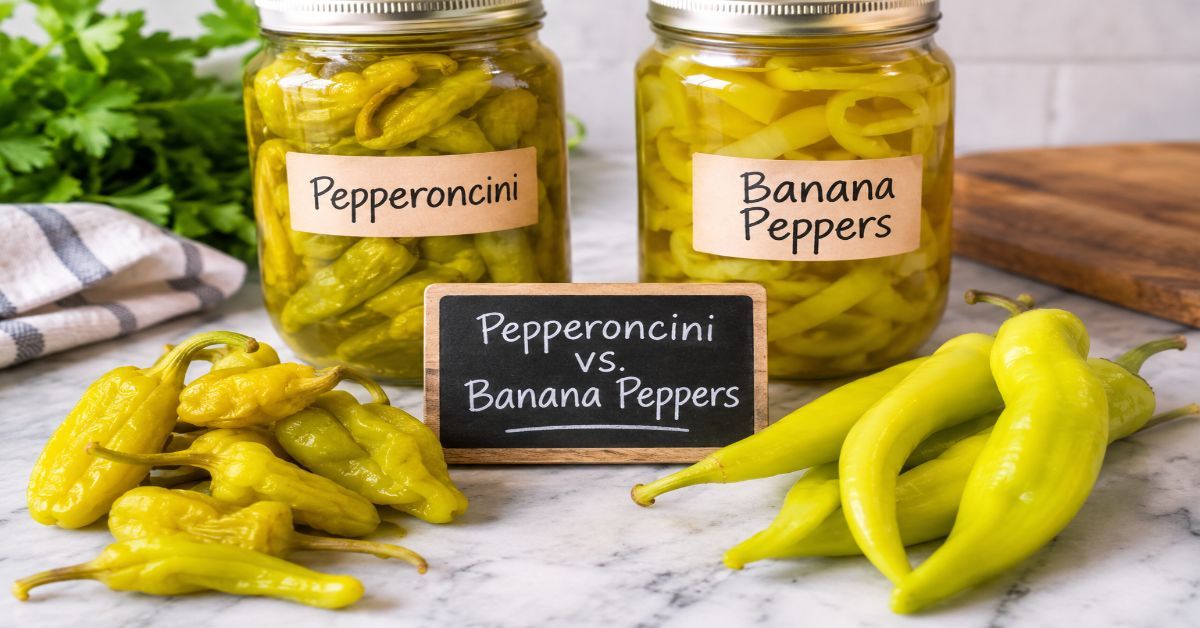
Pepperoncini and banana peppers are not the same pepper, but the surprising kitchen truth is that the pickle jar can matter more than their modest difference in heat. Both are mild, yellow-green members of Capsicum annuum. Yet a fresh banana pepper can taste less like pickled banana-pepper rings than like a fresh pepper of another variety. That is why swapping by name alone sometimes changes a meal more than expected.
The familiar shorthand is useful: the first is usually shorter and wrinkled, with thin walls; the second tends to be longer, smoother, and firmer. Standard reference ranges put the former at about 100–500 Scoville Heat Units (SHU) and the latter at approximately 0–500 SHU. Those numbers overlap nearly completely. A cook selecting peppers for a Greek salad, pizza, roast, or stuffed appetizer is usually better served by checking the form, brine, and texture than ranking them by heat.
The difference gets more interesting at the grocery shelf. One jar may contain whole, softly textured peppers in a sharp vinegar solution. Another holds crisp rings in a sweetened brine. Neither flavor is explained by plant variety alone. A practical comparison therefore needs three layers: what the fresh pepper is, what preservation does to it, and what your finished dish requires.
This guide starts with a clear side-by-side view, then uses dish-specific substitution rules, a brine mixing approach, and storage guidance to turn labels into better cooking choices. No taste testing or original laboratory measurements are claimed; the recommendations are culinary reasoning based on cited food references and extension guidance.
The Differences That Matter at the Cutting Board
Both peppers are mild chilies, not bell peppers. In US grocery usage, the word pepperoncini usually means the tender, often pickled Italian- or Greek-associated pepper; in Italian, peperoncino is a broader term for chili peppers. That naming mismatch helps explain why a search for a “fresh pepperoncino” can lead to varieties unlike the familiar deli jar.
| Kitchen trait | Pepperoncini | Banana pepper | Why it matters |
| Typical fresh skin | Wrinkled or crinkled | Smooth and waxy | Helps identify whole fresh peppers |
| Usual outline | Shorter, often blunt-ended | Longer, curved, tapered | Banana pepper is usually easier to fill |
| Common heat range | About 100–500 SHU | About 0–500 SHU | Both are mild; ranges overlap |
| Fresh bite | Tender, thinner-walled | Firmer, often crunchier | Changes roasting and stuffing |
| Pickled flavor | Often tangy, briny | Can be sharp or sweetened | Check jar ingredients, not just name |
| Best role | Sharp accent, salads, braises | Slices, crunchy toppings, stuffing | Pick by recipe function |
The Scoville Overlap Makes Heat a Poor Tie-Breaker
The widely cited heat ranges come from culinary descriptions rather than a universal measurement of every pepper sold. Growing conditions, ripeness, cultivar, and individual fruit all vary. A pepper rated at the upper end of either published range could seem hotter than one at the lower end of the other. Because both are far milder than many common hot chilies, visual texture and preparation deserve more attention. Food Network’s detailed culinary comparison reports the same broad overlap (Khoury-Hanold, 2023).
Fresh, Pickled, and Dried Are Not Equivalent Ingredients
Fresh peppers deliver vegetal flavor and texture without the acid and salt of a jar. Pickling adds both, and a sweetened recipe can alter the flavor further. Dried chili sold under related Italian names may refer to hotter varieties altogether; do not treat dried “peperoncino” flakes as a direct substitute for whole mild pickled peppers. Packaging and ingredient lists are more reliable than a similar-sounding name.
A Better Rule: Pick for Acid, Crunch, or Structure
The practical decision can be reduced to three jobs. Acid balances rich ingredients. Crunch keeps a soft sandwich or salad lively. Structure matters when a pepper has to hold cheese, sausage, or a vegetable filling. Matching the job is more accurate than assuming one variety always tastes sour and the other always tastes sweet.
| Recipe situation | Best starting choice | Adjustment if using the other |
| Greek-style salad or antipasto | Whole or sliced pickled pepperoncini | Use pickled banana peppers; taste for sweetness |
| Deli sandwich or pizza | Either pickled variety | Drain rings well to avoid sogginess |
| Stuffed and baked peppers | Fresh banana peppers | Use larger sturdy peppers rather than thin-walled pickled ones |
| Quick skillet fry | Fresh thin-walled pepperoncini | Cook banana peppers a little longer if thicker |
| Slow-braised beef or chicken | Jarred pepperoncini plus some brine | Use pickled banana peppers; reduce added sugar or vinegar |
| Cold pasta salad | Either, with measured brine | Reduce added salt and dressing acid first |
The Sandwich Swap: Start With a Like-for-Like Jar
For a sandwich, substitute equal amounts of drained pickled peppers to start. Taste one piece before building the sandwich. If a banana-pepper jar contains sugar, its rounds may taste noticeably sweeter than unsweetened pepperoncini. A squeeze of lemon or a little neutral vinegar can restore the tartness you wanted; if the jar is already very sharp, no adjustment is necessary. Drying the slices on a towel also prevents the bread from becoming wet.
The Stuffing Test: Walls Matter More Than Heat
For stuffed peppers, choose fresh and firm pods with enough cavity and wall strength to hold their shape. Smooth banana peppers usually have the advantage. Small, thin-walled pepperoncini can collapse or tear when loaded, especially if already pickled. A recipe built for filling should not use jarred whole peppers as a one-for-one replacement for fresh ones without rethinking cooking time and moisture.
What to Do With the Brine Instead of Throwing It Away
Pickling liquid is an overlooked cooking ingredient, but it is not simply interchangeable with plain vinegar. It carries salt, acid, pepper flavor, and sometimes sugar, garlic, or preservatives. Treat it as a ready-seasoned liquid: start small, taste, and reduce other salty or sour ingredients accordingly.
For a simple vinaigrette, whisk one tablespoon of clean brine with three tablespoons of olive oil and a little mustard, then add brine or lemon by taste. This is a suggested starting ratio, not a controlled taste-test result. In a pasta salad, replace a portion of the recipe’s vinegar with the liquid from the pepper jar. For slow-cooked meat, add a few tablespoons to the braising liquid before adding more salt. A splash also brightens a nonalcoholic tomato-based savory drink.
Brine can be used for quick refrigerator pickles if a trusted recipe permits it and the mixture remains refrigerated, but reused jar liquid must never be assumed to have the acidity required for shelf-stable canning. Colorado State University Extension stresses tested recipes and controlled vinegar acidity for safe home-preserved peppers (Hill & Kendall, reviewed 2025).
A Three-Step Brine Check
- Read the label: check sodium, sugar, acidity ingredients, and whether spices are present.
- Taste a teaspoon: decide whether the main contribution is salty, sour, sweet, or spicy.
- Add gradually: replace part of existing acid, rather than pouring brine into a fully seasoned sauce.
This ingredient-use approach also fits a wider low-waste kitchen strategy: useful leftovers can replace newly purchased ingredients when storage and food safety are respected.
The Nutrition Trade-Off Is Mainly the Jar
Fresh mild chilies add produce, flavor, and relatively little energy to a dish, but one pepper is not a shortcut to better health. Commercial pickled products can bring substantial sodium, and the amount varies by brand and serving size. A nutrition comparison without a particular label would create false precision. Read the sodium per serving and the number of servings eaten; draining may remove some surface liquid but does not make the pepper sodium-free.
People limiting salt should prioritize the actual package label and overall meal. The site’s low-sodium diet guide explains why a few small packaged-food additions can add up across a day.
No robust basis exists here for claiming either variety prevents disease, improves digestion, or delivers a clinically meaningful dose of a specific nutrient in an ordinary pickled serving. The reason to choose them is primarily culinary: mild chili flavor, acidity, and texture.
Buying and Storage: Where Home Cooks Make Mistakes
For fresh peppers, look for firm fruit without soft spots, leakage, or unexpected discoloration. A naturally crinkled pepperoncini is not automatically spoiled; distinguish cultivar texture from mushiness or mold. Keep fresh peppers refrigerated and use them while crisp. If a recipe requires whole stuffed peppers, choose size and wall strength before color.
For commercial jars, read the label for sweeteners, salt, and refrigeration instructions. Once opened, close tightly and refrigerate; keep peppers submerged according to product directions, use clean utensils, and follow the manufacturer’s stated storage period. Oregon State University Extension advises storing opened pickles refrigerated and covered by their pickling liquid (OSU Extension, 2024). General USDA guidance lists refrigerated pickles at roughly one to three months after opening, but a specific manufacturer’s instructions take precedence.
The Risk of Treating Every Pickle as a Preserving Recipe
An opened store-bought jar is not a reliable blueprint for making shelf-stable preserves at home. Safe processing depends on food acidity, recipe proportions, and heat treatment. Colorado State University Extension describes the danger of improperly acidified or processed home-canned peppers. Reusing commercial brine in a refrigerator dressing is a flavor decision; using leftover brine to can new peppers without a tested recipe is a food-safety mistake.
Build a Better Plate: Pairings, Not Pepper Rules
A Greek-style vegetable salad benefits from chopped tomatoes, cucumbers, olives, a measured amount of briny pepper, herbs, and olive oil. The sour ingredient should lift the vegetables, not replace their freshness. The same balance is central to a broader
For more context on vegetables, herbs, and acidity, the site’s Mediterranean food guide offers a meal-building framework that does not reduce a cuisine to one signature garnish.
With roasted fish, a few drained pickled rings can cut through richness without demanding a heavy sauce. If the fish is delicate, put the peppers on the plate after cooking so their brine does not mask the mild flesh. The site’s
That pairing makes sense alongside the practical cooking advice in the branzino preparation guide, where texture and cooking technique matter more than decoration.
For pasta salad, use a modest quantity of chopped peppers and taste the dressing before seasoning. For a pizza, drain jarred slices so they do not soak the crust. For a slow cooker roast, the liquid can become part of the sauce, but begin with less salt than normal. For a pan-fried fresh pepper, cook until the walls soften and lightly blister; adding jar brine early would turn a sauté into an acidic braise.
The Future of Mild Pickled Peppers in 2027
There is no credible evidence in the sources reviewed that either pepper is about to experience a dramatic 2027 culinary or agricultural breakthrough. The more defensible outlook is a continued practical role for mild, acidic garnishes in home cooking, alongside greater attention to food-waste reduction and packaged-food sodium. These are editorial expectations, not measured forecasts of category sales or consumer demand.
For cooks, the likely change is in how recipes explain ingredients. A formula that says “add six pickled peppers” leaves important information unspecified: whole versus sliced, sweetened versus unsweetened, and how much brine accompanies them. More helpful recipes will describe the desired taste or texture and explain how to adjust. That is an aspiration for recipe clarity, not a prediction of what publishers or brands will necessarily do.
The storage and safety fundamentals are unlikely to become optional. Shelf-stable home pickling will still require tested procedures rather than casual reuse of commercial liquid. And even if new labels emphasize “natural” or “Mediterranean,” a serving’s salt content will remain something to verify, not infer from front-of-pack language.
Key Takeaways
- Choose by culinary function: tartness, crunch, and structure are more useful than a tiny SHU difference.
- Fresh and jarred peppers are separate ingredients, even if the botanical variety is identical.
- For sandwiches and salads, swap pickled for pickled first, then correct the dressing or seasoning.
- Fresh banana peppers usually provide a sturdier vessel for stuffing; thin-walled fresh pepperoncini suit quick cooking.
- Treat brine as salted, flavored acid; it can enhance dishes but does not replace a tested canning solution.
- Read a specific product’s sodium label instead of quoting a single nutrition number for every jar.
Conclusion: Let the Recipe Choose
The common debate over which mild pepper is “better” has no universal winner. Their typical shapes and textures differ, and the published Scoville ranges give pepperoncini a slightly higher floor, but those facts rarely decide dinner. A cook who wants a sturdy whole pepper to fill should begin with a fresh banana pepper. Someone trying to sharpen a rich sandwich or roast may find the usual jarred pepperoncini more convenient. For sliced toppings, either can work.
The biggest avoidable error is overlooking preservation. Fresh pepper, vinegar-packed pepper, and sweetened pickled rings can produce very different results even when the peppers look alike. Match the form, drain when crunch matters, use brine sparingly, and taste before adding salt or acid. That is a more reliable rule than treating a pepper name as a complete flavor specification. It also explains why the leftover jar liquid deserves attention, while safe home canning still demands a tested procedure.
Frequently Asked Questions
Are pepperoncini spicy?
They are generally mild. Culinary references commonly place them around 100–500 SHU, a modest range whose overlap with banana peppers makes individual taste and preparation more important than numerical ranking.
Are banana peppers the same as pepperoncini?
No. Both are Capsicum annuum, but they are distinct types. Banana peppers are usually longer and smoother, whereas fresh pepperoncini are commonly shorter and crinkled.
What can replace pepperoncini in a salad?
Pickled banana peppers are usually the easiest replacement. Use similar drained quantities, then taste for sweetness, salt, and acidity. For a less similar but still acidic option, a small amount of chopped mild pickled vegetables can provide contrast.
Can you eat pepperoncini raw?
Yes, if fresh and properly washed. Expect a more vegetal and less sour flavor than the familiar jarred version. Choose sound, fresh peppers and prepare them as you would other raw mild chilies.
Can pepperoncini juice be used in a marinade?
Yes, in small amounts as one acidic, salty flavor component. Adjust any additional vinegar and salt; do not assume it has the same strength as plain vinegar or that it makes meat safe without proper refrigeration and cooking.
Are pickled peppers healthy?
They can add flavor and variety to meals, but health claims should stay modest. Sodium can be substantial in commercial jars, so consult the package label and the needs of the full meal.
Can dogs eat pepperoncini?
It is better not to offer pickled peppers to dogs. The salt, vinegar, added seasoning, and possible garlic or onion ingredients make them an unnecessary choice. Ask a veterinarian if a dog eats a substantial amount or shows symptoms.
Methodology
This comparison synthesizes culinary reference descriptions of Capsicum annuum peppers and food-preservation recommendations from university extension services and USDA materials. Ten discoverable competing results were reviewed for recurring themes, including Food Network, Southern Living, Tasting Table, MasterClass, Chili Pepper Madness, Cozymeal, Nutritionist Answers, Chowhound, The Chilli Index, and Nex Virox. No first-hand taste trial, laboratory capsaicin measurement, or product-label sample is represented as having been conducted. Brand-specific sodium values, jar acidity, and shelf life require individual verification.
References
Khoury-Hanold, L. (2023, August 10). Banana peppers vs pepperoncini: What’s the difference? Food Network. https://www.foodnetwork.com/how-to/packages/food-network-essentials/banana-peppers-vs-pepperoncini
Hill, M., & Kendall, P. (2025 review). Making pickled peppers. Colorado State University Extension. https://extension.colostate.edu/resource/making-pickled-peppers/
Oregon State University Extension Service. (2024). Pickle fact sheet (SP 50-466). https://extension.oregonstate.edu/food/preservation/pickle-fact-sheet-sp-50-466
U.S. Department of Agriculture, Food Safety and Inspection Service. (2025). How long can I keep condiments in the refrigerator? https://ask.fsis.usda.gov/article/How-long-can-I-keep-condiments-in-the-refrigerator
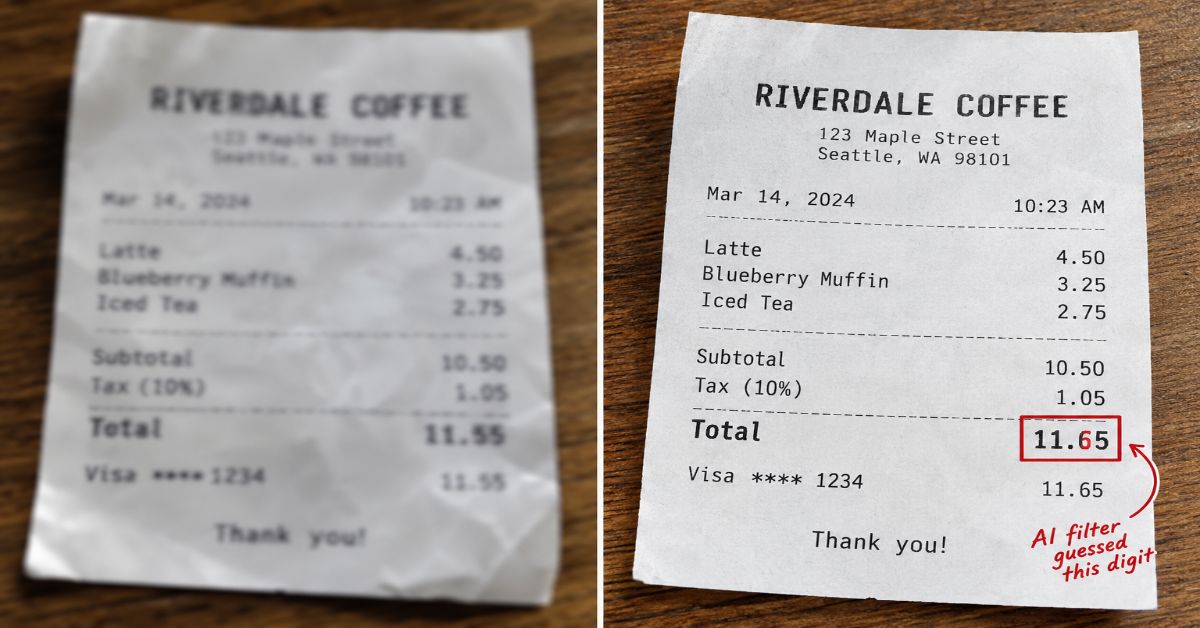
A blurry receipt may still be accepted if the transaction details needed for the claim can be verified—but a crisp-looking enhancement does not make missing facts true. That distinction decides whether a purchase gets reimbursed, rejected by an expense app, accepted for a return, or questioned during record review.
Consider two photos. The first is slightly soft, yet the merchant, date, amount and itemization remain readable. The second looks strikingly clear after an AI filter, but the filter has guessed a digit in the total. The first may be more useful and more defensible. In financial documentation, faithful evidence matters more than visual perfection.
The right first step is not to sharpen every image. Identify what went wrong, determine which fields are required, protect the original, and choose among recapture, conservative enhancement, merchant reissue and supporting records. An employee claiming lunch, a small-business owner filing taxes, and a customer requesting a refund do not face identical rules.
This guide separates those cases and gives a practical process for each. It also covers optical character recognition (OCR), thermal-paper fading and the less obvious reason that a scan may pass a machine yet fail human review. The result is a clear boundary: improve visibility when information exists, but never manufacture information when it does not.
Four failures that look alike—but are not
| Symptom | What failed | Best next step |
| Motion streaks | Camera moved during capture | Retake photo with stable phone and brighter, softer light |
| Soft whole receipt | Focus landed behind the print | Tap on the printed text and rescan |
| Gray or missing ink | Thermal print has faded or printed faintly | Digitize promptly; seek merchant copy if details are gone |
| Cut-off or obscured text | Crop, fold, glare or physical damage | Recapture entire slip or obtain a duplicate |
A receipt can have more than one problem. A faded receipt photographed from a long distance is both low contrast and low resolution. Sharpening addresses neither missing ink nor information that fell outside the frame.
Blurry versus faded: why the distinction matters
Blur affects the recorded image; fading affects the information on the original paper. For a blurred photo, the paper may still be readable and a second capture solves the issue. For a faded thermal slip, the source itself may have lost contrast. Some differences can be made easier to see with careful editing, but completely erased characters cannot be reliably recovered from the same pixels.
The 60-second receipt readability scorecard
Before uploading, look at the original at normal size, then zoom in. Mark each field readable, partial or unreadable. This is a triage aid, not an employer or tax-authority standard.
| Field | Why it may matter | If unreadable |
| Merchant or seller | Identifies counterparty | Find order history or merchant duplicate |
| Transaction date | Matches purchase to claim period | Cross-check card posting and invoice date |
| Final total and currency | Establishes amount | Check statement and merchant record |
| Items or services | Explains character of expense | Find itemized invoice or order confirmation |
| Tax and tip breakdown | May matter for local tax or policy | Seek original invoice or full receipt |
| Payment reference | Links evidence to transaction | Use partial card reference or order ID where available |
Decision rule: if every field required by the reviewing organization is human-readable and consistent, submit the unaltered file or a lightly corrected copy alongside it. If a mandatory field cannot be verified, pause the claim and gather external proof. A scan that is readable to a person can still be misread by OCR; a machine-accepted scan can still lack business purpose.
A simple decision path
- Can you read the original paper? If yes, take a fresh, flat, well-lit scan instead of editing the bad photo.
- Can you read all policy-required fields in the original image? If yes, use light geometric and tonal corrections and preserve both files.
- Does OCR misread a field? Correct the extracted data using the source image, never a guessed value.
- Is a mandatory detail absent? Request a merchant duplicate or make a supporting-evidence packet before submitting.
When an expense report accepts—or rejects—the record
There is no single universal rule that every employer or receipt app applies. A reimbursement policy might demand an itemized restaurant bill, while another permits a card record for certain low-value costs. Different platforms may flag uploads because required fields are unreadable, the image is cropped, totals differ from manually entered amounts or another submission appears to match.
OCR systems extract likely text and assign confidence values; confidence is not independent proof that the transaction happened. Amazon Textract, for example, recommends appropriate image quality and human scrutiny where predictions have low confidence. An approval workflow may impose separate rules after extraction.
For a rejected claim, obtain the rejection reason rather than repeatedly uploading edited variants. The fastest fix may be a missing itemized bill, not another sharpening filter. When resubmitting, attach the original and clearly label any enhanced version to avoid ambiguity about what was changed.
What an approver actually needs
The approver generally needs to match who was paid, when, for what, how much and why the expense was business-related. These are different questions: a card statement can show an outgoing payment, but often cannot identify the goods or business purpose. For U.S. travel and certain other expenses, IRS Publication 463 describes recordkeeping and substantiation requirements; the particular exception for expenses under $75 is not a general permission to discard all receipts.
How to fix a blurry receipt photo without altering facts
Work on a duplicate, never the only copy. Start with the original file rather than a screenshot from a chat app, which may have been resized or compressed. Make changes that help reveal captured pixels, not changes that invent missing symbols.
The safe editing sequence
- Keep the original, record its filename and save a separate working copy.
- Crop surrounding table, hands and other objects without removing receipt edges or transactional details.
- Rotate and correct perspective just enough to keep printed rows straight.
- Adjust exposure and shadows gently before increasing contrast.
- Apply minimal noise reduction; excessive smoothing may erase decimals or narrow digits.
- Sharpen lightly as the final step; compare every critical field against the original.
- Export at a readable resolution with modest compression and retain both versions.
If a receipt says 18.60 but a model turns it into 78.60, the enhanced image is a liability. Never ask generative AI to fill in invisible prices, dates or merchant names. An app may infer a reasonable-looking result without access to the true record. Preserve uncertainty as uncertainty.
A better capture beats an aggressive filter
Place the slip flat on a dark, matte surface and light it from the sides to avoid glare. Clean the lens. Hold the phone parallel to the paper, tap to focus on a small printed line and use document-scanning mode if it improves the result. Capture the entire receipt; for long slips, add overlapping close-ups of the item section and total. Photograph again before folding or storing the paper.
Making receipts readable to OCR systems
OCR is a conversion step, not a verification service. Its output can confuse the subtotal with the final total, drop a decimal point or mix a transaction number with the date. A genuinely useful OCR workflow compares extracted fields with the original photo and independent records before the result enters an accounting system.
| Image issue | Likely extraction risk | Safer action |
| Low resolution | Digits and decimal points merge | Retake closer or scan at higher quality |
| Severe skew | Rows and totals mis-grouped | Rescan parallel; apply moderate deskew |
| Faded thermal text | Field confidence decreases | Request electronic original or duplicate |
| Glare over total | Missing or wrong amount | Change lighting and recapture |
| Too much enhancement | Plausible but false characters | Use untouched source as ground truth |
Amazon recommends high-quality inputs, ideally at least 150 DPI for Textract, and points to confidence scores as a way to guide human review. That guidance is platform-specific, not a guarantee that 150 DPI will rescue an unreadable slip.
When the receipt is unreadable: build a replacement-evidence packet
When critical information truly cannot be recovered, stop treating image enhancement as the solution. A strong replacement packet connects several records that corroborate the same transaction. Acceptance is never automatic; follow the employer, card program, retailer or tax jurisdiction that will evaluate it.
What to collect
- Original blurry, damaged or faded image, without changes.
- A separately labeled enhanced image, if it improves genuinely visible details.
- Merchant-issued duplicate, itemized invoice, e-receipt, order email or loyalty purchase history.
- Card or bank entry showing merchant, amount and posting date, with unrelated financial information redacted if permitted.
- A contemporaneous note explaining purpose, date, attendees where relevant and why the original is unavailable.
- Approval or exception form required by the employer, plus any exchange with the merchant.
Example: a consultant pays for a team meal, then finds the restaurant’s thermal slip unreadable. The card statement shows the restaurant and charge but no attendees or itemization. An emailed itemized receipt and a same-day note naming the business purpose provide a more complete record than generating a fictional “restored” bill.
The IRS explains that electronic storage must preserve accurate, legible, retrievable records. It also notes that documentary evidence usually establishes amount, date, place and essential character, with additional requirements for particular expenses. These standards illustrate why an attractive scan and adequate substantiation are not the same thing.
Recovering a faded thermal receipt before it disappears
Thermal receipts rely on heat-sensitive coating, so excessive heat and poor storage can damage the remaining print. Photograph a fresh receipt promptly; store an important original flat, dry and away from heat and direct sunlight. Avoid ironing, hairdryers and heavy rubbing. Those approaches may darken paper or destroy surviving detail rather than safely restoring it.
If some text remains visible, capture multiple ordinary photographs with even lighting, preserve them and transcribe only characters you can independently identify. For major purchases, request a merchant-issued digital copy before the return or warranty window becomes urgent.
If the printer made the receipt blurry
A fuzzy receipt straight out of a point-of-sale (POS) printer has a different fix from a bad phone image. Run the printer’s self-test first: a sharp self-test but faint output from the POS app points toward software settings; poor self-test output suggests paper, printhead, roller or mechanical issues. Follow the exact manual for the printer model.
Printer-side troubleshooting order
- Verify compatible thermal stock and the correct coated-side orientation.
- Power down, let the printhead cool and follow manufacturer-approved cleaning instructions.
- Inspect roller, paper path and alignment for contamination or wear.
- Adjust print density and speed in small steps if supported.
- Check the driver, application settings and firmware.
- Consider replacement parts only after testing clean paper and verified settings.
Otter’s printer-support guidance identifies dirty heads, roller issues and incorrect thermal paper among common causes. Cleaning methods vary by model: never apply a solvent to plastic or rubber components unless the manufacturer approves it.
Refunds, warranties and the cost of assuming rejection
A store can sometimes locate a transaction by order number, loyalty account, payment card, purchase date or branch location. Contact the retailer before assuming the unreadable slip ends the case. A receipt may be required by one return policy and optional under another, while statutory consumer rights may differ by country. Avoid describing any particular refund as guaranteed.
For warranties, preserve the receipt image with the product serial number, order confirmation and registration email. A merchant duplicate issued now is usually more defensible than an altered photograph whose content no longer matches the original.
The Future of Receipt Evidence in 2027
The likely direction is less manual typing and more automatic matching among merchant receipts, card entries and expense-policy fields. That projection reflects present OCR systems that already identify document text, assign confidence values and route exceptions for human review; it is not a promise that every platform will deploy identical controls by 2027.
The trade-off is more important than the technology. When recognition improves, organizations may be tempted to regard extracted data as verified data. Yet a model can accurately read a fabricated slip, or confidently assign the wrong label to a real charge. Document forensics research published in 2026 underscores that realistic AI-generated receipt images complicate authenticity checks. The defensible direction is source retention, audit trails, cross-record checks and transparent exception handling—not invisible reconstruction.
Privacy will matter too. A scan may expose location, payment details, account identifiers and purchase habits. Businesses deciding how to automate receipts should weigh data minimization, retention rules and who can view the originals. No fixed industry-wide timetable or universal accuracy threshold for 2027 can be verified from the cited materials.
Practical takeaways
- Test the source first: a recapture often beats editing a blurry image.
- Use a field checklist to decide usability; aesthetic sharpness is not the acceptance criterion.
- Keep the untouched original whenever an image is corrected or submitted.
- Validate OCR totals, dates and merchants against independent evidence.
- Treat merchant duplicates and itemized invoices as stronger replacements than guesses.
- For claims and taxes, consult the rules that apply to the particular transaction.
Conclusion
A blurry receipt does not automatically mean the purchase is unverifiable. The key question is whether the required details survive and can be supported. A slightly soft photograph may be enough when an approver can identify the merchant, date, items and final total. An apparently perfect restoration may be inadequate if its digits were guessed or if it omits what the expense was for.
That makes the best recovery sequence practical rather than flashy: inspect the original; retake the photo when possible; make only conservative edits; verify OCR output; and build a documented replacement packet when facts are missing. Preserve the original and show the reviewer what happened. A clear audit trail is often more valuable than another round of image sharpening.
Policies differ across employers, card programs, retailers and jurisdictions. This guide describes a careful documentation method, not a legal or tax ruling for every case. If the claim is material, obtain the relevant policy or professional guidance before treating substitute evidence as sufficient.
Frequently asked questions
Can I enhance a blurry receipt for an expense claim?
Usually you can improve contrast, framing or perspective, but preserve the original and check your company’s rules. Do not invent text or cover missing details.
Will OCR read a blurry receipt photo?
Possibly. Accuracy depends on resolution, glare, contrast, focus and layout. Review the merchant, date and final amount manually even when the scan appears successful.
Is a bank statement enough when a receipt is unreadable?
Not necessarily. A statement often confirms payment but not what was bought or the business purpose. Add an itemized merchant document or other supporting record if required.
Can a retailer look up a lost or unreadable receipt?
Some retailers can search using the date, card, loyalty account or order number. Availability depends on the business and its retention and returns policy.
Why do thermal receipts fade?
Many direct-thermal receipts use a coating whose visible mark is vulnerable to heat and poor storage. Digitize important receipts promptly and keep originals cool and dry.
Should AI restore missing numbers on a faded receipt?
No. Generating a plausible total or date creates data that may not represent the transaction. Request a reissued document or corroborate with independent evidence.
How clear must a receipt be for U.S. taxes?
The IRS looks for sufficient substantiation, not a universal photo-sharpness score. Required proof depends on the expense type; amount, date, place and business character may matter.
Methodology
Research compared publicly discoverable guidance about receipt OCR, thermal printing and recordkeeping with official IRS publications and Amazon Textract documentation. The original editorial angle is the decision boundary between visual readability and evidentiary sufficiency, with illustrative (not field-tested) examples. Claims about company-specific expense rejection algorithms and any universal OCR success rate were deliberately avoided because they could not be independently verified.
References and verification links
Internal Revenue Service. (2025). Publication 463: Travel, gift, and car expenses. Source
Internal Revenue Service. (2024). Publication 583: Starting a business and keeping records. Source
Amazon Web Services. (n.d.). Best practices: Amazon Textract. Source
Otter. (n.d.). Troubleshooting printer receipt. Source
Zhang, Y., et al. (2026). GPT4o-Receipt: A dataset and human study for AI-generated document forensics [Preprint]. arXiv. Source
-

 Technology3 months ago
Hitomi la in 2026: Domain Status, Safety and Risks
-

 Technology2 months ago
Scrolller in 2026: How It Works, Risks and Alternatives
-

 General3 months ago
Voozon.com: What It Is and How the Platform Works
-

 Technology3 months ago
Iwara: What iwara.tv Is, How It Works and What to Know
-

 Technology3 months ago
ThomsonKids.com: Website Guide, Topics & Trust Check
-

 Business3 months ago
incabizgrowth.com Review: Content, Trust & Use
-

 Technology2 months ago
Filetype:pdf Windows Update: Find Better Microsoft Guides
-

 General2 months ago
R Politics: How Reddit’s Political Feed Really Works