
Food & Drinks
Mediterranean Food: A Practical Guide to Eating Well

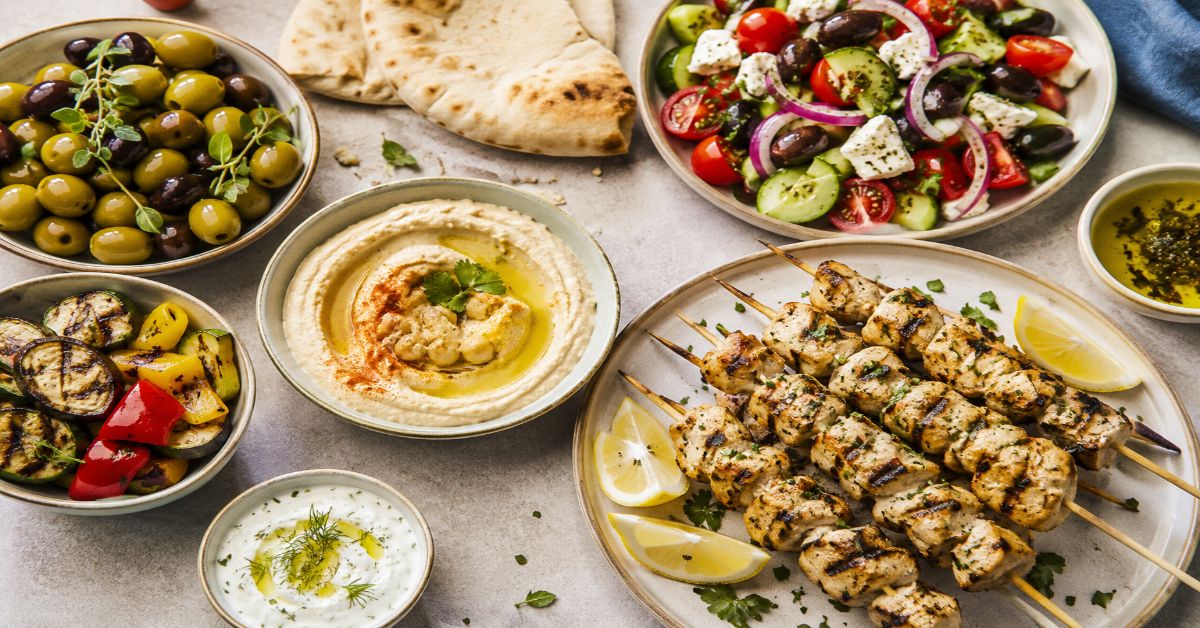
A bowl of lentils brightened with lemon, a tomato salad glossy with olive oil, charred fish beside herbs and grains: Mediterranean food often looks simple because the ingredients do the work. I think that is the easiest way to understand the term. Mediterranean food is not one fixed cuisine or a short list of Greek and Italian dishes; it is a broad family of traditions around the Mediterranean basin, commonly centered on vegetables, legumes, grains, olive oil, nuts, herbs, fruit, seafood, and moderate amounts of dairy and meat.
If you searched for Mediterranean food because you want to know what counts, what to order, or how to eat this way at home, the practical answer is straightforward: build meals around plants and minimally processed staples, use olive oil and other unsaturated fats as the main added fats, choose beans and seafood often, and treat red or processed meat and sweets as supporting players rather than the center of the plate. The exact dishes change dramatically from Spain to Morocco, Italy to Greece, and the Levant to the eastern Mediterranean, so authenticity does not require every meal to contain hummus, feta, or olives.
There is also an important distinction between Mediterranean cuisine and the Mediterranean diet studied in nutrition research. A restaurant can serve a traditional dish that is salty, refined, fried, or rich, while someone can follow a Mediterranean-style pattern using local foods. UNESCO recognizes the Mediterranean diet as living cultural heritage built around food knowledge, preparation, seasonality, and shared meals. Health organizations focus on the pattern: vegetables, fruit, whole grains, legumes, nuts, fish, olive oil, and fewer highly processed foods. This guide brings those ideas together, so you can recognize the food, understand the evidence, and use the pattern without flattening a diverse region into one menu.
Quick answer: Mediterranean food is a diverse group of regional cuisines, while Mediterranean-style eating is a plant-forward pattern centered on vegetables, legumes, grains, olive oil, nuts, fruit, and seafood. It is flexible rather than prescriptive, and its best-supported health benefits come from the overall eating pattern, not from any single “Mediterranean” ingredient.
What Is Mediterranean Food, Exactly?
Mediterranean food is an umbrella term for the cuisines and foodways associated with the Mediterranean region. It includes distinct traditions from Southern Europe, North Africa, the Levant, Turkey, and the Adriatic coast, among others. These cuisines do not share one recipe book, but they repeatedly use overlapping ingredients shaped by climate, agriculture, trade, religion, and local custom.
The health-focused phrase “Mediterranean diet” is narrower. Harvard’s Nutrition Source describes it as a primarily plant-based pattern with whole grains, olive oil, fruits, vegetables, beans, legumes, nuts, herbs, and spices, with fish and seafood favored over red meat. The American Heart Association similarly emphasizes minimally processed plant foods, olive oil, nuts, seeds, fish, poultry, and limited added sugars, refined carbohydrates, saturated fat, and processed meats.
UNESCO adds a cultural dimension that nutrition charts miss. Its description includes growing, harvesting, fishing, preserving, cooking, sharing food, hospitality, markets, celebrations, and the transmission of skills across generations. That matters because Mediterranean food is not simply a nutrient profile. It is also a way of turning seasonal staples into satisfying meals and eating them in a social context.
This table separates the recurring building blocks from the specific dishes that vary by region.
| Food group | Typical role | Examples |
| Vegetables and fruit | Base of meals, sides, snacks, desserts | Tomatoes, greens, peppers, eggplant, citrus, grapes, figs |
| Legumes | Plant protein and fiber | Chickpeas, lentils, white beans, fava beans |
| Grains and starches | Energy and meal structure | Bulgur, barley, farro, bread, couscous, rice, potatoes |
| Unsaturated fats | Cooking, dressing, texture | Olive oil, nuts, seeds, tahini |
| Animal foods | Supporting protein and flavor | Fish, shellfish, yogurt, cheese, eggs, poultry |
| Herbs, spices, acid | Flavor without relying on heavy sauces | Parsley, mint, oregano, cumin, garlic, lemon, vinegar |
Which Foods Define a Mediterranean-Style Plate?
A useful Mediterranean plate is built by role rather than by a rigid list of “approved” foods. Start with produce, add a plant-rich starch or grain, include legumes or another protein, then bring the plate together with olive oil, herbs, spices, acidity, and texture. This structure travels well across cuisines and budgets.
Vegetables, legumes, whole grains, and fruit do most of the work
Tomatoes, leafy greens, eggplant, peppers, onions, zucchini, artichokes, cabbage, cucumbers, and many other vegetables appear in Mediterranean cooking, but season and place matter more than any single vegetable. Chickpeas, lentils, white beans, fava beans, and other pulses provide protein, fiber, and body to soups, stews, spreads, salads, and grain dishes. Whole grains such as barley, bulgur, farro, whole-wheat bread, oats, and brown rice fit the nutrition pattern, while traditional regional meals may also use refined breads, couscous, pasta, or rice.
Olive oil is a signature ingredient, not a free-pour health hack
Olive oil is a defining added fat in many Mediterranean traditions and a major source of monounsaturated fat. It works as cooking fat, salad dressing, finishing oil, and a carrier for garlic, herbs, citrus, and spices. Still, the benefit comes from the overall pattern and from replacing less favorable fats, not from adding unlimited oil to an unchanged diet. Harvard specifically cautions that simply adding olive oil or nuts without changing the rest of the eating pattern misses the point.
Fish, poultry, eggs, and dairy play different supporting roles
Fish and seafood commonly appear more often than red meat in Mediterranean-style guidance. Poultry and eggs fit comfortably, while yogurt and cheese are typically used in moderate amounts rather than as the bulk of every meal. Red and processed meats are generally less frequent. This does not mean every traditional Mediterranean meal follows a modern nutrition template, but it is the pattern used by major health organizations when they discuss Mediterranean eating.
Use this plate framework when you want the Mediterranean pattern without following a rigid meal plan.
| Plate component | Practical target | Easy options |
| Vegetables | Make them the largest visible portion | Roasted peppers, salad, greens, eggplant, zucchini |
| Protein | Favor beans and seafood often | Lentils, chickpeas, sardines, salmon, eggs, chicken |
| Grain or starch | Choose whole grains often | Bulgur, barley, farro, whole-grain bread, potatoes |
| Added fat | Use mainly unsaturated fats | Olive oil, nuts, seeds, tahini |
| Flavor | Build with herbs, spices, and acid | Lemon, vinegar, garlic, mint, parsley, cumin, oregano |
How Does Mediterranean Food Change From Region to Region?
Calling a dish “Mediterranean” tells you less than naming its regional context. The basin spans multiple languages, religions, climates, and culinary histories. A useful way to understand the overlap is to notice recurring techniques, such as grilling, braising, baking, marinating, pickling, and dressing foods with oil and acid, while respecting the ingredients that make each cuisine distinct.
The table below shows how a shared ingredient vocabulary changes across broad regional contexts.
| Regional lens | Common flavor building blocks | Representative foods or dish styles |
| Southern Europe | Olive oil, tomato, garlic, herbs, grains | Vegetable stews, grilled seafood, pasta or rice dishes, bean soups |
| Greece and Cyprus | Olive oil, lemon, oregano, yogurt, herbs | Legume dishes, vegetable bakes, grilled fish, yogurt-based accompaniments |
| Levant and eastern Mediterranean | Tahini, lemon, parsley, mint, sumac, legumes | Hummus, lentil dishes, chopped salads, stuffed vegetables, grilled foods |
| North Africa | Olive oil, cumin, coriander, paprika, preserved or fresh citrus | Couscous dishes, vegetable and legume stews, grilled meats or fish |
| Adriatic and Balkan coast | Olive oil, seafood, greens, beans, herbs | Grilled fish, bean dishes, vegetable stews, simple salads |
These are examples, not ownership claims. Many dishes and ingredients cross modern borders, and their histories can be shared or disputed. For a reader or diner, the better question is not “Which country owns this food?” but “Which culinary tradition is this version coming from, and how is it prepared there?”
Is Mediterranean Food Healthy?
Mediterranean food can be very health-supportive, but the strongest evidence applies to a Mediterranean-style dietary pattern rather than to every dish carrying the label. The American Heart Association recommends Mediterranean-style eating because it aligns with a heart-healthy pattern rich in vegetables, fruit, whole grains, beans, legumes, nuts, fish, and unsaturated plant oils while limiting highly processed foods, added sugars, refined carbohydrates, saturated fat, and processed meats.
What does the heart-health evidence actually show?
One of the best-known trials is PREDIMED, which studied thousands of adults at high cardiovascular risk. Participants assigned to Mediterranean diets supplemented with extra-virgin olive oil or nuts experienced fewer major cardiovascular events than the comparison group over roughly 4.8 years. Harvard’s Nutrition Source summarizes the risk reduction at about 30 percent in this high-risk population. The 2025 Dietary Guidelines Advisory Committee also reviewed evidence linking healthy dietary patterns rich in fruits, vegetables, legumes, fish, nuts, and similar foods with better cardiovascular and metabolic outcomes.
That evidence does not turn individual foods into medicine. Olive oil, nuts, fish, and vegetables work as part of a dietary pattern that also tends to displace refined snacks, processed meats, and excess saturated fat. Portion needs still depend on age, body size, activity, health conditions, and total energy intake.
Does wine have to be part of Mediterranean eating?
No. Older Mediterranean diet descriptions often mention modest wine intake with meals, but current public-health guidance does not recommend starting alcohol for health. The CDC states that people who do not drink should not start for any reason, and that even moderate drinking can carry health risks. You can follow a Mediterranean-style eating pattern completely alcohol-free.
Why “Mediterranean” on a menu is not a nutrition guarantee
A platter of fried food, refined pita, large portions of fatty meat, salty sauces, and sugary dessert can come from the Mediterranean region and still differ sharply from the pattern studied for health outcomes. Restaurant meals can also be high in sodium or oil simply because chefs optimize flavor and texture. If health is your goal, judge the whole plate: vegetables, legumes, whole grains, protein choice, cooking method, added fats, and portion size matter more than the cuisine label.
How Can You Start Eating Mediterranean Food at Home?
You do not need imported specialty products or a complete pantry reset. The fastest route is to change the structure of familiar meals and keep a small set of high-impact ingredients on hand.
Make vegetables the largest visible part of lunch or dinner. Roast, grill, sauté, or serve them raw instead of treating them as garnish.
Use beans or lentils several times a week. Add chickpeas to a chopped salad, simmer lentils with onion and tomato, or mash white beans with lemon and olive oil.
Choose olive oil as a main added fat when it suits the dish. Measure it when calorie intake matters, and use acid, herbs, garlic, and spices to amplify flavor.
Rotate seafood into the week. Sardines, salmon, trout, tuna, mussels, and frozen fish can all work, depending on budget and availability.
Swap some refined grains for whole grains. Try bulgur, barley, farro, whole-wheat couscous, or whole-grain bread, while keeping portions appropriate for your needs.
Finish meals with fruit, yogurt, nuts, or a small sweet rather than making dessert automatically large and sugary.
A simple Mediterranean flavor formula
For weeknight cooking, combine one aromatic, one acid, one herb or spice, and one textural finish. For example: garlic + lemon + parsley + toasted almonds; onion + tomato + cumin + chickpeas; or shallot + red-wine vinegar + oregano + olives. This formula is more useful than buying a premixed “Mediterranean seasoning” because it teaches you how flavor is built.
What Does a Day of Mediterranean Food Look Like?
There is no mandatory menu, but this sample shows how the pattern can work with ordinary groceries rather than restaurant dishes.
Breakfast: plain yogurt with oats, walnuts, berries or chopped fruit, and cinnamon.
Lunch: lentil and vegetable soup, whole-grain bread, and a cucumber-tomato salad dressed with olive oil and lemon.
Snack: fruit with a small handful of nuts, or carrots with a bean-based dip.
Dinner: baked fish or chickpeas, roasted vegetables, and bulgur or barley with herbs.
Dessert: fresh fruit, or a modest portion of a traditional sweet when you want one.
The pattern is flexible enough for vegetarian eating. Legumes, nuts, seeds, whole grains, vegetables, yogurt, cheese, eggs, and soy foods can cover many meals without forcing fish or poultry onto the plate. For vegan eating, the same structure works with legumes, tofu, nuts, seeds, tahini, and fortified plant foods, but vitamin B12 and other nutrient needs deserve deliberate planning.
What Are the Most Common Mediterranean Food Mistakes?
The first mistake is reducing an entire region to hummus, feta, pita, olives, and grilled chicken. Those foods can fit, but they do not represent the full Mediterranean basin. The second is equating “Mediterranean” with “low carb.” Traditional foodways include bread, grains, pasta, couscous, potatoes, fruit, and legumes. The health pattern focuses more on food quality and balance than on eliminating carbohydrates.
Another mistake is assuming that more olive oil is always better. Olive oil is energy-dense, so pouring it freely can push a meal far beyond a person’s needs even when the fat quality is favorable. Finally, do not treat wine as a required component. Shared meals, vegetables, legumes, whole grains, seafood, nuts, and minimally processed foods are far more central to the pattern, and alcohol is optional.
The most useful mindset is replacement, not addition. Replace some butter or fatty meat with olive oil, beans, nuts, or fish. Replace a refined snack with fruit and nuts. Replace a small token side salad with a substantial vegetable dish. Those swaps move the whole pattern instead of merely decorating an unchanged diet with Mediterranean ingredients.
Key Takeaway
Mediterranean food is best understood as both a diverse culinary region and a practical eating pattern. Respect the regional cuisines for what they are, then borrow the pattern that health research consistently recognizes: more plants, legumes, whole grains, nuts, olive oil, and seafood; fewer highly processed foods and less red or processed meat. The result is not a rigid diet. It is a flexible way to build flavorful meals from ordinary ingredients while keeping culture, pleasure, and food quality in the same conversation.
Frequently Asked Questions About Mediterranean Food
Is Mediterranean food the same as Greek food?
No. Greek cuisine is one important Mediterranean tradition, but Mediterranean food also includes cuisines from Italy, Spain, parts of the Balkans, Turkey, the Levant, North Africa, and other communities around the sea. The ingredients overlap, but the dishes, seasonings, and techniques vary widely.
Is hummus considered Mediterranean food?
Yes, hummus is commonly included in Mediterranean and Middle Eastern food contexts, especially in the eastern Mediterranean and Levant. It fits a Mediterranean-style eating pattern because chickpeas and tahini provide plant protein, fiber, and unsaturated fats, although serving size and accompaniments still matter.
Can Mediterranean food be vegetarian?
Very easily. Many Mediterranean meals already center on beans, lentils, vegetables, grains, nuts, seeds, yogurt, cheese, and eggs. A vegetarian version can emphasize those foods while using fish or meat alternatives according to personal preference.
Is Mediterranean food spicy?
It can be, but it is not uniformly hot. Mediterranean cuisines use a wide range of flavorings, including garlic, cumin, coriander, paprika, chile, oregano, mint, parsley, dill, rosemary, citrus, vinegar, and fermented or pickled ingredients. Heat level depends on the regional dish and cook.
What is the best Mediterranean food for beginners?
Start with familiar formats: a chopped vegetable and chickpea salad, lentil soup, grilled or baked fish with lemon, roasted vegetables with yogurt or tahini sauce, or a grain bowl with beans, herbs, olive oil, and vegetables. These meals teach the core flavor structure without requiring specialized technique.
Do I need extra-virgin olive oil for every Mediterranean recipe?
No. Extra-virgin olive oil is traditional and flavorful in many dishes, but Mediterranean cooking is diverse and recipes vary. Use it when it suits the dish and your budget. The broader goal is to favor unsaturated fats and minimally processed foods rather than forcing one ingredient into every meal.
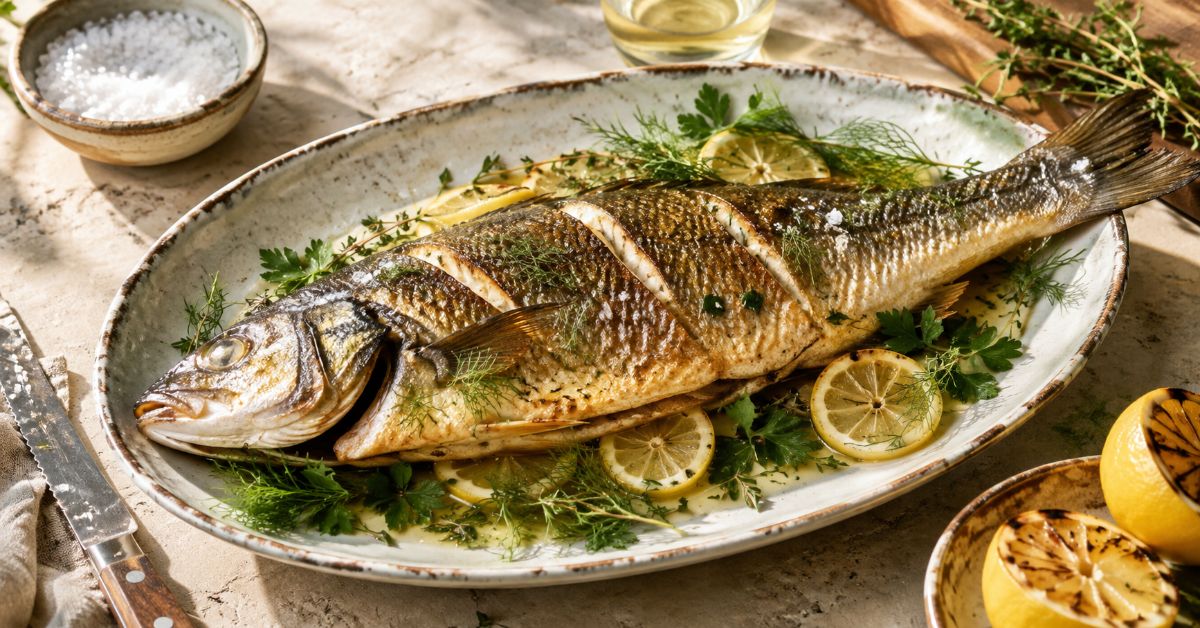
Branzino is European sea bass, and the reason it shows up so often on Mediterranean menus is not mystery but balance: it is mild enough for hesitant fish eaters, flavorful enough to stand on its own, and thin-skinned enough to become crisp without a heavy coating. I think its biggest advantage at home is that a whole fish looks ambitious while the actual cooking can be simpler than managing several delicate fillets.
The practical answer is straightforward. Buy a fish with clean ocean-like aroma, firm flesh, bright skin, clear eyes, and red or pink gills; ask the fishmonger to scale and gut it; dry it thoroughly; season it simply; and cook until the thickest part reaches 145°F / 63°C. The USDA lists 145°F as the safe minimum internal temperature for fish and shellfish, which gives home cooks a clear endpoint rather than relying only on appearance.
What deserves more attention is everything around that endpoint. Wild and farmed fish can differ in fat, texture, price, and environmental footprint. A whole fish also cooks differently from a skin-on fillet because bones and the intact body slow moisture loss. Grilling rewards very dry skin and a clean grate. Roasting is more forgiving. Wine pairings work best when acidity matches the lemon-and-herb style rather than overpowering the fish.
I use this guide to separate those choices so you can decide what to buy, how to prepare it, and which method fits your kitchen. The goal is not restaurant theater. It is repeatable control over freshness, heat, seasoning, doneness, and sourcing.
What Is Branzino, and What Does It Taste Like?
European sea bass, scientifically Dicentrarchus labrax, is sold under several market names. In English-language seafood counters you may also see branzini, European seabass, or sea bass, although “sea bass” by itself can refer to other species. The flesh is white, fine-flaked, moist when properly cooked, and gently sweet rather than strongly marine.
Because seafood names vary by market, I treat species identity as a sourcing question, not a spelling contest. That is the same verification principle I use when a term has multiple documented forms, as explained in this site’s guide to spelling and naming variants. For this species, the scientific name on a label or supplier sheet is the cleanest way to confirm what you are buying.
How nutritious is European sea bass?
Current EUMOFA European seabass data lists wild North East Atlantic fillet at about 96 kcal, 20.1 g protein, 1.6 g lipid, and 508 mg omega-3 per 100 g. Those figures are useful as a reference point, not a promise for every fish, because farmed feed, season, location, size, and cooking method can change composition.
How Do You Choose and Clean a Whole European Sea Bass?
Freshness matters more than elaborate seasoning. Geoffrey Zakarian advises looking for taut skin, clear eyes, and bright red gills. I also want resilient flesh and a mild, clean smell rather than sour, rancid, or ammonia-like notes.
What should the fishmonger do for you?
- Gut the fish and remove the viscera cleanly.
- Scale both sides, including the area near the belly and fins.
- Trim sharp fins if you prefer easier handling.
- Leave the head and tail on for whole roasting or grilling unless your pan or grill space requires trimming.
At home, rinse only if needed to remove loose scales, then dry the fish thoroughly. Surface moisture delays browning and increases sticking, so dry skin is one of the highest-leverage steps in the recipe.
How do you descale a whole fish yourself?
1. Place the fish in a sink or on a washable board and hold it firmly by the tail.
2. Using a fish scaler or the back of a knife, scrape from tail toward head in short strokes.
3. Work around the belly, dorsal area, and near the gill plate where scales are easy to miss.
4. Rinse away loose scales, check the skin by touch, then dry the fish completely before seasoning.
How Do You Cook Branzino Without Drying It Out?
Roasting gives the widest margin for error, grilling produces the strongest skin and smoke, and pan-searing gives the most control over fillets. The shared risk is overcooking after the flesh is already done.
For safety, use a thermometer in the thickest part of the fish, avoiding direct contact with bone. The USDA safe minimum internal temperature chart lists fish and shellfish at 145°F / 62.8°C. That number is more reliable than judging only by color, especially when you are cooking a whole fish of unfamiliar size.
Quick whole-roasted European sea bass method
1. Heat the oven to 400°F / 205°C.
2. Pat a cleaned, scaled whole fish completely dry and make two or three shallow diagonal scores on each side.
3. Season inside and out with salt, black pepper, olive oil, and lightly crushed or minced garlic.
4. Fill the cavity with thin lemon slices and a small handful of parsley, dill, or thyme.
5. Roast for roughly 12 to 15 minutes for a typical 1 to 1.5 pound fish, then check the thickest section for 145°F / 63°C.
6. Rest briefly and finish with fresh lemon juice and a thin stream of extra-virgin olive oil.
Thickness matters more than the recipe clock. I use time as a checkpoint and temperature as the decision.
Can you grill it whole?
Yes. The whole fish is compact enough for direct grilling, and its skin helps protect the flesh. Geoffrey Zakarian calls it a good introductory grilling fish because it “is not massive and it cooks quickly.” Use a hot grill, clean grates, and very dry skin.
- Heat a gas or charcoal grill to medium-high.
- Oil the fish lightly, not heavily. Excess oil can flare.
- Place it diagonally across clean grates and leave it alone long enough to release naturally.
- Flip once with a fish spatula and tongs supporting the body.
- Check the thickest flesh for 145°F / 63°C before serving.
What about skin-on fillets?
For fillets, start skin-side down in a hot pan with a thin film of oil. Press gently for the first 20 to 30 seconds so the skin stays flat, cook until crisp, then flip briefly to finish. Fillets cook quickly, so check early.
This table makes the method trade-offs easier to scan.
| Method | Best for | Heat and timing | Main risk | Best finish |
| Whole roast | Most forgiving home method | 400°F / 205°C, about 12 to 15 min for a typical small whole fish | Overcooking while waiting for more browning | Lemon juice, olive oil, parsley |
| Whole grill | Crisp skin and smoke | Medium-high grill, usually several minutes per side depending on size | Sticking or tearing during an early flip | Charred lemon, herbs, capers |
| Pan-seared fillet | Fast weeknight control | Hot skillet, skin-side down first | Skin curling or flesh drying out | Butter or olive oil, lemon, dill |
| Broil | Fast blistering close to oven heat | Short, high-heat cook with close monitoring | Burning garlic or herbs before fish is done | Herb oil added after cooking |
What Substitutes Work for European Sea Bass?
The best substitute depends on whether you care most about mild flavor, whole-fish presentation, or crisp skin. I would not chase an exact species match. I would match the cooking behavior.
| Substitute | Flavor and texture | Best use | Adjustment |
| Red snapper | Mild to moderately sweet, firmer flakes | Whole roasting or grilling | May need slightly longer cooking for thicker fish |
| Black sea bass | Mild, delicate, clean | Whole roast or fillets | Treat similarly but confirm species and local sourcing |
| Dorade / gilthead sea bream | Mediterranean, slightly richer | Whole grill or roast | Excellent with the same lemon-herb profile |
| Trout | Milder freshwater character, delicate flesh | Whole roast or grill | Cooks quickly, especially smaller fish |
| Halibut fillet | Clean, firm, lean | Pan-seared or roasted fillets | Not a whole-fish visual substitute; avoid overcooking |
Why Does Wild European Sea Bass Differ From Farmed Fish?
Wild and farmed European sea bass are the same species, but wild fish forage naturally while farmed fish receive formulated feed under managed conditions. That can affect fat, texture, consistency, availability, and price.
A 2022 comparison found that intensive rearing affected European sea bass composition, including higher total lipid and total n-6 in the intensive group. The useful consumer lesson is not that one category is automatically better, but that feed and farming method shape the fish.
EUMOFA’s 2024 market report recorded 47,068 tonnes of Greek farmed seabass production in 2022, valued at €342 million, with Spain producing 24,121 tonnes. That scale helps explain the predictable sizes and year-round supply restaurants value.
The environmental side is more complicated. Open-water aquaculture depends on water quality, feed, disease management, escapes, and habitat interaction. Readers who want a broader explanation of how controlled aquatic environments depend on linked biological and engineering systems can see this site’s biodome and ecosystem guide. The same systems thinking is useful when evaluating fish farms.
For current consumer guidance, Seafood Watch rates European Union marine net-pen European seabass red and notes that its assessment is being updated. Its concerns include chemical use and escapes. That rating should not be treated as a judgment on every individual farm, but it is a reason to ask where the fish was raised and whether a credible certification or sourcing policy applies.
The table below separates the differences that matter most at purchase time.
| Factor | Wild fish | Farmed fish | What it means for the buyer |
| Availability | Seasonal and less predictable | More consistent year-round | Farmed fish is easier for routine menus |
| Size consistency | Variable | Often standardized | Standard sizes make cooking times more repeatable |
| Fat profile | Depends on natural diet and season | Strongly influenced by formulated feed | Flavor and richness can vary by source |
| Price | Often higher | Usually lower and more stable | Compare value per serving, not only price per pound |
| Sustainability | Depends on fishery management and catch method | Depends on farm system, feed, escapes, disease, chemicals | Origin and production method matter more than the word wild or farmed alone |
What White Wines Pair Best With Roasted European Sea Bass?
I pair wine to the preparation, not just the fish. Lemon, olive oil, and herbs favor bright, dry whites with good acidity; heavy oak or high alcohol can overpower delicate flesh.
- Vermentino: a natural Mediterranean fit with citrus, herbs, and saline notes.
- Pinot Grigio or Pinot Gris in a dry style: clean and restrained for simply roasted fish.
- Sauvignon Blanc: useful when the dish has extra herbs, capers, or a sharper lemon finish.
- Assyrtiko: high acidity and mineral character work especially well with grilled fish.
- Lightly oaked Chardonnay: better when the fish is served with butter, roasted fennel, or a richer sauce.
With tomatoes, olives, or a stronger sauce, dry rosé or a very light red served cool can work because the sauce, not the fish, drives the pairing.
What Are the Main Risks and Trade-Offs?
Bones are part of the whole-fish experience
A whole fish has a central skeleton and smaller bones. Lift flesh away from the backbone rather than cutting through it. Children and anyone who struggles with bones are better served a carefully checked fillet.
Food safety includes storage, not only cooking
Cooking to 145°F solves only one part of the safety problem. Cold storage, clean surfaces, handwashing, separation from ready-to-eat foods, and prompt refrigeration still matter. The systems approach in this site’s workplace health and safety guide is broader than seafood, but its core principle applies in a kitchen too: control the actual hazard rather than relying on a certificate or one final checkpoint.
The prettiest whole fish is not always the best value
Whole-fish price includes head, backbone, and fins, so price per pound is not the same as edible value. I compare the cost by expected servings, while recognizing that bones and skin help protect moisture during cooking.
Presentation can encourage overcomplication
The intact fish already has a strong visual shape, so it does not need crowded garnish. For readers who think about food as a visual assignment, the production discipline in this site’s photography jobs guide translates surprisingly well: control the light, keep the frame clean, and make the subject obvious. On the plate, that means a whole fish, a few herbs, lemon, and sauce placed with purpose.
Three Practical Insights That Change the Result
- Dryness beats extra oil for crisp skin. If the surface is wet, more oil cannot create the same clean browning that a thoroughly dried fish produces.
- Thickness predicts doneness better than weight alone. Use recipe minutes as a checkpoint, then verify temperature in the thickest flesh.
- Sourcing labels deserve the same attention as cooking labels. “Wild” and “farmed” are broad categories; country, method, feed, fishery management, and certification tell you much more.
The Future of Branzino in 2027
The credible 2027 story is pressure on how European sea bass is farmed, fed, labeled, and evaluated. EUMOFA shows a large Mediterranean aquaculture market, while sustainability assessments continue to scrutinize open-net pens for escapes, chemical use, feed inputs, and ecosystem effects.
Feed innovation is one area to watch. A 2023 Frontiers study found that alternative marine lipid sources, including algal oil blends, could maintain growth while changing fatty-acid profiles. That does not prove rapid industry-wide change, but it shows a technical path toward reducing dependence on conventional marine oils.
By 2027, I expect more emphasis on traceability, farming system, certification, and feed claims rather than a simple wild-versus-farmed split. Seafood Watch says its European seabass assessment is being updated, so ratings should be rechecked before publication or major revision.
Key Takeaways
- European sea bass is mild and forgiving enough for simple Mediterranean seasoning, but its thin skin rewards aggressive drying before high heat.
- 145°F / 63°C is the food-safety endpoint for fish; use time as a guide and temperature as the decision.
- Whole roasting gives the best margin for error, grilling gives the strongest smoke and skin, and pan-searing gives the best control over fillets.
- Wild and farmed fish can differ in fat, texture, price, and environmental footprint because diet and production system matter.
- For substitutes, match cooking behavior first: dorade, red snapper, black sea bass, trout, and halibut can all work in different formats.
- Vermentino, Assyrtiko, Sauvignon Blanc, Pinot Grigio, and lightly oaked Chardonnay are reliable wine directions when matched to the sauce.
- At the fish counter, ask where the fish came from and how it was caught or raised.
Conclusion
This fish earns its reputation because it gives you several advantages at once: mild flavor, quick cooking, crispable skin, a dramatic whole-fish presentation, and a natural affinity for lemon, olive oil, garlic, and herbs. I would choose roasting when I want the safest path to moist flesh, grilling when crisp skin and smoke matter most, and fillets when speed and portion control are the priority.
The more important decision happens before the heat. Freshness, fish size, production method, and origin shape the final plate as much as seasoning does. Farmed European sea bass provides consistency and availability, but environmental performance varies by system and region. Wild fish can offer a different texture and fat profile, but it is not automatically the more sustainable choice.
For most home cooks, the reliable formula is simple: buy well, dry thoroughly, season lightly, cook to 145°F / 63°C, and stop. A fish this delicate does not need to be rescued by technique. It needs technique to stay out of its way.
Frequently Asked Questions
Is branzino the same as sea bass?
It is the Italian market name commonly used for European sea bass, Dicentrarchus labrax. Because “sea bass” can describe other species, the scientific name is the best confirmation.
What substitutes work well if I cannot find European sea bass?
Dorade or gilthead sea bream is a close whole-fish substitute. Red snapper, black sea bass, and trout also roast or grill well. Halibut works when you need a firm fillet rather than whole-fish presentation.
Why does wild European sea bass differ from farmed varieties?
Wild fish forage naturally, while farmed fish receive formulated feed under managed conditions. Those differences can affect fat, texture, size consistency, price, and environmental impact.
How do I properly descale and clean a whole European sea bass?
Scrape from tail toward head, including the belly and gill plate. Remove the viscera if needed, rinse only to clear loose debris, then dry the fish thoroughly before seasoning.
What white wines pair best with roasted European sea bass?
Dry, high-acid whites are the safest match. Vermentino, Assyrtiko, Sauvignon Blanc, Pinot Grigio, and lightly oaked Chardonnay all work, depending on the sauce.
Can I grill whole European sea bass on an outdoor barbecue?
Yes. Dry and lightly oil the fish, use clean medium-high grates, let the skin release naturally before flipping, and cook the thickest part to 145°F / 63°C.
Can you eat the skin?
Yes. Properly scaled skin is edible and excellent when crisp. Soft skin usually comes from surface moisture, low heat, crowding, or flipping too early.
Methodology
I built this guide from the supplied species definition and cooking brief, then cross-checked food-safety claims against USDA and FDA guidance, market and nutrition context against EUMOFA, aquaculture and feed trends against recent peer-reviewed research, and sustainability context against Seafood Watch. I used named chef commentary only where the source and wording were verifiable. Internal links were limited to live aperplexity.com pages that could be connected to a genuine adjacent point rather than inserted as unrelated SEO anchors.
The main limitation is that European sea bass varies by size, season, farm, fishery, feed, and retail handling. A cooking time therefore cannot replace a thermometer, and a broad sustainability label cannot describe every producer. The Seafood Watch European seabass assessment is currently being updated, so its rating should be rechecked close to publication. AI assistance was used in drafting and organizing this article, and a human editor must review the final text, claims, links, and references before publishing.
References
Food Network. (n.d.). Try this at home: How to make grilled fish, with Geoffrey Zakarian.
Mexican Food Near Me: How to Find a Great Local Mexican Restaurant
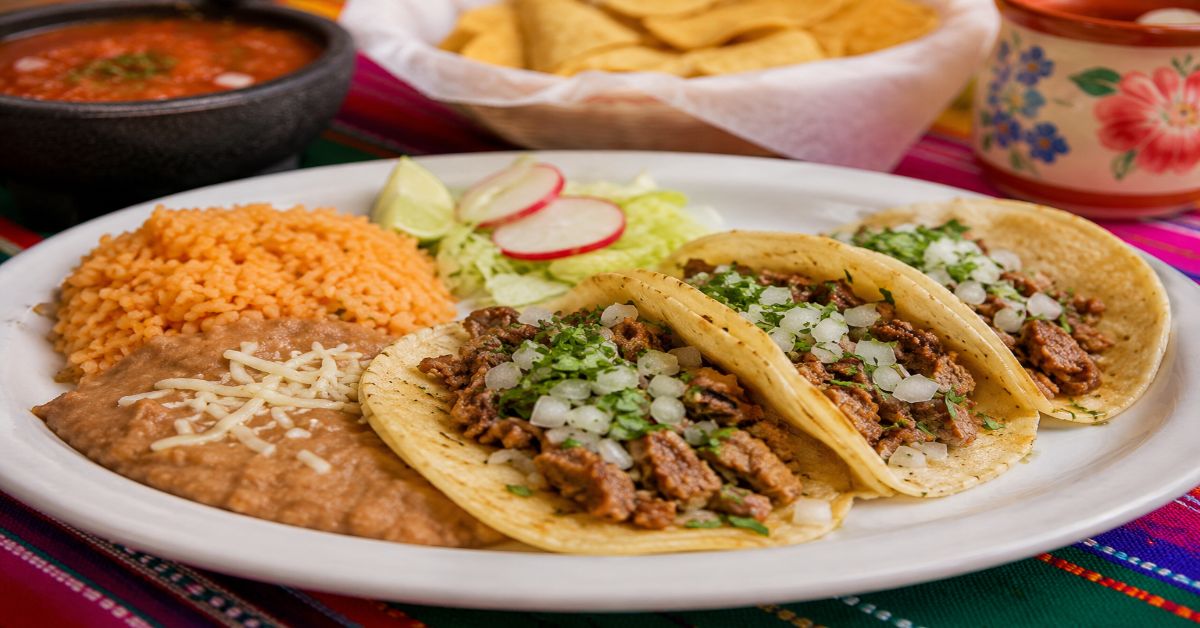
A craving for tacos, enchiladas, birria, or a plate of something hot and comforting can turn a simple phone search into a surprisingly crowded decision. I think the phrase mexican food near me is really shorthand for a more useful question: which nearby restaurant is worth choosing right now for the food I want, the time I have, and the way I plan to eat it? The nearest result is not automatically the best result, and the highest rating does not always tell you whether a place fits your specific meal.
The fastest way to choose well is to narrow the search in layers. First, decide what you are actually craving and whether you want dine-in, pickup, or delivery. Next, compare only restaurants that are open when you need them, then look for menu specificity, recent dish-focused reviews, current food photos, and practical details such as wait time, parking, ordering method, and dietary information. That approach turns a vague local search into a short list you can act on.
This guide focuses on that decision process rather than pretending one restaurant can be recommended without knowing your location. You will learn how to read menus for useful clues, separate meaningful review patterns from noise, match different Mexican dishes to the kind of restaurant most likely to do them well, and avoid common mistakes such as choosing by star rating alone. I will also show you a simple first-order strategy that helps you test a new restaurant without over-ordering. By the end, you should be able to open a local search, compare a few realistic options, and choose with much more confidence.
Quick answer: To find the best Mexican food near you, filter for restaurants that are open and practical for your meal, then compare menu focus, recent dish-specific reviews, current photos, and ordering details. Choose the place whose specialty matches your craving instead of automatically picking the closest listing or the highest overall rating.
What should I look for when searching for Mexican food near me?
A useful local search starts with fit, not fame. A restaurant can be excellent and still be the wrong choice if its strength is seafood and you want carne asada, if it is built for a long sit-down dinner and you have twenty minutes, or if its best dishes do not travel well for delivery. The goal is to identify the strongest match between the restaurant’s specialty and your immediate need.
Which menu clues matter most?
Menus reveal more than price and dish names. Look for signs that the restaurant knows what it wants to be known for. A focused taqueria may offer several taco fillings with a deliberate salsa selection, while a birrieria may center its menu on birria in tacos, quesabirria, consome, or plates. A broader family restaurant may be the better choice when one group wants enchiladas, another wants fajitas, and someone else wants a combination plate.
- A clear specialty or regional point of view, such as tacos al pastor, birria, Oaxacan-style mole, Yucatecan dishes, Baja-style seafood, or Mexican breakfast.
- Dish descriptions that explain fillings, sauces, tortilla type, toppings, or preparation instead of using only generic names.
- House salsas, tortillas, aguas frescas, pan dulce, or other supporting items that appear to be part of the restaurant’s identity, while remembering that not every good restaurant makes every component in-house.
- A menu that is current enough to show prices, ordering options, sold-out items, and any limits on substitutions.
- Food that matches the format you need. Crisp tostadas may be better eaten immediately, while pozole, birria, rice plates, and some stews can be more forgiving on a short trip home.
One checkable culinary detail can also help you interpret a menu. Tacos al pastor are associated with meat cooked on a vertical spit, a technique shaped by Lebanese shawarma traditions in Mexico. Birria is a chile-spiced meat dish strongly associated with Jalisco, while mole refers to a family of complex sauces rather than one single recipe. These distinctions matter because a restaurant that names a regional specialty is giving you a more specific promise to evaluate.
How do I compare Mexican restaurants near me before I go?
Do not compare every result on the map. Build a short list of three to five realistic options, then check the same signals for each one. Consistency makes the comparison much clearer than bouncing between ratings, photos, and menu pages at random.
| Check | What to look for | Why it matters |
| Open hours | Open now, kitchen closing time, holiday notes | A listing can show open while the kitchen is close to last call. |
| Menu | Current dishes, specialty items, prices, ordering method | Confirms whether the restaurant actually serves what you want. |
| Recent reviews | Dish names, repeated praise or complaints, visit context | Recent patterns are more useful than an old average score alone. |
| Photos | Current food presentation, portions, dining room, takeout packaging | Helps verify what the experience and food look like now. |
| Logistics | Distance, parking, pickup process, delivery radius, wait estimates | A great meal can still be a poor fit if the logistics do not work. |
| Dietary details | Ingredient notes, allergy guidance, vegetarian options, cross-contact warnings | Prevents assumptions about ingredients or preparation. |
How should I read restaurant reviews without getting misled?
Read reviews as evidence, not as a popularity contest. The most useful review usually names a dish, describes what happened, and gives enough context to understand the visit. A comment such as ‘the birria was deeply seasoned and the consome arrived hot at pickup’ tells you more than ‘best place ever.’ The same is true for criticism.
A practical review-reading method is to separate four signals: food signal, service signal, fit signal, and timing signal. Food signal tells you which dishes repeatedly satisfy or disappoint. Service signal covers accuracy, wait times, and hospitality. Fit signal tells you whether the reviewer wanted the same experience you want, such as a quick lunch or a family dinner. Timing signal asks whether the review is recent enough to reflect the current kitchen, menu, and staffing.
| Review pattern | What it may indicate | How to use it |
| Many recent mentions of the same dish | A dependable specialty or a recurring problem | Give repeated dish-specific patterns more weight. |
| Complaints only about delivery delays | A logistics issue rather than a food issue | Check whether pickup or dine-in solves the problem. |
| Praise for atmosphere but little about food | The experience may be the main attraction | Look for additional food-focused evidence. |
| Conflicting opinions on spice level | Preference differences are likely | Check salsa choices or ask what can be adjusted. |
| Several recent comments about changed portions or recipes | The current experience may differ from older reviews | Prioritize the newer pattern over older reputation. |
What type of Mexican food am I actually craving?
Mexican cuisine is highly regional, and Mexican restaurants in the United States also reflect local Mexican American traditions, family recipes, border cooking, and Tex-Mex influences. That variety is useful when searching, because the right keyword or menu clue can move you from a generic list to a restaurant built around the dish you actually want.
Instead of searching only by cuisine, name the food format, cooking style, or meal occasion in your own mental filter. If you want quick tacos, a taqueria may be a stronger match than a full-service restaurant. If you want mole, seafood, or a specific regional plate, look for menus that treat that item as a specialty rather than a single token option.
| Craving | Best menu clues to look for | Good first check |
| Street-style tacos | Multiple fillings, tortilla choice, salsas, simple toppings | Does the restaurant emphasize tacos as a core category? |
| Birria | Birria plates, tacos, quesabirria, consome | Is birria a specialty or only one item on a huge menu? |
| Mole or regional dishes | Named mole styles, regional dishes, detailed sauce descriptions | Does the menu explain the preparation rather than label it generically? |
| Mexican seafood | Ceviche, aguachile, fish or shrimp tacos, seafood cocktails | Are seafood items prominent and current? |
| Breakfast or brunch | Chilaquiles, huevos dishes, breakfast tacos, cafe de olla | Are breakfast hours and breakfast-specific menu items posted? |
| Family dinner | Shareable starters, combination plates, kids options, broad entree range | Can different preferences be handled without ordering from separate places? |
What does “authentic” Mexican food near me actually mean?
The word authentic is too broad to be a reliable quality filter. Mexico has many regional cuisines, and dishes change across families, cities, states, and migration histories. A better approach is to look for specificity: Does the menu identify a region, cooking method, ingredient, or house specialty? Does the food description match what is actually served? Specificity gives you something concrete to judge without treating one style of Mexican food as the only legitimate version.
How do I know if a nearby Mexican restaurant fits my meal?
The best restaurant for a Friday night dinner may not be the best restaurant for a weekday lunch. Before choosing, define the job the meal has to do. That single decision removes many options that look appealing but do not fit the moment.
- For a quick lunch, prioritize short distance, easy ordering, a compact menu, reliable pickup timing, and dishes that can be eaten without a long setup.
- For a family dinner, check seating, noise level, wait expectations, children’s options, shareable items, and whether the menu covers different spice preferences.
- For delivery, favor dishes that tolerate travel and restaurants with clear packaging or delivery feedback.
- For a date or celebration, atmosphere, reservations, beverage options, dessert, and pacing may matter as much as speed.
- For a group order, look for family packs, taco trays, large sides, clear modification rules, and an ordering system that makes quantities easy to confirm.
What should I check if I have dietary restrictions?
Never infer ingredients from the dish name alone. Beans may be prepared with animal fat, rice can be cooked in broth, sauces may contain dairy, nuts, seeds, or other allergens, and a corn tortilla does not guarantee a gluten-free meal if there is cross-contact during preparation. If an allergy or dietary restriction is important, use the restaurant’s current ingredient information and contact the restaurant directly when the menu is unclear.
Is the closest Mexican restaurant always the best choice?
No. Distance is one decision factor, not the final score. A restaurant five minutes farther away may be a much better match if it specializes in the dish you want, has stronger recent feedback on that dish, offers easier pickup, or avoids a long wait. On the other hand, the nearest option can absolutely be the right choice when convenience is the priority.
A simple way to think about distance is to price it in time, not miles. Ask what the extra ten or fifteen minutes buys you. If the answer is a specialty you care about, a more reliable ordering experience, or a better fit for your group, the extra trip may be worthwhile. If the alternatives look similar, convenience should win.
This also changes by food type. A dine-in meal can justify a longer drive because the food arrives directly from the kitchen. Delivery has a different tradeoff because distance adds travel time after preparation. For foods that lose texture quickly, a nearby restaurant with dependable execution may beat a farther restaurant with a slightly stronger reputation.
How can I order smarter the first time?
The first order at an unfamiliar restaurant should teach you something. Instead of ordering the largest possible spread, choose one anchor item that represents the restaurant’s specialty and one supporting item that reveals how the kitchen handles a basic component such as salsa, tortillas, beans, rice, or a house drink. This keeps the order focused and gives you a better read on whether you want to return.
What should I order to judge a new Mexican restaurant?
Judge the restaurant by the promise it makes. At a taqueria, try the taco filling the menu or reviewers repeatedly highlight, preferably with a simple preparation that lets the meat, tortilla, and salsa stand on their own. At a birrieria, order birria in the format the restaurant emphasizes. At a seafood-focused spot, choose a core seafood dish rather than defaulting to a burrito. A restaurant’s signature is a fairer test than forcing every kitchen through the same benchmark dish.
For groups, add variety without losing the test. Pick one specialty item, one familiar crowd-pleaser, and shared sides. That way, a single unfamiliar dish does not determine whether everyone enjoys the meal.
When should I choose pickup instead of delivery?
Pickup is often the better choice when texture matters, the restaurant is close, or you want tighter control over timing. Crispy tacos, tostadas, nachos, and fried items generally benefit from less time enclosed in packaging. Delivery is more convenient when travel is difficult or when the order includes dishes that hold heat and moisture well. Check the restaurant’s actual delivery area and estimates rather than assuming every nearby listing delivers to your address.
What should I check before heading to a Mexican restaurant near me?
A one-minute pre-trip check prevents many avoidable disappointments. Local restaurant information changes, especially hours, wait policies, menus, and sold-out items, so verify the details that matter to your visit rather than relying on memory or an old review.
- Confirm the restaurant is open at the time you plan to arrive, and check whether the kitchen closes earlier than the dining room.
- Open the current menu and confirm the dish you want is still offered.
- Check dine-in, pickup, delivery, or reservation availability for your specific meal.
- Review the newest practical feedback for wait times, parking, order accuracy, or temporary changes.
- Confirm payment methods, accessibility needs, seating needs, and dietary questions that could affect your visit.
- If the place is known for a specialty that can sell out, contact the restaurant before making a long trip.
This is also where local judgment matters. A two-minute call can answer a question that no review can resolve, such as whether the birria is still available, whether a large party can be seated, or whether a sauce contains an ingredient you need to avoid.
What is the best way to choose Mexican food near me?
Choose the restaurant that best matches your craving and the practical realities of the meal. The strongest local decision usually comes from combining five things: specialty fit, current menu, recent dish-specific feedback, real-world logistics, and the format in which you will eat the food. Ratings and distance are useful, but they should support that decision rather than make it for you.
If you remember one method, make it this: start with the dish, narrow to a few nearby places, verify the current details, and order what each restaurant does best. That keeps the search quick without reducing a diverse cuisine to a star score on a map.
Frequently Asked Questions
How do I find Mexican food open now near me?
Use a local map or restaurant search to filter for places listed as open, then verify the restaurant’s current hours and kitchen closing time before leaving or ordering. Hours can change for holidays, private events, or temporary staffing changes.
What is the difference between Mexican food and Tex-Mex when I search nearby?
Mexican cuisine includes many regional traditions from Mexico, while Tex-Mex developed in Texas from Mexican, Tejano, and American influences. Tex-Mex commonly features dishes such as chili con carne, queso, and flour-tortilla combinations, but individual restaurant menus can overlap, so read the menu rather than relying only on the category label.
How can I find inexpensive Mexican food near me without choosing only by price?
Compare value by portion, specialty, and meal format. Taquerias, lunch specials, combination plates, and family packs can offer strong value, but current menu prices are the only reliable way to compare nearby restaurants because costs vary by city and restaurant.
What Mexican food usually travels well for takeout?
Stews, birria, pozole, rice-and-bean plates, enchiladas, and many burritos can travel reasonably well when packed properly. Crispy foods, tostadas, nachos, and items with delicate fresh toppings are more sensitive to steam and travel time, so pickup distance matters more for those orders.
How far should I travel for better Mexican food?
Travel farther when the extra time gets you a specialty you specifically want or a clearly better fit for your meal. If two restaurants offer similar menus and recent feedback, the closer option usually provides better convenience and, for takeout, a shorter time between kitchen and table.
How can I tell whether a Mexican restaurant is good for a large group?
Check seating capacity, reservation or wait-list rules, large-order policies, shareable menu options, parking, and whether the restaurant can handle dietary needs across the group. For takeout, ask about trays, family packs, labeling, and how far ahead large orders should be placed.
-

 Technology3 weeks ago
ThomsonKids.com: Website Guide, Topics & Trust Check
-

 General2 weeks ago
Voozon.com: What It Is and How the Platform Works
-

 Technology2 weeks ago
thesindi com Review: What TheSindi.com Really Offers
-

 Technology2 weeks ago
Cambro.tv: Status, Safety & Technical Guide
-

 Business2 weeks ago
5starsstocks.com Review: Features, Trust and Safety
-

 General3 weeks ago
My Reading Manga: What MyReadingManga Is, Safety, Legality and Better Alternatives
-

 Guide3 weeks ago
Thothub Safety Guide: What the Name Means, Link Risks and Legal Concerns
-

 Technology3 weeks ago
Iwara: What iwara.tv Is, How It Works and What to Know